




Drying Techniques That Preserve THCA Potency in Hemp Flower

Drying Techniques That Preserve THCA Potency in Hemp Flower
Every grower obsesses over the same variables: nutrient schedules, light spectrums, VPD charts, training techniques. Weeks are spent dialing in the perfect feeding regimen or chasing an extra half-percent of cannabinoid content through genetics and environment. And yet one of the most consequential steps in the entire cultivation process — the one that can make or break everything that came before it — gets treated as an afterthought. Drying.
Learning how to dry THCA flower correctly isn't a minor detail tacked onto the end of harvest. It's the step that determines whether all that careful cultivation actually shows up in the jar. A rushed or poorly controlled dry can strip potency, flatten aroma, and introduce mold risk that turns an otherwise flawless harvest into an unsellable batch — sometimes without any visible warning until the product is already packaged and shipped. Buyers scrolling through options like Oregon Hemp Flower's THCA collection are increasingly savvy about this, and the difference between a batch dried with discipline and one dried for speed is obvious the moment the jar is opened.
This guide breaks down exactly what happens to hemp flower during drying, why it matters as much as the grow itself, and how commercial operations control the process to protect both potency and shelf life.
Why Drying Matters as Much as Growing
Freshly harvested flower isn't inert plant material — it's still metabolically active. Cells inside the bud continue respiring, enzymes continue functioning, and chlorophyll continues breaking down for days after the plant leaves the ground. This is the biological reality that makes drying so consequential: it isn't just about removing water, it's about giving the plant's own internal chemistry time to finish its work.
Chlorophyll breakdown is a perfect example. Freshly cut flower is loaded with chlorophyll, which is responsible for the harsh, "grassy" or hay-like flavor found in poorly dried cannabis. A slow, controlled moisture loss gives enzymes time to break that chlorophyll down naturally, resulting in smoother smoke and a cleaner terpene expression. Rush the process — high heat, low humidity, forced airflow — and that chlorophyll gets locked in place before it can degrade. The result is bud that smells and tastes green and hay-like no matter how good the genetics were.
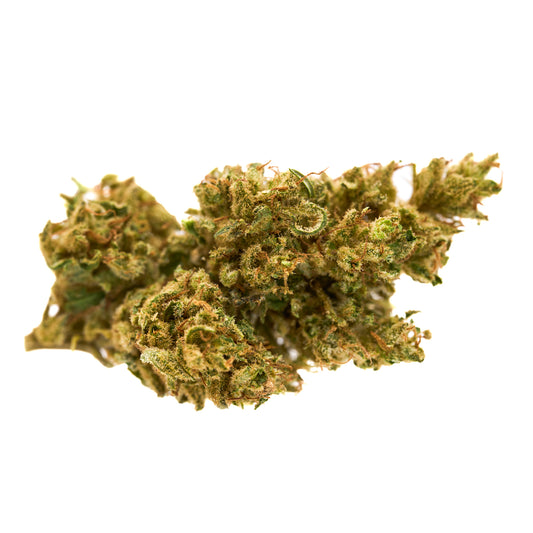
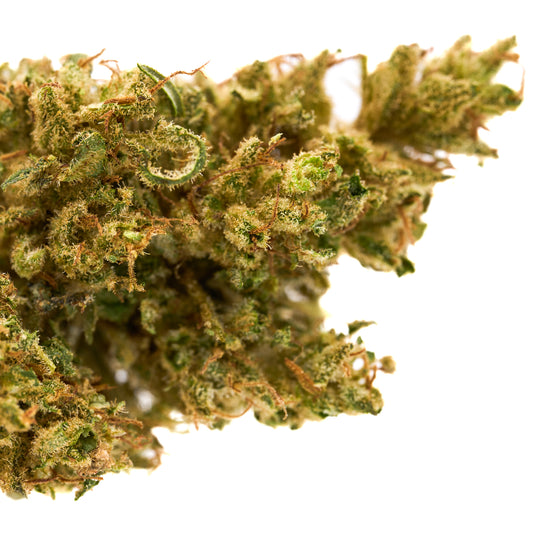
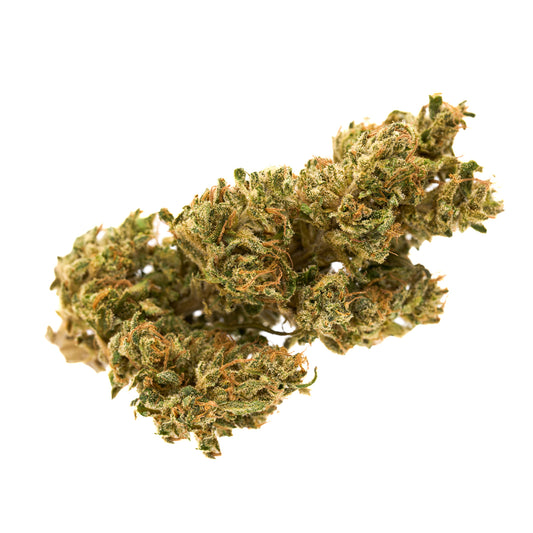
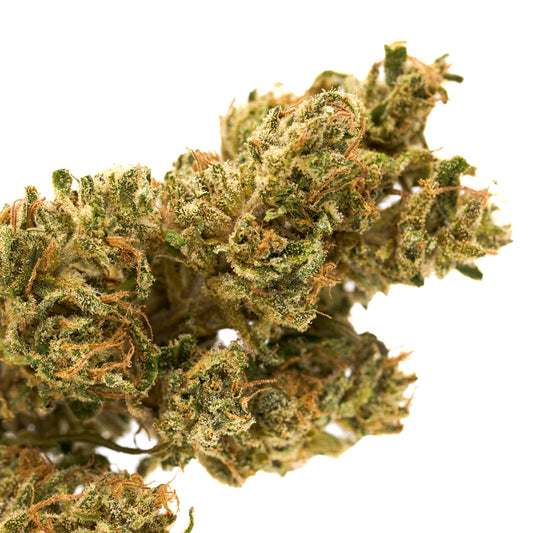
There's a second, more fragile risk: trichome integrity. THCA and the plant's terpene profile are housed almost entirely in trichomes, the small resin glands covering the flower's surface. These structures are delicate. Rapid drying causes uneven contraction of plant tissue, and that stress can rupture trichome heads — literally the structures holding the compounds growers spent months trying to maximize. Once a trichome head ruptures, the resin it held oxidizes and degrades rapidly. No amount of curing afterward can undo that damage.
This is why drying hemp without losing potency requires patience more than equipment. The goal isn't to remove water as fast as possible — it's to remove it slowly enough that the plant's internal chemistry and trichome structure stay intact.
The Ideal Drying Environment
Commercial-grade drying comes down to controlling four variables simultaneously: temperature, humidity, light, and airflow. Get any one of these wrong and the entire batch is compromised, regardless of how well the other three are managed.
Temperature: 60–70°F
This range isn't arbitrary. Terpenes — the aromatic compounds responsible for flavor and much of the "entourage" sensory experience — are highly volatile and begin evaporating at temperatures above roughly 70°F. Push a drying room even a few degrees past that threshold and you're not just risking a faster dry, you're actively boiling off the compounds that make the flower valuable. This is one of the most common mistakes in rushed operations: cranking heat to speed up turnaround while unknowingly cooking off the very terpenes that create bag appeal and flavor complexity.
Humidity: 45–55% RH
Hemp flower drying room humidity control is arguably the single most important environmental variable, and it's the one most commonly mismanaged. Too low, and the exterior of the bud dries far faster than the interior — a phenomenon called case hardening, where the outer layer forms a dry "shell" while the core remains moist. This traps internal moisture with nowhere to escape, creating a false sense that the flower is ready when it's actually a mold risk waiting to happen inside a sealed jar or bag. Too high, and the room simply becomes a mold and bud rot incubator, particularly in dense, tightly-packed colas where airflow struggles to reach the interior of the bud.
The 45–55% RH window strikes the balance: slow enough moisture loss to avoid case hardening, dry enough to prevent microbial growth.
Darkness
UV and even standard visible light exposure accelerates the breakdown of cannabinoids, including THCA, over time. A dry room should be light-blocked entirely — no windows, no ambient light leaking in, no reason for anyone to open the door and expose curing flower to light more than briefly. This is a simple, low-cost control that many smaller operations overlook, and the potency cost compounds over the full 7–14 day drying window.
Airflow
Gentle, indirect air circulation is critical — but the emphasis is on indirect. Oscillating fans should circulate air around the room, never blast directly onto hanging buds. Direct airflow on flower accelerates surface drying unevenly, contributing to the same case hardening problem caused by low humidity, while also risking physical damage to fragile, trichome-covered surfaces. The goal of airflow is simply to prevent stagnant pockets of humid air from forming around dense buds, which is where mold gets its foothold.

The 7–14 Day Timeline
THCA flower moisture control isn't a single event — it's a process that unfolds in distinct phases, each with different physiological things happening inside the plant.
Days 1–3: Rapid initial moisture loss
Immediately after harvest, large fan leaves and the outer surface of the bud shed moisture quickly. This is the most visually dramatic phase — leaves that were rigid and turgid at harvest go limp within 24–48 hours. This rapid initial loss is normal and expected; it's the moisture sitting closest to the surface with the least distance to travel.
Days 4–10: The critical slow phase
This is where the real work happens, and where most drying mistakes cause permanent damage. Internal moisture begins slowly migrating outward and equalizing throughout the bud structure. This phase needs to be slow — rushing it with added heat or airflow is exactly what causes case hardening and chlorophyll lock-in. Growers who check in daily during this window will notice the plant material feels deceptively "done" on the outside days before the interior has actually reached equilibrium.
Days 10–14: The snap test stage
By this point, stems should be approaching full dryness. The classic snap test for cannabis drying involves bending a small stem: if it bends without breaking, moisture remains inside and the flower needs more time. If it snaps cleanly, the flower has reached the moisture level appropriate for curing. This tactile check is more reliable than a calendar date because drying speed varies with strain density, bud size, room conditions, and even how tightly plants were hung.
It's worth emphasizing that this 7–14 day window is a guideline, not a rule. Dense, resin-heavy colas from certain strains can take longer; smaller, airier buds may finish faster. Relying on physical cues — stem snap, bud texture, the way the outer leaves feel — will always outperform a fixed number of days on a calendar.

What Goes Wrong With Rushed Drying
Time and space pressure push many operations toward shortcuts, and each one carries a specific, predictable cost.
High heat / low humidity "quick dry" tents compress a 10–14 day process into 3–4 days by cranking temperature and stripping humidity. The result: locked-in chlorophyll (harsh, grassy smoke), evaporated terpenes (flat, muted aroma with none of the complexity a slow dry preserves), and a high risk of case hardening — dry-looking bud with trapped internal moisture that becomes a mold problem weeks later, after the product has already been packaged, shipped, and shelved.
Food dehydrators apply the same logic with even less environmental control. Designed for fruit and vegetables, not resin-covered flower, they push hot, dry air directly onto the product with no ability to manage the slow equalization phase that's essential to potency retention. The bud may look and feel dry within hours, but the chemistry underneath tells a different story — degraded terpenes and inconsistent internal moisture.
Drying in direct sunlight compounds nearly every problem at once: UV exposure degrades cannabinoids, heat accelerates terpene loss, and there's typically zero humidity control at all. It's the fastest possible way to dry flower and also the most destructive to the compounds that make it worth buying in the first place.
The most dangerous part of all of these shortcuts is that the damage isn't always visible at the point of drying. Flower can look, feel, and even smell acceptable right after a rushed dry — the real cost shows up later, either as flat lab results, harsh smoke reported by end users, or mold blooming inside a sealed bag weeks after the batch already shipped to a retail or wholesale buyer.
Moisture Testing and Quality Control
Guessing has no place in commercial-scale drying. Serious operations verify dryness objectively rather than relying on touch and feel alone, especially because a single miscalculated batch can affect an entire production run once it's packaged at scale.
Moisture meters provide a fast, direct reading of moisture content within the bud, giving growers an objective checkpoint beyond the snap test.
Water activity (Aw) testing goes a step further, measuring the amount of unbound water available to support microbial growth — which is a more precise predictor of mold risk than moisture content alone. Water activity testing cannabis typically targets an Aw range of roughly 0.55–0.65 for flower that's both shelf-stable and safe from mold, while still retaining enough moisture to avoid overly brittle, crumbly bud that degrades quickly in storage.
This kind of quality control matters more the larger the operation gets. At small scale, a slightly-off batch might be a disappointing personal loss. At commercial and wholesale scale, one poorly dried batch that passes a visual check but fails an Aw test can mean an entire harvest — potentially thousands of units — has to be pulled, reprocessed, or scrapped after packaging. Objective testing catches what touch and smell can miss.
The Oregon Hemp Flower Standard
This is exactly why Oregon Hemp Flower treats drying as a controlled, non-negotiable phase of production rather than a step to compress for faster turnaround. Every batch is dried under monitored temperature, humidity, and airflow conditions across the full timeline flower actually needs — not the timeline that's most convenient for shipping schedules.
The difference shows up in ways that are easy to verify: potency percentages that consistently test higher, terpene profiles that retain their full aromatic complexity instead of the flat, muted scent of a rushed batch, and flower that smokes smooth rather than harsh and grassy. It's the difference between flower that was dried and flower that was merely dehydrated.
For wholesale buyers and retail consumers alike, that distinction matters. Explore the current lineup on the Oregon Hemp Flower THCA collection page and see — and smell — the difference a properly managed slow dry makes firsthand.
FAQ
How long should THCA flower dry before curing?
Most flower needs 7–14 days to dry fully, though this varies with bud density, strain, and room conditions. The snap test — bending a stem to see if it breaks cleanly rather than folding — is a more reliable indicator than a fixed number of days.
What humidity is best for drying hemp flower?
A drying room should sit between 45–55% relative humidity. Lower humidity risks case hardening; higher humidity invites mold and bud rot.
Does drying temperature affect potency?
Yes. Temperatures above roughly 70°F accelerate terpene volatilization, which degrades aroma and flavor even if THCA levels are less immediately affected. Keeping rooms between 60–70°F protects both cannabinoids and terpenes.
What is case hardening in cannabis drying?
Case hardening occurs when the outside of a bud dries faster than the inside, forming a dry "shell" that traps interior moisture. This creates a hidden mold risk that often isn't visible until after packaging.
Is slow drying always better than quick drying?
For flower quality, yes. Quick-dry methods using high heat and low humidity may save time, but they consistently produce harsher smoke, flatter terpene profiles, and higher long-term mold risk from trapped internal moisture.
What is water activity testing and why does it matter?
Water activity (Aw) measures how much unbound water in the flower is available to support microbial growth — a more precise mold-risk indicator than moisture content alone. A target range of roughly 0.55–0.65 Aw is considered shelf-stable and safe.
