





Kief vs Hash: 3 Textures, Solventless Methods, and Cold Storage

Kief is loose trichome resin collected by sifting, while hash is concentrated trichomes pressed or processed into a denser form, often made from kief itself. Kief works best as a simple topper for easy dosing, while hash delivers a more consistent, concentrated experience for smoking or dabbing. Both come from the same plant material; the difference lies in how far that material gets processed.
TL;DR:
- Kief and hash made without solvents average 39% to 60% THC; filtration usually makes hash potency more consistent between batches.
- Choose kief for easy, lower cost topping without special tools; begin with a pinch about the size of a grain of rice and wait.
- Choose hash for dabbing or steadier sessions, but store it away from heat and moisture because its denser form loses texture and potency faster.
- Before buying either, check a current certificate of analysis for cannabinoid levels and residual solvent screening; avoid products with sharp chemical odors or melted textures.
Table of Contents
- What Is Kief? Collection Methods and Retail Forms
- What Is Hash? Non-Solvent Methods and Common Textures
- How Kief and Hash Are Made: Production Steps Compared
- Potency and Effects: THC Ranges and What to Expect
- Using Kief and Hash: Methods, Tools, and Dosing
- Checking Quality: Lab Reports, Cold Chain, and Warning Signs
- Choosing Between Kief and Hash for Your Needs
- Why Solventless Concentrates Still Matter
- Try Oregon Hemp Flower’s Kief Selection
- FAQ
- Sources
What Is Kief? Collection Methods and Retail Forms
Kief is the trichome rich resin that separates from cannabis or hemp flower during sifting, usually through a fine mesh screen or a grinder’s bottom chamber. Those trichomes hold the bulk of the plant’s cannabinoids and terpenes, which is why kief looks powdery and feels almost like fine sand.

Not all kief is equal. Unrefined kief, collected straight from a grinder, often looks greenish brown because it carries plant debris along with the trichome heads. Refined dry sift kief, filtered through multiple micron screens, comes out tan or nearly white and carries a higher concentration of pure trichome material.
Yields vary by strain and handling. Trichome density differs across cultivars, and rough handling during trimming or storage knocks resin heads loose before collection even starts.
Common ways consumers use kief:
- Sprinkle it over a bowl or inside a joint for an extra kick.
- Press it into rosin using heat and pressure for a cleaner concentrate.
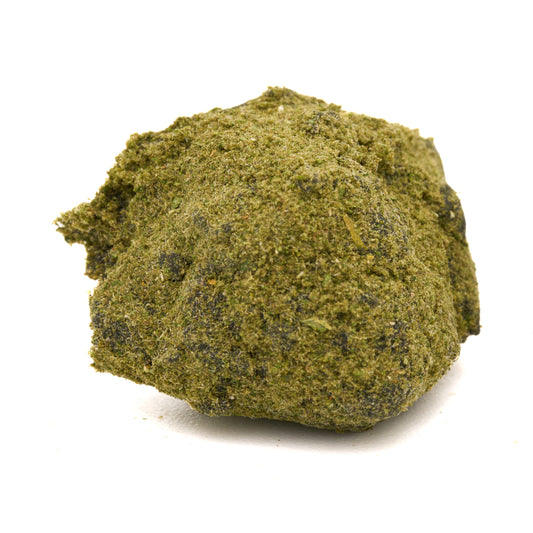
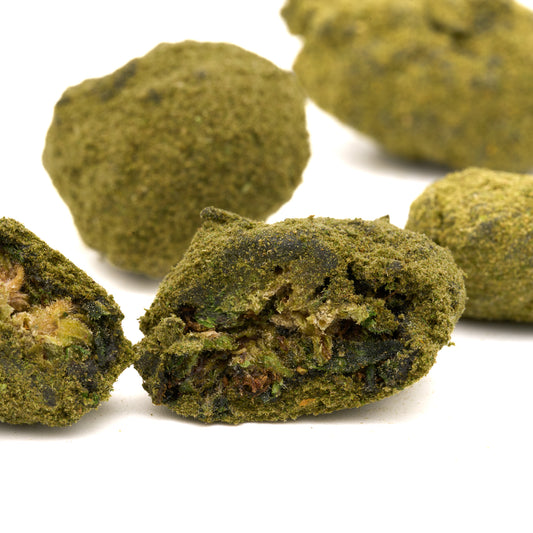
- Layer it onto moon rocks for a stronger, slower burning product.
- Add it to edibles after light decarboxylation.
What Is Hash? Non-Solvent Methods and Common Textures
Hash, short for hashish, is a concentrated and typically pressed form of trichomes. It has been produced for centuries using methods that compress loose resin into a denser, more stable product, and hashish remains a broad term covering many textures and regional production styles.
Two non-solvent approaches dominate modern hash production. Bubble hash, also called ice water hash, uses agitation in ice water to knock trichomes loose, which are then filtered through a series of mesh bags ranked by micron size. The other route takes refined dry sift kief and presses it under heat and pressure until it binds into a solid mass.
Texture depends heavily on the input material and process:
- Bubble hash often comes out crumbly or sandy depending on the drying method.
- Pressed sift hash tends toward a sticky, pliable texture similar to clay.
- Fully cured, aged hash can form hard bricks that need to be warmed before use.
Storage matters more with hash than with kief because moisture and heat exposure degrade texture and potency faster in a denser, more concentrated product.
Consumers typically use hash by crumbling it into a bowl, rolling small pieces into a joint, or breaking off a piece for dabbing on a rig. Some smoke it on its own in a pipe, since the concentration means a little goes a long way.
How Kief and Hash Are Made: Production Steps Compared
Dry sifting starts with dried flower shaken or rubbed against screens, with screen sizes varying by process. Finer screens catch purer trichome heads; coarser ones let more plant matter through, which lowers purity and can introduce contaminants if the source material wasn’t clean.
- Dry flower is agitated over stacked screens to separate trichomes by size.
- Collected material passes through progressively finer mesh for purity.
- The finest pass yields refined, light colored kief ready for pressing or direct use.
Dry ice extraction, sometimes called a Kryo style method, freezes trichomes with solid carbon dioxide before agitation. This approach preserves terpenes and cannabinoids more effectively than warmer methods, and one solventless extraction study found cannabinoid concentrations reaching 60.7% while keeping monoterpenoid profiles largely intact.
Bubble hash follows a similar logic with water instead of air. Fresh frozen flower, agitated in ice water, releases trichomes that sink and get filtered through bubble bags. Fresh frozen material tends to produce better texture and flavor than cured flower, since curing causes some trichome heads to degrade or fall off early.
Pressing kief into hash requires careful temperature and moisture control, often called maintaining a cold chain. Material that gets too warm during pressing smears trichome heads into surrounding plant tissue, lowering purity and dulling flavor. This is the most common mistake in home processing.
Pro Tip: Keep screens, tools, and material cold throughout collection and pressing. Warmth is the fastest way to turn good kief into mediocre hash.
Potency and Effects: THC Ranges and What to Expect
Potency varies by method and material. According to NIDA’s concentrate research summary, solvent-based concentrates average THC levels between 54% and 69%, sometimes exceeding 80%, while non-solvent methods like dry sift kief, dry ice processing, and bubble hash average between 39% and 60%.
Kief potency can look impressive on paper but varies widely from batch to batch depending on screen size and plant source, since a single sift session mixes trichomes from different parts of the plant. Hash production through multiple filtration passes tends to even out that variation, giving a more predictable experience from one session to the next.
Higher concentration products carry real considerations. A comprehensive health effects review notes limited and mixed evidence on how different concentrate forms affect health specifically, but recommends caution given the higher THC exposure concentrates deliver compared to flower.

Using Kief and Hash: Methods, Tools, and Dosing
Kief is the easiest entry point. Sprinkle a small pinch, roughly the size of a grain of rice, over a packed bowl or inside a joint before rolling. It burns alongside the flower and adds noticeable strength without needing extra tools.
Hash takes a bit more handling. Crumbly bubble hash breaks apart easily for mixing into a bowl, while pressed slabs often need gentle warming between fingers before they crumble. For dabbing, a small sliver placed on a hot nail or banger vaporizes quickly.
A few practical approaches:
- Make moon rocks by coating a flower nugget in hash oil, then rolling it in kief.
- Press kief into rosin with a hair straightener or rosin press for a cleaner dab.
- Use a vaporizer rated for concentrates when smoke isn’t the goal.
Pro Tip: Start with a small amount of either product and wait before adding more. Concentrates hit harder and faster than flower.
Checking Quality: Lab Reports, Cold Chain, and Warning Signs
A certificate of analysis, or COA, should list cannabinoid percentages and residual solvent screening, even for products marketed as solventless. Solvent testing matters because cross-contamination can happen in shared processing facilities.
Sellers who mention fresh frozen material or dry ice processing are usually aiming for better terpene retention, a claim worth checking against the COA itself when one is available.
Warning signs to watch for:
- Any chemical or unusually sharp odor that doesn’t match the strain.
- Excessive stickiness or a melted appearance, suggesting heat exposure during pressing.
- No COA available at all, or a COA that’s clearly outdated.
| Quality signal | What it tells you |
|---|---|
| COA with cannabinoid breakdown | Confirms actual potency versus label claims |
| Residual solvent screening | Flags contamination even in solventless products |
| Fresh frozen or cold chain notes | Suggests better terpene and flavor preservation |
Choosing Between Kief and Hash for Your Needs
The right pick depends on how you plan to use it. Consider intended use, available equipment, budget, and whether terpene preservation matters to you.
- Choose kief if you want simplicity: no special tools, easy sprinkling, and lower cost per use.
- Choose hash if you prefer dabbing or want a more consistent potency from one session to the next.
- Check for lab testing and cold chain claims regardless of which product you pick.
- Factor in storage space, since pressed hash holds up better over time than loose kief.
For straightforward kief options, Spectrum CBD Kief Wholesale and Maverick CBD Kief Wholesale fit the simplicity and sprinkling use cases described above.
Why Solventless Concentrates Still Matter
Solventless methods keep gaining ground for one reason: flavor. Dry sift and bubble hash preserve terpene profiles that solvent extraction often strips away, and that distinction shows up the moment you taste the difference. For anyone new to hemp derived concentrates, lab tested kief offers a low-risk, flavorful starting point before moving toward pressed hash or rosin.
— Michael
Try Oregon Hemp Flower’s Kief Selection
We grow every strain without pesticides or synthetics. Check our terms for details about satisfaction guarantees.

- Spectrum CBD Kief Wholesale offers an option for readers who want a straightforward topper.
- Maverick CBD Kief Wholesale gives wholesale buyers another strain to compare side by side.
- Check each product page for strain details and COA information before ordering.
- Check our shipping information for free-shipping details, and browse our full kief and concentrate lineup now.
Browse our full product catalog to compare strains, or head straight to the Spectrum or Maverick listings to place an order today.
FAQ
Is hash stronger than kief?
Not necessarily. Non-solvent methods including both kief and hash average THC levels between 39% and 60%, but hash production through multiple filtration passes tends to produce more consistent potency from batch to batch than loose kief.
What kind of high does kief give you?
Kief delivers effects similar to flower but amplified, since it concentrates the same cannabinoids and terpenes found in the plant’s trichomes. The onset and duration mirror smoking flower, just with a stronger pull per hit.
Can kief turn into hash?
Yes. Pressing refined kief under controlled heat and pressure, while keeping the material cold until the pressing step, binds the loose trichomes into the denser form known as hash.
What is hash called at a dispensary?
Dispensaries typically label it simply as hash or hashish, sometimes specifying the method such as bubble hash or pressed hash depending on how it was produced.
