



Check Delta 8 Flower COAs Before Trusting Strain Names

Delta 8 flower is hemp flower that has been treated with concentrated delta-8 distillate, usually by spraying, dipping, or dusting raw buds with the extract. It is a manufactured product, not a naturally occurring one, and it can be intoxicating, sometimes described as milder than delta-9 THC for many users. Before buying, verify potency and purity through a lab report.
TL;DR:
- A COA should match the package’s batch number and list total THC, delta 8 potency, solvents, pesticides, and heavy metals, though testing cannot catch all contaminants.
- The federal hemp threshold covers delta 9 THC only: products at or below 0.3% may still contain enough delta 8 to cause noticeable impairment.
- Because coating varies, begin with a few inhalations and wait at least 15 minutes before continuing; effects peak within 30 to 60 minutes.
- Reported relaxation and sleep benefits remain unproven clinically, and the FDA has approved no medical use for delta 8 products.
Table of Contents
- What Delta 8 Flower Is and Common Product Forms
- How Delta 8 Is Made: Converting CBD Into Distillate
- Delta 8 vs. Delta 9 THC and CBD Flower: What Changes
- What Strain Names Really Mean on Delta 8 Flower
- Reading COAs and Spotting Quality Delta 8 Flower
- Publisher Spotlight: Oregon Hemp Flower’s Strains, Testing, and Guarantees
- Comparing Delta 8 Flower Prices to Other Hemp Products
- Effects and Potential Benefits of Delta 8 Flower
- How to Use Delta 8 Flower: Methods, Dosing, and Onset
- What Consumers Report About Delta 8 Flower
- A Practical Note on Buying Delta 8 Flower
- Starter Picks and How to Order Confidently
- FAQ
- Sources
What Delta 8 Flower Is and Common Product Forms
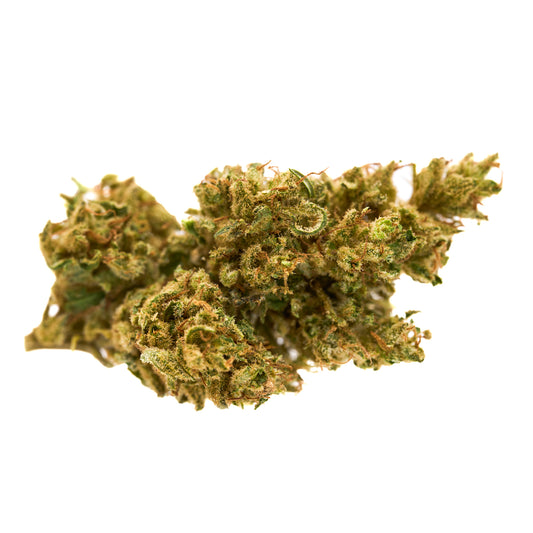
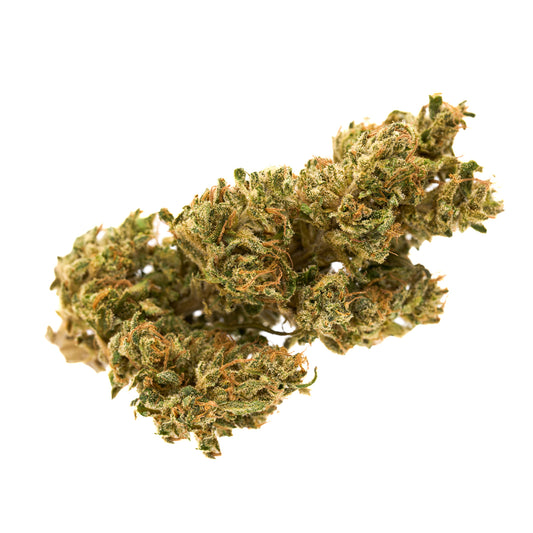
Delta 8 flower starts as regular hemp flower. Growers cultivate the plant for its cannabinoid and terpene profile, then processors add concentrated delta-8 distillate to the dried buds. Hemp plants naturally contain only trace amounts of delta-8, so almost every delta-8 flower product on the market got its potency from an applied extract rather than from the plant itself, a point the Cleveland Clinic confirms when describing how commercial delta-8 is produced.
The application method varies by manufacturer. Some spray distillate directly onto the bud, others dip the flower into liquid extract, and some dust it with a fine delta-8 powder or kief blend.
Retail delta-8 flower shows up in several forms:
- Loose coated flower sold by weight for home rolling or packing
- Pre-rolled joints made from distillate-coated buds
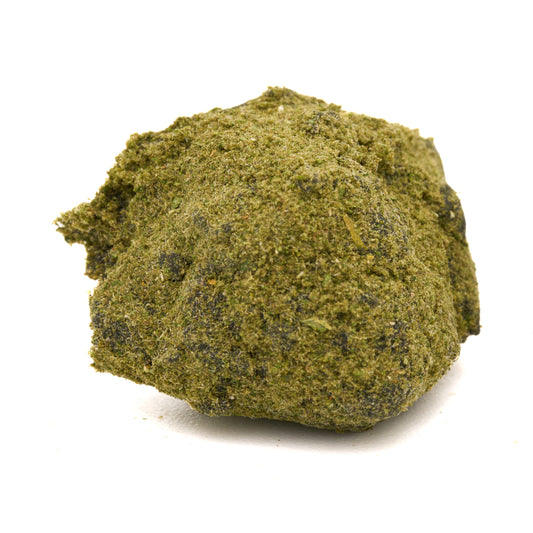
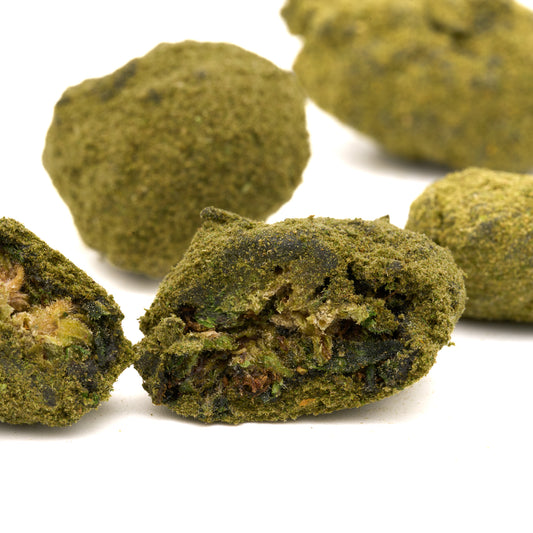
- Moon rocks, which layer distillate and kief over a flower core for higher potency
- Infused nugs marketed under familiar strain names
Each form delivers the same basic product: hemp flower carrying an added dose of delta-8.
How Delta 8 Is Made: Converting CBD Into Distillate
Because hemp contains only trace delta-8, manufacturers rely on a chemical process called isomerization to produce it at scale. This process takes CBD extracted from hemp and converts it into delta-8 using solvents, acids, and controlled heat. The result is a concentrated distillate that gets applied to flower, used in vapes, or formulated into edibles.
Isomerization matters to consumers mainly because of what can be left behind. The FDA has noted testing gaps around delta-8 production, including reports of adverse events tied to products that skipped safety evaluation altogether.
Risks worth understanding before buying:
- Residual solvents from the conversion process can remain in the final distillate if purification is incomplete
- Reaction by-products, including isomers that standard lab panels may not screen for, can form during conversion
- Inconsistent manufacturing standards mean potency and purity vary widely between brands
Testing gap: the CDC’s Health Alert Network has flagged that testing methods for synthetically derived delta-8 are still evolving, which means a passing lab report does not automatically rule out every possible contaminant. Third-party testing remains the best available check, but it works best when the lab’s panel is broad and current.
Delta 8 vs. Delta 9 THC and CBD Flower: What Changes
Delta-8 is intoxicating, but many users describe the effect as milder or clearer than delta-9, according to the Cleveland Clinic. That difference is qualitative and varies by person, dose, and tolerance, not a fixed ratio you can count on every time.
Federal hemp law defines legal hemp by delta-9 THC content: a product qualifies as hemp only if delta-9 sits at or below 0.3% by dry weight. That threshold says nothing about delta-8. A product can be fully compliant on delta-9 and still carry enough delta-8 to cause noticeable impairment.
This creates a labeling blind spot worth understanding:
- “Total THC” on a label should account for delta-9, delta-8, and other THC isomers combined
- A “delta-9 %” figure alone can understate how intoxicating a product actually is
- CBD flower, by contrast, contains little to no added THC of any kind and is not intended to produce a high
Reading past the headline percentage on a label is the only reliable way to know what you are actually buying.
What Strain Names Really Mean on Delta 8 Flower
Strain names on delta-8 flower borrow heavily from traditional cannabis culture, but the meaning shifts once distillate enters the picture. The name usually points to the underlying hemp cultivar and its terpene profile, not to a plant that is naturally high in delta-8, as the FDA’s consumer guidance explains.
Terpenes like myrcene, limonene, and pinene shape the aroma and flavor of the base flower and may subtly influence how the effect feels, even though the psychoactive strength itself comes mainly from the applied distillate.
Realistic expectations when shopping by strain name:
- Aroma and flavor will generally match the named cultivar
- Effect intensity depends more on distillate potency than on the strain label
- Marketing language describing a strain’s “mood” or “energy” is descriptive, not a clinical claim
Pro Tip: Judge a delta-8 flower product by its lab-confirmed potency first and its strain name second, since the name describes scent and flavor more reliably than it describes strength.
Reading COAs and Spotting Quality Delta 8 Flower
A Certificate of Analysis, or COA, is the single most useful document a buyer can check before purchasing delta-8 flower. It should come from an independent third-party lab, not the brand’s own facility.
Run through this checklist before buying:
- Confirm the batch number on the package matches the batch number on the COA
- Check total THC and delta-8 potency figures against what the label claims
- Look for a residual solvent panel, since this is where conversion by-products would show up
- Review pesticide and heavy metal screens, both standard for organically grown hemp
- Check for a terpene report, which confirms the aroma profile matches the strain claim
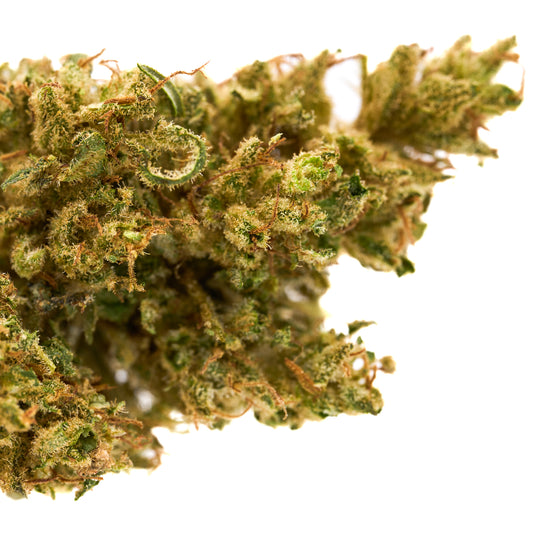
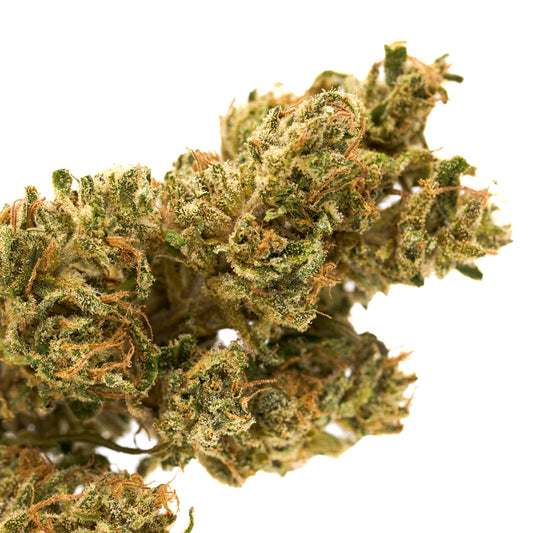
Red flags include a missing or unlinked COA, an unnamed or unverifiable lab, a contaminant panel that skips solvents or heavy metals entirely, and flower that looks oily, clumped, or unevenly coated, often a sign of rushed or careless distillate application.
Context worth knowing: the CDC has documented cases of THC intoxication tied to inconsistently labeled infused food products, a reminder that labeling accuracy and manufacturing care directly affect consumer safety across the hemp category.
Publisher Spotlight: Oregon Hemp Flower’s Strains, Testing, and Guarantees
Our delta-8 collection includes lab documentation alongside each strain so you can check potency and contaminant screens before buying.
For deeper reading on verification, our guides on reading CBD lab reports and spotting FDA safety signals walk through the same checklist points covered above.
Our delta-8 strains include options with varying profiles suited for different consumer preferences.
Comparing Delta 8 Flower Prices to Other Hemp Products
Delta-8 flower typically costs more per gram than plain CBD hemp flower, reflecting the added distillate and extra processing step. CBD flower, grown and dried without any added extract, generally sits at the lower end of hemp flower pricing because it skips the conversion and application stages entirely.
Moon rocks and heavily coated nugs tend to cost more than loose delta-8 flower of the same weight, since they layer additional kief and distillate onto the flower core. Pre-rolls carry a convenience premium over loose flower, covering the labor of rolling and consistent packing.
Value comparisons should weigh potency alongside price. A cheaper product with a thin or uneven distillate coating may deliver less actual delta-8 per gram than a slightly pricier option with a verified, consistent application. Checking the COA’s potency figure against the price per gram gives a clearer value comparison than price alone.
Wholesale buyers purchasing in bulk for resale generally see lower per-unit costs than retail single-unit buyers, a standard pattern across hemp flower, pre-rolls, and concentrates. Our wholesale options extend that bulk pricing structure to CBD, THCA, and delta-8 product lines for businesses buying for resale or manufacturing.
Shoppers comparing across brands should treat price as only one input. A low price on a product with no accessible COA is not a value, since there is no way to confirm the actual potency behind the number.

Effects and Potential Benefits of Delta 8 Flower
Delta-8 produces an intoxicating effect, and the Cleveland Clinic describes it as often milder than delta-9 THC for many users, though research on the compound remains limited and effects vary by person. Reported effects commonly include relaxation, mild euphoria, and appetite changes, similar in category to effects associated with delta-9 but generally reported at a reduced intensity.
Some users turn to delta-8 flower for therapeutic reasons, including easing tension or supporting sleep, drawing on the broader pattern of reported cannabinoid effects. These are user-reported experiences rather than established clinical outcomes, and no delta-8 product currently carries FDA approval for any medical use.
Because research on delta-8 specifically is still thin compared to research on delta-9 or CBD, claims about therapeutic benefit should be treated as preliminary. The honest position is that many users report feeling calmer or more relaxed after use, while acknowledging that individual response depends heavily on dose, tolerance, and the specific product’s potency.
Anyone using delta-8 flower for a specific health concern should treat it as a personal-use product rather than a treatment, and should talk to a healthcare provider about interactions with any existing medication or condition before starting.
How to Use Delta 8 Flower: Methods, Dosing, and Onset
Delta-8 flower is most commonly smoked, either rolled into a joint, packed into a pipe, or loaded into a dry herb vaporizer. Smoking or vaporizing produces effects within minutes, typically peaking within 30 to 60 minutes and tapering off over the following two to four hours.
Dosing is harder to standardize with flower than with a measured edible or tincture, since the amount of distillate per gram varies by product and by how evenly it was applied. Starting with a small amount, a few inhalations rather than a full joint, and waiting at least 15 minutes before taking more gives a clearer read on individual tolerance.
New users generally benefit from starting at the lower end of any dose and increasing gradually across sessions rather than in a single sitting. Because delta-8 flower potency depends on both the base flower and the distillate concentration, checking the COA’s delta-8 percentage before use gives a more reliable dosing baseline than relying on strain name or appearance alone.
Storage also affects consistency. Keeping flower in a sealed, airtight container away from light and heat helps preserve both potency and terpene content over time, so the tenth use delivers an experience closer to the first.

What Consumers Report About Delta 8 Flower
Consumer feedback on delta-8 flower tends to cluster around two themes: effect strength relative to expectations, and product freshness. Buyers who check COAs before purchasing report more predictable outcomes, since they know the approximate potency going in rather than guessing from the strain name.
Freshness and trim quality show up often in feedback, since poorly dried or inconsistently trimmed flower burns unevenly and can mute both flavor and effect regardless of distillate potency. Coating evenness is another recurring point: buyers who receive clumped or oily flower generally report a harsher smoking experience and less predictable dosing.
Reviews that mention lab transparency, easy access to a COA, a responsive support team, consistent batch quality, tend to track with more positive overall experiences. That pattern lines up with the safety guidance covered earlier: products backed by accessible, complete lab documentation are the ones that consistently perform the way their label claims.
A Practical Note on Buying Delta 8 Flower
My interest in this space comes down to one habit: checking the COA before checking the strain name. That single step separates a verified product from a guess.
If you take one thing from this explainer, make it this: buy from brands that publish lab reports for every batch, and compare the batch number before you compare the price.
— Michael
Starter Picks and How to Order Confidently
We built our delta-8 lineup around strain variety and documented testing, so you can match a flower to your evening and still check the lab report first.

- Hawaiian Haze Delta 8 Hemp Flower: best for daytime use with a brighter, citrus profile
- Bubba Kush Delta 8 Hemp Flower: best for evening relaxation with an earthy profile
- Gorilla Glue Delta 8 Hemp Flower: best for users wanting a stronger, denser effect
Browse our full hemp flower collection or explore pre-rolls and vapes to find your fit. Current shipping policies and prices are provided on our website.
FAQ
Is Delta-8 Legal in Canada?
Delta-8’s legal status outside the United States varies by country and is governed by each nation’s own cannabis and hemp regulations rather than by US hemp law. This explainer focuses on US rules, so confirm your own country’s current regulations with a local legal resource before purchasing or traveling with delta-8 products.
Does Delta-8 Help With Pain?
Some users report relaxation and reduced discomfort after using delta-8, consistent with general cannabinoid effects described by the Cleveland Clinic. These are user-reported experiences rather than clinically established outcomes, since delta-8 has no FDA-approved medical use.
Can Delta-8 Be in Flower Form?
Yes, delta-8 commonly appears in flower form, created by applying concentrated delta-8 distillate to hemp flower through spraying, dipping, or dusting. This is one of several product forms the FDA has identified for delta-8, alongside vapes and edibles.
Does Delta-8 Grow Naturally in Hemp Plants?
Delta-8 occurs naturally in the cannabis plant only in trace amounts, far too little to supply commercial products on its own. Nearly all delta-8 sold today is manufactured by converting hemp-derived CBD into delta-8 through a chemical process, as the Cleveland Clinic explains.
Could Delta-8 Affect a Drug Test?
Delta-8 can trigger a positive result on standard THC drug screens, since most tests detect THC metabolites broadly rather than distinguishing delta-8 from delta-9. Our guide to delta-8 and drug testing and this partner explainer on CBD and drug tests cover the mechanics in more detail.
Sources
- FDA issues warning letters to companies illegally selling CBD and delta‑8 THC products
- What Is Delta‑8?
- Tetrahydrocannabinol intoxication from food at a restaurant — Wisconsin, October 2024
