









Delta-8 Drug Tests: Why 29% of Confirmed Positives Matter for Workers

Yes, using delta-8 THC can cause a positive drug test because screening assays detect shared cannabinoid metabolites. Immunoassay screens commonly cross-react with delta-8 analogs, producing a non-negative result that confirmatory testing may or may not separate from delta-9. Avoid delta-8 before any required drug test, and if you test non-negative, request confirmatory analysis of the split specimen.
TL;DR:
- Delta-8 metabolites can trigger a positive result on initial THC drug screens due to cross-reactivity, even though confirmatory tests may differentiate them.
- Urine tests can detect delta-8 for up to a month in frequent users, while blood and saliva tests have much shorter detection windows of hours to days.
- Confirmatory testing using LC-MS/MS can often distinguish delta-8 from delta-9 metabolites if specifically included in the panel, but many labs do not do this by default.
- Disclosing delta-8 use beforehand can help, but many employer policies treat any confirmed THC metabolite as a positive regardless of isomer.
- Delta-8 products are often mislabeled or contaminated with delta-9 THC, increasing the risk of positive drug tests despite legal or organic claims.
Table of Contents
- How workplace and clinical drug testing actually works
- Detection windows by specimen type: what to expect
- Why delta-8 cross-reacts on screens and when labs can separate isomers
- Employment and federal testing: what a positive result means
- Oregon Hemp Flower’s approach to hemp flower and honest disclosure
- How delta-8 is metabolized and what that means for your results
- Comparing test sensitivity: delta-8 versus delta-9
- What to disclose before a scheduled drug test
- Legal distinctions that affect how delta-8 testing plays out
- Our honest take on labeling, testing risk, and consumer choice
- If you still want to try delta-8: products and lab transparency
- FAQ
- Sources
How workplace and clinical drug testing actually works
Most drug tests happen in two stages, and understanding both explains why delta-8 causes confusion at the first step. The initial screen is an immunoassay, a fast chemical test that looks for a class of substances rather than one exact molecule. For cannabinoids, that screen is built to catch THC-COOH, the main delta-9 metabolite, but the antibodies used in these kits often bind to chemically similar compounds too.
Urine screens typically use a cutoff of 50 ng/mL for the initial immunoassay test, a threshold set to reduce false positives from incidental exposure. Delta-8 use can push a sample above that line even though the test was designed with delta-9 in mind.
When a screen comes back non-negative, it moves to confirmatory testing. Labs use gas chromatography-mass spectrometry (GC-MS) or liquid chromatography-tandem mass spectrometry (LC-MS/MS), methods that identify and quantify specific molecules rather than a broad class. This is the step where delta-8 and delta-9 metabolites can, in some cases, be told apart.
-
- A screen flags anything that resembles THC metabolites, including delta-8 breakdown products.
- Confirmatory testing narrows the result down to a specific, named compound.
- The Medical Review Officer (MRO) reviews confirmed results and considers any documented prescriptions before a final report goes to an employer.
Screening tests detect cross-reacting cannabinoid analogs at standard cutoffs, which means delta-8 use can trigger a non-negative result that looks identical to delta-9 use on the first pass, according to a 2018 immunoassay cross-reactivity study. SAMHSA’s workplace testing guidance confirms that an initial screen alone is never treated as a final result precisely because of this kind of cross-reactivity, which is why confirmatory chromatography and MRO review exist as required steps before any employment action is taken.
If you take prescription medications or have a documented medical condition that could plausibly produce a cannabinoid-positive result, telling the MRO before the review is the only way that information factors into the final report.
Detection windows by specimen type: what to expect
How long delta-8 stays detectable depends heavily on which specimen a lab collects, and the differences are large enough to change your entire risk calculation. Urine testing is the most common method in workplace settings, and it also has the longest detection window. Occasional users may clear a urine screen within several days, while frequent or heavy users can test non-negative for about a month or possibly longer, according to Healthline’s testing summary.
Blood tests capture a narrower window tied closely to recent use. Active use typically peaks in detectability within 2 to 12 hours, and the window closes within days for most users, though metabolites can linger somewhat longer in people who use heavily and regularly.

Saliva testing sits between the two. Most usage patterns clear a saliva test within 24 to 72 hours, making it the shortest common window and one reason some employers prefer it for recent-use detection rather than historical patterns.
Hair testing works on an entirely different timescale. A hair sample can reflect use going back roughly 90 days, which makes it far less useful for catching an isolated incident but far more useful for employers or programs screening for a pattern of use over months.
| Specimen | Typical detection window | Best for |
|---|---|---|
| Urine | Days (occasional use) up to about a month (frequent use) | Standard workplace screening |
| Blood | 2 to 12 hours peak, days overall | Recent or active use |
| Saliva | 24 to 72 hours | Very recent use |
| Hair | Up to ~90 days | Historical use patterns |
Several factors push these windows longer or shorter for any individual:
- Frequency and dose: daily or heavy use builds up metabolites that take longer to clear than a single session.
- Body fat and metabolism: THC metabolites are fat-soluble, so body composition and metabolic rate both shift clearance time.
- Product contamination: a product labeled delta-8 that actually contains delta-9 THC will behave like delta-9 for testing purposes, not like delta-8.
- Testing cutoff: a lab using a lower cutoff will catch lower concentrations and effectively extends the detection window for the same person.
These ranges describe general patterns, not guarantees. Two people with identical use histories can get different results depending on hydration, individual metabolism, and the specific cutoff a lab applies that day.
Why delta-8 cross-reacts on screens and when labs can separate isomers
Delta-8 and delta-9 THC are structural isomers, meaning they share the same chemical formula arranged in a nearly identical shape. When the body metabolizes either compound, it produces carboxylated metabolites that look chemically similar enough that the antibodies used in immunoassay screens often cannot tell them apart. That shared shape is the entire reason a delta-8 product can trigger the same screening flag as delta-9.

A 2018 study examining six commercially available immunoassays found that these cannabinoid analogs, including delta-8 and its metabolites, cross-react with standard screening kits at common cutoffs. In practical terms, the screening step cannot reliably confirm which isomer produced the result, only that a cannabinoid-like substance is present above the threshold.
Confirmatory testing is a different story, at least when a lab chooses to look for the distinction. A validated LC-MS/MS method described in the Journal of Analytical Toxicology separated delta-8-THCCOOH from delta-9-THCCOOH across 2,939 confirmed positive urine specimens. Delta-8-THCCOOH appeared in 62% of those confirmed positives, and 29% of cases were delta-8-only, meaning no delta-9 metabolite was present at all.
That finding matters for two reasons:
- It proves confirmatory labs can distinguish the isomers when their panel is built to look for both.
- It shows delta-8-only positives are common enough in real-world samples that some labs and the Department of Defense have added delta-8 analytes to their standard testing panels.
Not every lab does this by default. A standard confirmatory panel built only to verify delta-9 will report a positive without ever checking which isomer caused it. Whether your result gets that level of detail depends entirely on which panel the testing lab or your employer’s contracted lab uses, something you usually cannot control or even know in advance.
Employment and federal testing: what a positive result means
A confirmed cannabinoid positive carries real consequences, and the isomer distinction rarely changes the outcome in practice. SAMHSA’s mandatory guidelines direct federal testing programs to report THC-COOH as the reportable analyte, and federal programs generally treat any confirmed THC metabolite the same way regardless of which cannabis-derived product produced it.
If you know a drug test is coming, a few practical steps reduce avoidable risk:
- Stop using any delta-8 product well before a scheduled or anticipated test, since detection windows for frequent users can stretch to 30 days or more.
- Disclose any prescription medications to the MRO in advance so legitimate medical explanations are on record before a result is finalized.
- Skip detox products and shortcuts. No verified method reliably clears cannabinoid metabolites faster than time and normal metabolism.
- Request confirmatory testing of the split specimen if your initial screen comes back non-negative and you believe the result does not reflect delta-9 use.
- Ask for MRO review and gather documentation of any delta-8 products used, including dates and product labels, before your review call.
Pro Tip: Keep the original packaging or purchase receipt for any hemp product you use regularly. It will not prevent a positive, but it gives the MRO something concrete to review if the panel includes delta-8-specific analysis.
Here is the honest caveat: many employer drug policies are written around “any detectable THC metabolite,” not around which isomer produced it. Even a documented delta-8-only confirmation may not change the outcome if company policy treats all cannabinoids the same. Reviewing your employer’s specific policy language before you ever pick up a delta-8 product is more useful than any post-test explanation.
Oregon Hemp Flower’s approach to hemp flower and honest disclosure
We grow and sell hemp flower, including delta-8 products, and we think readers deserve a straight answer about testing risk rather than marketing spin. At Oregon Hemp Flower, our focus stays on organic cultivation, meaning no pesticides or synthetic inputs across our growing process.
Our catalog includes strain variety across cannabinoid and terpene profiles, covering both recreational and therapeutic preferences, and each product page lists the specifics of that strain’s profile, including the D8 Hempress hemp flower line.
None of that changes the underlying chemistry covered above:
- Organic growing practices and pesticide-free cultivation affect product purity, not whether delta-8 metabolites cross-react on a drug screen.
- A satisfaction guarantee addresses product quality, not employment testing outcomes.
- Strain variety changes flavor and cannabinoid ratios; it does not change detection windows.
If a drug test of any kind is a possibility in your near future, that fact matters more than any product’s freshness or potency.
How delta-8 is metabolized and what that means for your results
Once delta-8 THC enters the body, the liver processes it through a metabolic pathway that closely mirrors how delta-9 THC gets broken down. Both compounds are converted into carboxylated metabolites, and the resulting molecules are structurally close enough that standard immunoassay antibodies often cannot tell them apart.
This metabolic similarity is the direct mechanical reason delta-8 shows up on standard cannabinoid screens. The test is not detecting “delta-8” by name. It is detecting a metabolite shape that delta-8 happens to share with delta-9, which is why the cross-reactivity research describes the issue as an assay limitation rather than a flaw specific to delta-8 products.
Metabolism speed varies by person, affected by body fat percentage, hydration, liver function, and how frequently someone uses cannabinoid products. Someone who uses delta-8 daily builds up a larger reservoir of stored metabolites in fat tissue, which then release gradually and extend the detection window well beyond what a single, occasional dose would produce.
This is also why a delta-8 product contaminated with delta-9, a labeling risk the FDA has flagged repeatedly, complicates the picture further: the body may be metabolizing both compounds simultaneously, and the resulting test will reflect whichever metabolites the lab’s panel is built to catch.
Comparing test sensitivity: delta-8 versus delta-9
Standard immunoassay screens were built and validated around delta-9 THC metabolites, since delta-9 has been the primary target of workplace and clinical testing for decades. Delta-8’s rise in the hemp market came later, and most screening kits were never redesigned specifically to catch it, yet they often do anyway because of the shared metabolite structure described above.
In practice, this means immunoassay screens show similar sensitivity to both isomers at standard cutoffs, not because they were built for delta-8, but because the antibodies cannot reliably discriminate between the two. The NIJ-funded cross-reactivity study found this pattern held across six different commercially available immunoassay kits.
The real sensitivity gap appears at the confirmatory stage, not the screening stage. A standard GC-MS or LC-MS/MS panel built only to confirm delta-9 will miss a delta-8-only case entirely in terms of identification, reporting it simply as a positive without specifying the isomer. Only labs that build delta-8-specific analytes into their confirmatory panel can draw that distinction, and the Journal of Analytical Toxicology study found meaningful numbers of delta-8-only results once labs started looking for them specifically.
For a person being tested, the practical sensitivity that matters is the screening cutoff, since that determines whether a sample gets flagged at all. The isomer-specific sensitivity only matters once a lab has already decided to look for it.
What to disclose before a scheduled drug test
If you use delta-8 and know a drug test is coming, the most useful thing you can do is get ahead of it with your employer or testing coordinator rather than hoping for the best. Most workplace testing programs have a process for disclosing prescription medications or legal substance use before a sample is collected, and that disclosure becomes part of the record the MRO reviews if your result comes back non-negative.
Be specific about what you used, when, and how often. “I used a delta-8 vape a few times last month” gives the MRO far more to work with than a vague mention of hemp products after the fact. Bring product labels or receipts if you have them, since they show exactly what the product claimed to contain.
Do not assume disclosure guarantees a different outcome. SAMHSA’s guidance makes clear that federal programs report confirmed THC-COOH findings regardless of the product source, and many private employer policies follow the same logic. Disclosure protects your credibility and gives the MRO accurate information to work with. It does not override a confirmed positive.
If delta-8 is legal where you live but your employer’s policy bans any THC metabolite, state legality will not protect your job. Reading your specific employer’s drug policy before you decide to use any hemp-derived product is more protective than any disclosure made after the fact.
Legal distinctions that affect how delta-8 testing plays out
Delta-8’s legal status varies by state, and that variation shapes how comfortable people feel using it, even though it rarely changes how a drug test interprets the result. Some states have banned or heavily restricted delta-8 outright, while others allow it under the same framework that governs hemp-derived CBD. None of these state rules change the chemistry behind a cannabinoid screen.
The FDA has repeatedly warned that delta-8 products are frequently synthesized from CBD through a chemical conversion process rather than extracted directly from the plant, and that this process is inconsistently regulated across states. That inconsistency means product quality and labeling accuracy can vary significantly depending on where and how a product was made, regardless of whether delta-8 itself is legal in your state.
A product being legal to purchase in your state says nothing about whether your employer’s drug policy permits its use, and it says nothing about whether the specific batch you bought is accurately labeled. A federal employee or a worker in a safety-sensitive, federally regulated role faces testing standards that do not bend based on state hemp law. Checking your state’s specific delta-8 rules is worthwhile for purchasing decisions, but it should never be mistaken for protection against a workplace drug test consequence.
Our honest take on labeling, testing risk, and consumer choice
The hemp industry has a labeling problem, and delta-8 sits at the center of it. The FDA has flagged repeated cases of mislabeled products, including some that contain delta-9 THC despite being sold as delta-8. That is not a minor technicality. It means a consumer trying to make an informed decision about drug testing risk often cannot trust the label alone.
Clear, accurate labeling and third-party lab reports should be table stakes across this entire product category, not a differentiator. If you are considering any delta-8 product and a drug test is even a remote possibility, check the lab report before you buy, and have a direct conversation with your employer or HR department about their specific cannabinoid policy. Neither step takes long, and both give you more control than guessing after the fact.
— Michael
If you still want to try delta-8: products and lab transparency
We understand that plenty of people using delta-8 are not subject to drug testing at all, and for that reader, strain quality and effect profile matter more than any testing caveat above. If that describes you, a few of our products are worth a look.

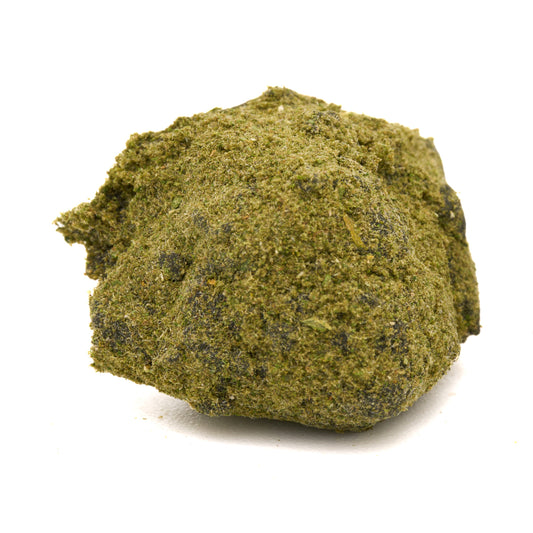
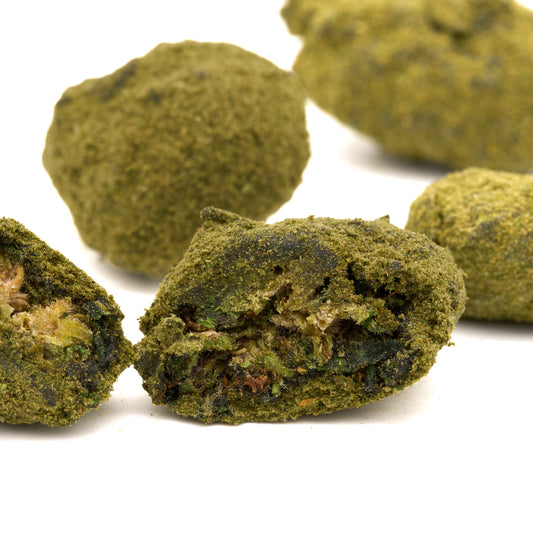
- Sour Hawaiian Haze Delta 8 Moon Rocks combine a tropical, sour profile with the extra potency moon rocks are known for.
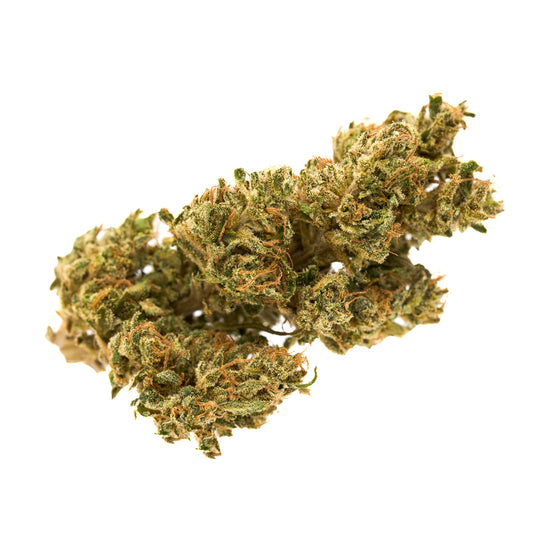
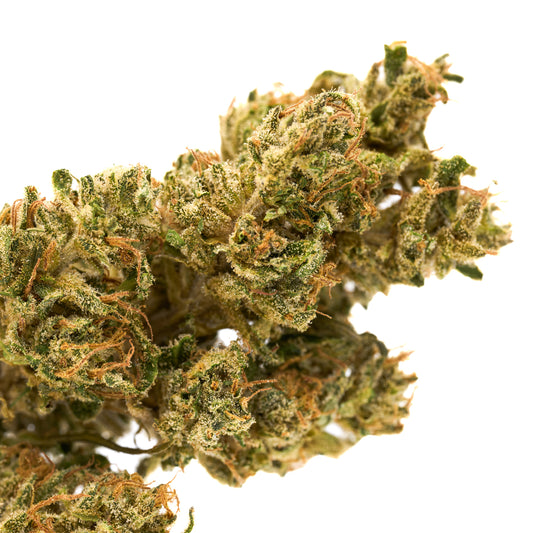
- Hawaiian Haze Delta 8 Hemp Flower offers a lighter, flower-only option for people who prefer a more traditional smoking experience.
- Gorilla Glue Delta 8 Moon Rocks pair a dense, resinous strain with moon rock preparation for a stronger overall effect.
Every product we list includes strain and cannabinoid details on its own page, and we encourage you to review that information alongside the testing guidance above before ordering. Browse the full collection if none of these three match what you are looking for, and remember that none of them are a safe choice if a drug test is anywhere on your horizon.
FAQ
Does delta-8 show up on a standard drug test?
Yes, delta-8 commonly triggers a non-negative result on standard immunoassay cannabinoid screens because the antibodies used cross-react with delta-8 metabolites. Confirmatory testing can sometimes distinguish delta-8 from delta-9, but only when the lab’s panel is built to check for that specific analyte, according to cross-reactivity research.
How long does delta-8 stay in your system for a urine test?
Occasional users may clear a urine screen within several days, while frequent or heavy users can test non-negative for about a month or possibly longer, according to Healthline’s testing summary. Individual factors like body fat, metabolism, and dose frequency shift this window in either direction.
Can a lab tell the difference between delta-8 and delta-9 on a drug test?
Confirmatory LC-MS/MS testing can separate delta-8 and delta-9 metabolites when a lab’s panel specifically includes delta-8 analytes. A validated study found delta-8-only confirmations in 29% of positive specimens tested with this expanded method, though many standard panels do not check for the distinction by default.
Will a delta-8-only positive still cost me my job?
It depends entirely on your employer’s specific policy language, since many workplace drug policies treat any confirmed THC metabolite as disqualifying regardless of isomer. SAMHSA’s guidance confirms federal programs report THC-COOH findings without distinguishing the cannabinoid source, and private employers often follow similar standards.
Why does the FDA warn about delta-8 product quality?
The FDA has warned that delta-8 products are frequently synthesized through chemical conversion rather than directly extracted, and that labeling is often inconsistent or inaccurate. This raises the risk that a product sold as delta-8 actually contains delta-9 THC, which would behave like delta-9 on any drug test.
