



Sativa vs Indica Hemp: What the Labels Really Tell You

Sativa and indica are the two words most shoppers use to pick hemp flower. Sativa is expected to feel energizing and indica relaxing. Research does not back that split as a reliable guide: a 2026 systematic review found that indica, sativa and hybrid labels are not dependable predictors of composition or effects. The better way to choose is to read the cannabinoid percentages and the terpene profile of the specific flower, then match them to what you want from it. This guide explains where the labels came from, what they still hint at, and how to shop by chemistry. It is written for adults 21 and older buying CBD, THCA or other hemp flower, and for resellers sourcing it in bulk.
TL;DR
- “Sativa” and “indica” began as botanical terms for plant shape and origin. In stores they became shorthand for “energizing” and “relaxing.”
- Genetic and chemical studies find the two labels are not consistent predictors of how a product feels. Cross-breeding has blurred the lines.
- Cannabinoids (CBD, THCA, CBG, delta-8) and terpenes (aroma compounds such as myrcene and limonene) are the measurable traits worth reading.
- THCA turns into impairing THC when heated, so a “hemp” label does not mean a product is non-intoxicating. Adults 21+ only.
- Choose by lab numbers, aroma, product form and dose. Treat the strain label as a loose hint.
Table of Contents
- Where “sativa” and “indica” come from
- How hemp fits in
- Do the labels predict how hemp feels?
- What actually shapes the experience
- Does sativa hemp make you high?
- How to choose hemp flower without relying on the label
- What this means for wholesale buyers
- Our point of view
- Where to start shopping
- FAQ
- Sources
Where “sativa” and “indica” come from
The names are older than the modern hemp market. According to HerbalGram’s history of the debate, Linnaeus named Cannabis sativa in 1753, with “sativa” meaning “cultivated,” describing common European hemp. Lamarck named Cannabis indica in 1785 from samples collected in India.
Botanists later used the words to describe plant shape. A 2018 systematic review of cannabis classification summarizes the traditional picture:
| Trait | “Sativa” | “Indica” |
|---|---|---|
| Leaflets | Narrow | Broad |
| Habit | Tall, slender | Short, compact |
| Maturation | Late | Early |
| Folk-taxonomy effect | Stimulating, energizing | Relaxing, sedating |
| Folk-taxonomy aroma | Herbal or sweet | Acrid or skunky |
The first three rows describe plants. The last two describe a reputation, and that reputation is where most of the confusion starts. Retail shelves took a botanical vocabulary and turned it into an effect guide.
How hemp fits in
Hemp is not a separate plant from the cannabis people call marijuana. UF/IFAS, the University of Florida’s extension service, states that current classification treats hemp and marijuana as one species, and that the working distinction is legal. In Florida and many other states, hemp is Cannabis sativa with no more than 0.3% THC on a dry-weight basis. The same publication says the descriptors “indica” and “sativa” are not reliable for botanical or legal classification.
So “sativa hemp” and “indica hemp” are marketing phrases rather than legal or scientific categories. A hemp flower is hemp because of its measured THC, not because of its leaf shape. The Washington State University Cannabis Research Center makes the same point: hemp is Cannabis sativa at 0.3% THC or less, and hemp products do not normally contain enough THC for the traditional high unless they are refined to higher levels.
It also explains why you will see two different descriptions of “indica” online. The National Hemp Growers Association describes C. indica as relatively short, conical and densely branched, with higher delta-9 THC and lower CBD. That is a plant description from agriculture. The calm-and-sleepy meaning on a retail jar is a different usage of the same word.

Do the labels predict how hemp feels?
In short, not reliably. The evidence comes from several directions.
Genetics. A 2021 study in Nature Plants analyzed more than 100 cannabis samples across over 100,000 genetic markers and found sativa- and indica-labeled samples were genetically indistinct across the genome. Some chemistry did track the labels: of 40 terpenes and cannabinoids measured, 12 correlated with the sativa-indica scale. The strongest link was between indica labeling and the terpene myrcene.
Commercial chemistry. A study of commercial products in six U.S. states found that labels did not consistently line up with the chemical diversity actually measured. National Geographic’s coverage of that work reports that, across more than 90,000 flower samples, sativa strains did not necessarily contain more THC than indicas.
Human reports. The 2026 Journal of Cannabis Research review covered 28 peer-reviewed reports. It concluded that the evidence does not support the labels as reliable guides to composition or therapeutic effects. Its authors point to measured chemistry, product form, route of use, dose and individual safety considerations as more defensible descriptors.
Breeding history. Decades of crossing make it almost impossible to trace the true heritage of commercial strains. In practice the words now describe an expected feel more than a plant family. UF/IFAS adds that modern plants are largely hybrids that still carry some genetic and chemical distinctions.
The practical conclusion: a jar labeled “sativa” tells you what the seller expects, not what a lab measured.

What actually shapes the experience
Three things matter more than the label.
Cannabinoids
Cannabinoids are the active compounds in the plant. In hemp flower you will most often meet CBD, CBG, THCA and, in some products, delta-8 THC. Each behaves differently, and the percentages vary a lot between cultivars. Our guide to cannabinoids in hemp covers the types and how to read them.
Terpenes
Terpenes are the aromatic compounds that give flower its smell. The Nature Plants authors found that the sativa-indica labeling people use is driven mainly by a small number of key terpenes. National Geographic reports that researchers have sorted strains into groups by dominant terpene, such as limonene, myrcene, caryophyllene and pinene. Citrusy limonene is associated by one expert there with a more elevated mood, while myrcene is linked to the heavier, more THC-like feel.
The research on what each terpene does is still early. The 2026 review notes that terpene-effect evidence remains preliminary. Use terpenes as a way to describe aroma and flavor, and as a reproducible way to compare one batch with another, not as a promise. Our pages on terpenes in hemp flower and how to read high-terpene hemp flower go deeper.
Dose and form
The same flower feels different when smoked, vaped or rolled, and a larger amount feels different from a smaller one. The 2026 review also warned that comparisons made without adjusting for THC cannot show whether label differences are independent of potency. In other words, much of what gets credited to “indica” or “sativa” may simply be how strong the product was.
Does sativa hemp make you high?
It depends on the cannabinoids, not the label. This matters most for THCA products.
The CDC explains that THCA itself is not psychoactive, but heat from smoking, vaping or dabbing converts it into impairing THC. It adds that hemp-derived THCA flower often has 15% to 20% total THC when smoked or vaped. The CDC also states that delta-8 THC is psychoactive and that hemp-derived delta-8 products can lead to unexpected or increased intoxication.
That means a “sativa” THCA flower and an “indica” THCA flower can both produce a high when heated, and both are for adults 21 and older. High-CBD flower sits at the other end of the range, with a different cannabinoid mix. If you are asking about a specific product, our article Will Hemp Flower Get You High? walks through the 0.3% rule and what it does and does not mean.
Safe-use points that apply to every type:
- Start with a small amount and wait before using more.
- Do not drive or operate machinery after using products that contain THC or delta-8.
- Keep products away from children and pets.
- If you take prescription medication, are pregnant or nursing, or have a health condition, speak with your doctor before using hemp products.
- If you are drug tested, read our explanation of CBD flower and drug test cutoffs.
How to choose hemp flower without relying on the label
Use this order when you compare products.
- Pick the cannabinoid first. Decide whether you want CBD-dominant flower, CBG, or THCA flower. That choice changes the experience far more than “sativa” or “indica.”
- Read the percentages. Look at CBD, CBG and THCA numbers on the product page. Our guide to reading the percentages on a CBD flower lab report explains total versus raw values.
- Check the terpene profile. Choose by aroma. If a flower smells citrus and bright, or earthy and heavy, that is the terpene profile speaking.
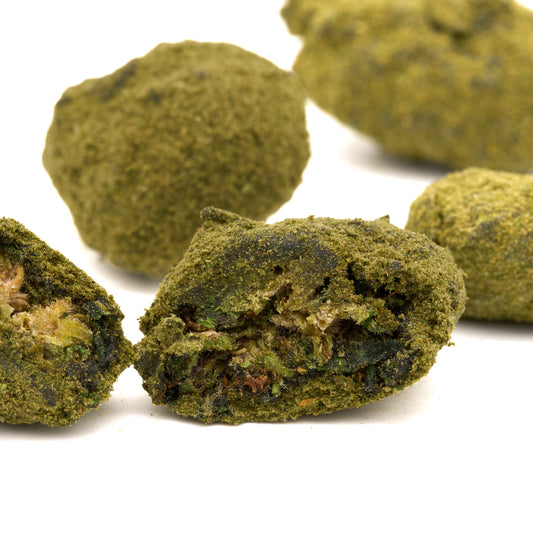
- Match the form. Flower, pre-rolls, kief, moon rocks, concentrates and vapes deliver different amounts at different speeds.
- Choose the dose. Begin low, especially with THCA and delta-8.
- Use the label as a tiebreaker. If two products have similar chemistry, the seller’s “sativa-leaning” or “indica-leaning” note can help you start with the one you expect to like, as long as you treat it as a guess.
Why the lab numbers deserve the attention: product labeling in the hemp market is not uniform. The New York Office of Cannabis Management advises shoppers to check ingredients, THC content, batch or lot number, expiry and a QR code linking to a Certificate of Analysis, and warns that some products marked below 0.3% THC or “Farm Bill Compliant” can still be high in THC. A 2021 survey of 147 U.S. hemp and CBD products found cannabinoid content ranging from below detection to 143 mg per serving, and fewer than half had CBD within 20% of the label. A 2023 study of hemp delta-9 products found that 66.0% differed from the stated dose by more than 10%. Numbers matter, and a single word on the jar cannot stand in for them.
A quick reference by goal
Treat this table as a starting point for browsing, not a prediction. It translates the old vocabulary into things you can look for.
| What you want from the experience | Old shorthand | What to look at instead |
|---|---|---|
| A brighter, citrus-forward aroma | “Sativa” | Limonene or pinene listed as dominant terpene; cannabinoid mix suited to your goal |
| A heavier, earthy aroma | “Indica” | Myrcene or caryophyllene listed as dominant terpene |
| Hemp flower with a milder cannabinoid profile | Either | CBD-dominant or CBG flower; check percentages |
| A stronger THC-type experience (adults 21+) | Either | THCA percentage and the form you will use |
| A balanced aroma | “Hybrid” | Several terpenes listed, with no single one far ahead |
What this means for wholesale buyers
Resellers face the same problem at scale. Customers ask for “sativa” and “indica” because they have seen the words elsewhere, but the products that sell steadily are the ones you can describe in specifics: cannabinoid range, aroma, trim and format. Describe each strain by its measured percentages and its terpene notes, and use the traditional label as a secondary tag if your customers expect one. Stock a spread across CBD, THCA and delta-8 so shoppers can choose by cannabinoid instead of by a word. We supply bulk lots across those lines on our wholesale collection.
Our point of view
We sell hemp flower, and we are asked about sativa and indica every week. Our answer is the same each time: look at what the plant contains.
Hemp flower is the product of its genetics, its growing conditions and how it is handled afterward. Our flower is grown organically, without pesticides or synthetics, and hand-trimmed. We offer a range of strains because each one carries its own mix of cannabinoids and terpenes, and that mix is what you actually smell, taste and feel.
That is why we write about terpenes, potency and cannabinoids instead of leaning on two old words. A shopper who knows how to read a percentage and recognize a terpene profile can pick flower with confidence, whether it is CBD, THCA or delta-8.
If you want a place to begin, browse by aroma and cannabinoid first, then decide on form. Our 100% satisfaction guarantee is there so you can find the strain that suits you.
Michael
Where to start shopping
If you want to put this into practice, our hemp flower collection lists each strain with its cannabinoid and terpene details, from CBD flower to THCA. Our products are organically grown without pesticides or synthetics and hand-trimmed, and every order is covered by our 100% satisfaction guarantee. Orders over $85 ship free.

If you prefer a different format, the pre-rolls, vapes and THCa concentrates pages cover the same chemistry in other forms. For a specific example of a terpene-rich CBD flower, see Critical Berries CBD hemp flower. Our products are for adults 21 and older.
FAQ
Which is worse for anxiety, sativa or indica?
Neither label reliably predicts it. The 2026 systematic review found inconsistent links between the labels and symptoms, subjective effects and side effects. Responses to THC differ from person to person and depend on dose, so anyone prone to anxiety should avoid THC-containing products, start with a very small amount if they use them at all, and talk to a doctor first.
Does sativa hemp make you high?
Only if the product contains enough intoxicating cannabinoids. Standard hemp is defined by 0.3% THC or less, but THCA flower converts to THC when heated, and the CDC notes that smoked or vaped THCA flower often has 15% to 20% total THC. Delta-8 is also psychoactive. CBD-dominant flower is a different category. Use these products only if you are 21 or older.
Do you get higher from indica or sativa?
The label does not decide it. National Geographic’s reporting on a large commercial analysis found sativa-labeled flower did not necessarily have more THC than indica-labeled flower. Potency, dose and the way you use the product matter more, so compare the THCA or THC percentage rather than the strain type.
Why do people prefer indica over sativa?
Mostly because of expectation and habit. Indica has long been described as relaxing and sativa as energizing, and the Nature Plants study found indica labeling tracks with the terpene myrcene. That gives the preference a chemical basis, but it is a tendency, not a rule. Choosing by terpene and cannabinoid numbers gets you closer to what you actually like.
Is there a real botanical difference between sativa and indica hemp?
In plant shape and origin, yes in the traditional sense: tall, narrow-leaved plants versus short, broad-leaved ones. But UF/IFAS notes that modern plants are largely hybrids, and some researchers propose dropping the terms in favor of cultivar names, as suggested in a short guide to cannabis nomenclature.
Sources
- Do consumer-facing “Indica,” “Sativa,” and “Hybrid” labels predict effects (Journal of Cannabis Research, 2026)
- Cannabis Systematics at the Levels of Family, Genus, and Species (PMC, 2018)
- Industrial Hemp in the United States: Definition and History (UF/IFAS)
- A Botanist’s Insight to Hemp (UF/IFAS)
- Frequently Asked Questions (WSU Cannabis Research Center)
- The Hemp Plant (National Hemp Growers Association)
- Cannabis Taxonomy: The ‘Sativa’ Vs. ‘Indica’ Debate (HerbalGram)
- Cannabis labelling is associated with genetic variation in terpene synthase genes (Nature Plants, 2021)
- The phytochemical diversity of commercial Cannabis in the United States (PMC, 2022)
- Indica vs. sativa: Science suggests there’s not actually a difference (National Geographic)
- Cannabis Analysis: Indica vs. Sativa (AZoLifeSciences)
- Cannabis Frequently Asked Questions (CDC)
- Cannabinoid Hemp Consumers (New York Office of Cannabis Management)
- A survey of cannabinoids and toxic elements in hemp-derived products (PMC, 2021)
- Potency and safety analysis of hemp delta-9 products (Journal of Cannabis Research, 2023)
- The Name of Cannabis: A Short Guide for Nonbotanists (PMC, 2016)
