





THCA Trim Potency: How Strong Is Trim Compared to Flower?

If you've been exploring the wholesale hemp market for a while, you already know that THCA trim potency is one of the most debated topics among buyers, extractors, and smoke shop operators alike. Walk into any wholesale conversation and someone will inevitably ask: how strong is THCA trim, really? Is it worth buying? Will customers complain? Can it actually move product?
The honest answer is that trim is less potent than flower — but the gap is far more nuanced than most people assume, and the right trim from the right source can still deliver a genuinely potent experience. In fact, the best sugar-leaf trim from a high-testing indoor strain can overlap with the lower end of flower potency in ways that might surprise you.
This guide breaks down everything you need to know about how potent is hemp trim, what drives that potency, how to read a COA to separate strong trim from weak trim, and how to set realistic expectations before you place a wholesale order. Whether you're buying trim for smoking, pre-roll production, or extraction, the information below will help you make smarter sourcing decisions and get the most value out of every pound you purchase.
Why Is Trim Less Potent Than Flower? Understanding the Basics
To understand trim THC percentage and why it naturally falls below flower, you need to understand where cannabinoids actually live on a hemp plant.
The answer is trichomes. Trichomes are the tiny, mushroom-shaped, resin-secreting glands that coat the surface of the hemp plant. They are the biological factories responsible for producing THCA, CBD, terpenes, flavonoids, and the full spectrum of compounds that give a strain its effects, aroma, and character. Under a microscope, a ripe trichome looks like a crystal sphere mounted on a thin stalk — and those crystals are loaded with cannabinoids.
Here's the critical part: trichomes are not distributed evenly across the plant. They are heavily concentrated on the flower buds — particularly on the calyxes, the small leaf-like structures that make up the bud's architecture — and on the sugar leaves immediately surrounding the flower. As you move away from the bud toward the larger fan leaves, trichome density drops dramatically. Fan leaves have very few trichomes. The stalks have almost none.
When a hemp plant is harvested and trimmed, the process produces two main byproducts: the trimmed flower (which retains the highest trichome concentration) and the trim itself (a mixture of sugar leaves, fan leaves, small popcorn buds, and loose kief that falls off during processing). Because trim is a blend of high-trichome sugar leaves and low-trichome fan leaves — with varying ratios depending on how the trim was processed — its overall THCA trim strength is inherently lower than the buds it came from.
But "lower" doesn't mean "negligible." The composition of that trim mixture is everything.
Typical THCA Percentages: Trim vs. Flower Side by Side
Before comparing trim to flower, it helps to understand the full potency spectrum for both categories. Here's a realistic breakdown of hemp trim vs flower potency based on what's actually tested and sold in the wholesale hemp market:
THCA Flower Potency Range
Budget or value flower: 15–20% THCA These are typically greenhouse-grown or outdoor strains, often older genetics, with adequate but unremarkable cannabinoid profiles. Functional and affordable, but not competitive for premium retail.
Mid-range flower: 20–25% THCA The sweet spot for most smoke shops and retail operators. Solid potency, reasonable price, consistent demand. The majority of quality wholesale flower falls in this range.
Premium indoor flower: 25–35%+ THCA Top-shelf indoor-grown flower, often featuring designer genetics, meticulous cultivation, and controlled environments. Commands the highest wholesale prices and the most discriminating buyers.
THCA Trim Potency Range
Fan-leaf-heavy trim: 3–8% THCA The weakest category. This trim is dominated by large, low-trichome fan leaves with minimal sugar leaf content. Its trim THCA percentage reflects the low trichome density of the source material. Suitable for crude extraction if the price per pound is low enough, but not recommended for smoking or pre-roll infill.
Mixed trim: 8–14% THCA The most commonly available category in the wholesale market. Contains a blend of sugar leaves and fan leaves with some loose material. Reasonable for infused pre-rolls, extraction, and budget smoking products when priced appropriately.
Sugar-leaf-dominant trim: 12–20% THCA This is where things get interesting. High-quality sugar trim from premium indoor strains can reach 15–20% THCA, overlapping directly with the lower tier of flower potency. If you're sourcing this grade, you're getting genuine cannabinoid content at a fraction of the cost of flower.
The key insight here is that the range for trim is dramatically wider than it is for flower. When people ask how strong is THCA trim, they're actually asking a question with a range of answers that spans from "barely worth processing" to "legitimately potent." Your sourcing decisions determine which end of that range you land on.

What Factors Determine THCA Trim Potency?
Understanding the variables that affect cannabis trim potency comparison gives you a real advantage as a buyer. There are four primary factors that determine whether a batch of trim is worth purchasing.
1. The Source Strain and Its Base Potency
This is the starting point for everything. Trim is a derivative product — it inherits its potency ceiling from the plant it came from. Trim sourced from a 30% THCA indoor strain carries substantially more THCA content trim than trim from a 15% outdoor strain, even if both are described as "sugar trim" by the seller.
This is why experienced wholesale buyers always ask two questions about trim: what strain did it come from, and what did the flower test at? A supplier who can answer both questions clearly — and back it up with COAs for the source flower — is demonstrating a level of traceability that sets their product apart.
When you're comparing trim bids, don't just compare the trim's own tested potency. Ask what the parent crop tested at. If a supplier says their trim is sourcing from 28–32% THCA indoor genetics but the trim is testing at 14–16%, that math makes sense and suggests a quality product with high sugar leaf content. If another supplier's trim is testing at the same 14% but they can't tell you what the parent strain was, that's a red flag.
2. Sugar Leaf vs. Fan Leaf Content
This is the single most impactful variable in trim versus bud strength comparisons. Sugar leaves are the small leaves that grow directly out of the flower and are dusted with trichomes — they're called "sugar" leaves precisely because of how frosty and crystal-covered they appear at harvest. Fan leaves are the iconic, large, palmate leaves that many people associate with the cannabis plant visually, but they contribute almost nothing to cannabinoid content.
A trim product dominated by sugar leaves behaves very differently from one dominated by fan leaves — not just in potency, but in texture, aroma, and usability. Sugar-leaf-heavy trim tends to be stickier, more aromatic, and more richly colored. Fan-leaf trim tends to be flatter, greener, and more inert.
Unfortunately, there's no universal labeling standard that distinguishes "sugar trim" from "fan leaf trim" across all suppliers. You need to ask directly, request photos, and scrutinize the COA. High terpene content on a COA is one of the clearest indicators of high sugar leaf content — because terpenes, like THCA, live in the trichomes. A trim testing at 2% total terpenes is almost certainly more sugar-leaf-rich than one testing at 0.4%, even if the THCA numbers are similar.
3. Machine Trimming vs. Hand Trimming
The trimming method used during harvest affects both the flower and the resulting trim in important ways. Machine trimming is faster and more economical at scale — it's standard practice for large commercial grows — but it's less precise and more aggressive. High-speed trimming machines can knock trichomes off the buds during processing, and they're less selective about excluding fan leaves from the trim stream. The result: slightly lower-potency flower and trim that contains more fan leaf material.
Hand trimming is slower and more labor-intensive, but it produces a cleaner separation between flower and trim. Hand trimmers can be more deliberate about removing only the large fan leaves, leaving more sugar leaf material attached to the bud. The trim produced as a byproduct of hand trimming tends to be more trichome-rich, more aromatic, and generally more potent than machine-trim byproduct.
For buyers, this is worth asking about. A supplier who hand-trims their premium indoor flower is likely producing better-quality trim as a byproduct than a large-scale operation running everything through automated trimming equipment. This doesn't mean machine trim is always inferior — but it's a useful data point when comparing suppliers at similar price points.
4. Freshness, Storage, and Handling
THCA is a relatively stable cannabinoid, but it does degrade under adverse conditions. Exposure to heat, light, oxygen, and moisture all accelerate the conversion of THCA to CBN (cannabinol), a mildly sedating degradation product that signals age. Trim that has been stored in unsealed containers, held in a warm warehouse, or kept under fluorescent lighting for months before sale will test meaningfully lower than fresh, properly stored material.
When reviewing COAs, always check the test date. A lab report from eight months ago is not a reliable indicator of current potency hemp trim. Ideally, you want trim tested within the last 60–90 days, stored in sealed, UV-resistant packaging in a cool, dark environment. If a supplier can't tell you how and where their trim has been stored since testing, that's information worth factoring into your purchase decision.
Practical Potency Expectations: Smoking Trim vs. Extraction
The real-world implications of THCA trim effects differ significantly depending on how you're using the product. Let's look at both primary applications.
Smoking and Pre-Roll Applications
If you or your customers are accustomed to smoking 25% THCA flower and you switch to 12% THCA trim, you will notice a difference. The effects will be less immediate, shorter-lasting, and generally less intense. This isn't a failure of the product — it's a physics problem. Less THCA per gram means less converted THC per session.
A useful rule of thumb: to replicate the same experience with half-potency material, you'll need to consume roughly 1.5 to 2 times as much. This has important implications for cost analysis. If trim is priced at one-third the cost of flower per pound, but you're burning through twice as much to achieve the same result, your effective savings are closer to 1.5x rather than the 3x suggested by the raw price difference. That's still meaningful savings — especially at wholesale scale — but it should be factored into your margin calculations.
For pre-roll production specifically, trim's THCA trim effects profile makes it a natural fit for infused pre-rolls rather than standalone smoking products. Coating trim-filled pre-rolls with kief, concentrates, or live resin dramatically elevates the final potency and creates a product that can command retail prices closer to premium flower, even though the base material cost is lower.
Extraction Applications
For extraction — whether you're pressing rosin, running solvent-based processes, or producing infused products — the potency arithmetic looks very different. How much THCA in trim matters less in absolute terms because you're concentrating cannabinoids from a large volume of input material. Even 10% trim, when pressed into live rosin or extracted with hydrocarbon solvents, yields a concentrate that tests anywhere from 60–85% THC+, depending on the process and efficiency.
What matters more for extraction is the trichome quality and the presence of residual plant material, chlorophyll, and moisture. Sugar-lean fan leaf trim can clog screens, reduce press efficiency, and introduce more chlorophyll into solvent-based extracts. High-quality sugar trim presses more cleanly, yields better returns per pound, and produces a finished product with superior flavor and appearance.
For extraction buyers, the relevant metric isn't just the trim cannabinoid content percentage — it's the expected yield per pound and the quality of that yield. Experienced extractors often pay more per pound for higher-quality trim precisely because the yield and quality advantages outweigh the input cost difference.

How to Verify THCA Trim Potency Before Buying
The COA (Certificate of Analysis) is your primary tool for evaluating is THCA trim strong enough to justify the purchase. Here's what to look for:
Total THCA Percentage
This is the most direct measure of potency. For smoking applications, prioritize trim testing 12% or above. For extraction, you can work with slightly lower percentages if the price per pound reflects it.
Total THC Calculation
Total THC accounts for the conversion of THCA to THC during decarboxylation (typically heat from combustion or vaporization). The formula is: Total THC = (THCA × 0.877) + Delta-9 THC. This gives you a more accurate picture of the actual potency a consumer will experience when smoking or vaporizing the product. A trim testing 15% THCA will deliver approximately 13.2% active THC after full decarboxylation.
Terpene Content
Total terpene percentage on a COA is a useful proxy for trichome richness. High terpene counts (1.5% and above) generally indicate a product with significant sugar leaf content and good overall trichome density. Low terpene counts (below 0.5%) suggest a product heavy on fan leaves or one that has been stored for too long.
Test Date
As noted above, always check when the sample was tested. Batch-level COAs should be recent — ideally within 90 days of your purchase. An older COA doesn't necessarily mean the product is bad, but it's a data point that requires follow-up. Ask your supplier when the batch was harvested, when it was tested, and how it's been stored since.
Pesticide and Heavy Metal Panels
While these don't speak to potency, they matter for legal compliance and product safety — especially if you're using trim in ingestible products. Any reputable wholesale supplier should provide full panel COAs on request.
Comparing Trim to Other Budget Hemp Products
It's worth situating trim in the broader landscape of value hemp products to understand where cannabis trim potency comparison data actually matters strategically.
Trim vs. Shake: Shake is composed of small pieces of broken-off flower and loose kief that accumulate at the bottom of flower containers. It often tests higher than trim because it contains actual bud fragments rather than leaf material. Trim is generally cheaper per pound and available in larger quantities, making it better suited for bulk extraction or high-volume pre-roll production.
Trim vs. Smalls: Smalls are simply undersized buds that didn't develop to full size during cultivation. They retain the same trichome density as regular flower because they are flower — just smaller. Smalls typically test close to or at full flower potency and command a higher price per pound than trim accordingly. For smoke shops looking to retail a budget product, smalls are often a better choice than trim. For extractors or pre-roll manufacturers working at high volume with tight cost structures, trim's price advantage may make more sense.
Trim vs. Kief: Kief is the most potent of all trim-derived products. It's composed of the trichome heads themselves, separated from the plant material by dry sifting or tumbling. THCA kief typically tests 40–65% THCA, making it dramatically more potent per gram than any trim product. Kief commands significantly higher wholesale prices, but its potency-per-dollar ratio can be favorable for extraction or for infusing pre-rolls.
Frequently Asked Questions About THCA Trim Potency
Q: Is THCA trim strong enough to get you high? Yes, when heated (smoked, vaped, or decarboxylated), THCA converts to Delta-9 THC, which is psychoactive. Quality sugar trim testing 12–20% THCA will produce real effects — comparable in intensity to mid-range hemp flower, just requiring more material per session. Lower-grade trim testing under 8% will produce noticeably weaker effects.
Q: How much THCA is in trim compared to flower? Flower typically tests 15–35% THCA. Trim ranges from 3–20%, with sugar-leaf-dominant trim from premium indoor strains at the high end of that range and fan-leaf-heavy trim at the low end. The overlap between the best trim and the weakest flower is real.
Q: Can I use THCA trim for extraction? Absolutely. Trim is one of the most common extraction inputs precisely because it delivers cannabinoids at a lower cost per pound than flower. Solvent-based extraction (hydrocarbon, ethanol) and solventless methods (rosin press) both work well with quality sugar trim. The yield and quality of your extract will reflect the trichome content of the input material.
Q: What's the difference between sugar trim and fan leaf trim? Sugar trim consists primarily of the small, trichome-covered leaves that grow directly from the flower structure. Fan leaf trim is dominated by the large outer leaves, which contain very few trichomes. Sugar trim tests significantly higher in THCA and terpenes, smells better, and is far more valuable for both smoking and extraction purposes.
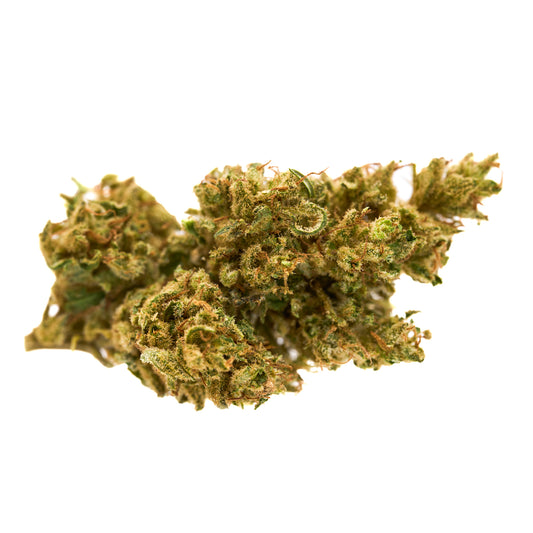
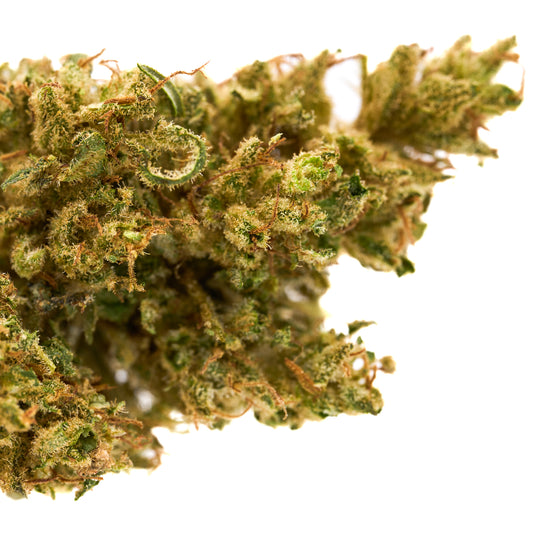
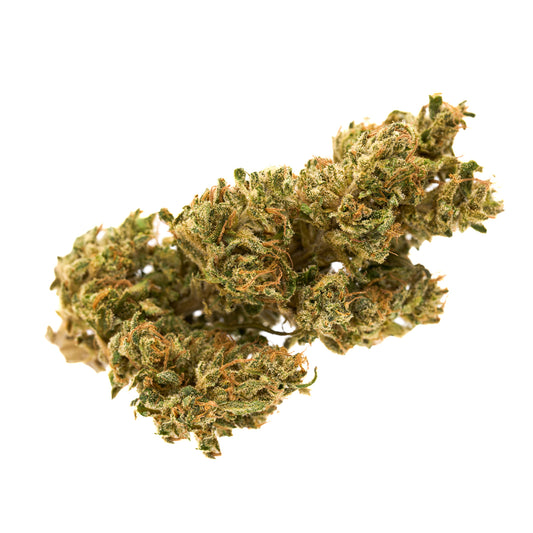
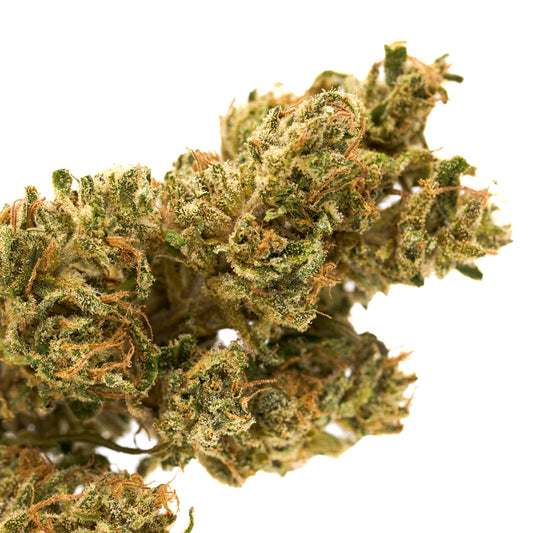
Q: How do I know if a supplier's trim is high quality before buying? Request a COA with a recent test date, look for THCA above 10% and total terpenes above 1%, ask about the source strain and its base potency, and request photos of the trim. Quality trim looks frosty, has visible trichomes, and smells distinctly of the source strain. Fan-leaf-heavy trim looks flat and green with little visible crystal coverage.
Q: Is trim worth buying for a smoke shop? It depends on your use case. Trim is generally not suitable for display and direct sale as a flower substitute — the visual presentation and potency don't support retail price points. However, trim is well-suited as an input for house-brand infused pre-rolls, where it can be combined with kief or concentrate coatings to produce a compelling finished product at strong margins.
Q: How should I store THCA trim to preserve potency? Store trim in airtight, light-resistant containers (mylar bags or sealed jars) in a cool, dark location — ideally between 60–70°F with low humidity (55–62% RH). Avoid stacking heavy weight on trim, which can compress and degrade the trichomes. Under proper storage conditions, trim retains most of its potency for 6–12 months.
Finding the Right THCA Trim for Your Needs
Given everything above, the purchasing decision comes down to matching product grade to intended use. Here's a quick framework:
For direct smoking or budget pre-rolls: Target sugar-leaf-dominant trim testing 12%+ THCA, sourced from known high-potency strains, with a COA dated within 90 days. Don't accept fan-leaf-heavy trim at these price points — the value proposition disappears when your customers notice weak effects.
For infused pre-roll production: Mixed trim at 8–14% THCA can work well here, especially if you're applying a kief or concentrate coating that elevates the final product's potency. The base trim cost stays low, and the infusion does the heavy lifting on the experience side.
For solventless extraction (rosin): Sugar-trim at 14%+ THCA from indoor or greenhouse-grown material is your target. Higher starting potency and trichome quality translate directly into yield and rosin quality. Don't press fan-leaf trim — it clogs screens and yields poorly.
For solvent-based extraction: You have more flexibility here. Ethanol or hydrocarbon extraction can process mixed trim at 8–12% THCA efficiently, especially at high volumes where the cost-per-pound advantage of trim over flower is most significant.
Conclusion: THCA Trim Is a Value Play — With the Right Sourcing
THCA trim potency is real, but it's highly variable, and the range between the best and worst trim products is wider than in any other hemp product category. The best sugar-leaf trim from premium indoor genetics can genuinely approach the lower end of flower potency and deliver a satisfying experience for both end consumers and extractors. The worst fan-leaf trim barely justifies the cost of processing.
Your job as a wholesale buyer is to use the COA, your supplier relationships, and the framework laid out in this guide to filter out underperforming material and find trim that punches above its weight. Ask the right questions: What's the source strain? What did the flower test at? What's the sugar-to-fan-leaf ratio? When was this tested and how has it been stored?
With realistic expectations and disciplined sourcing, hemp trim vs flower potency gaps become opportunities rather than obstacles. Trim isn't flower — but at the right price, from the right source, it doesn't need to be. It needs to deliver value for its intended application, and the best trim on the market does exactly that.
For wholesale buyers looking to source quality THCA trim at competitive prices, understanding the potency variables covered in this guide is your biggest competitive advantage. The operators who thrive in this market aren't the ones who avoid trim — they're the ones who know how to buy it right.
