




What Farmers Need to Know About the 2026 Federal Hemp Redefinition

If you grow hemp, sell hemp, or process hemp-derived cannabinoids, 2026 is the most consequential year the industry has faced since the 2018 Farm Bill first legalized the crop. Buried inside a government funding package, Section 781 rewrites the federal definition of "hemp" itself — and that single definitional change ripples through cultivation, testing, packaging, and interstate commerce for every farmer in the supply chain.
Here's the short version: on November 12, 2025, Congress passed the Continuing Appropriations, Agriculture, Legislative Branch, Military Construction and Veterans Affairs, and Extensions Act, 2026, and President Trump signed it into law later that night, ending a forty-three-day government shutdown. Tucked inside that bill's agriculture section is Section 781, a provision that rewrites the definition of hemp under the Agricultural Marketing Act of 1946. Mandelbaum Barrett PCMandelbaum Barrett PC
The 2026 hemp ban THCA compliance conversation has dominated industry forums for months, and for good reason. The new definition takes effect November 12, 2026, giving the industry a one-year runway to reformulate products, adjust packaging, and rework supply chains — or convince Congress to change course first. For farmers specifically, this isn't an abstract policy debate. It's a question of whether the crop in your field today will be legally sellable a year from now. Regulatory Oversight
This guide walks through exactly what changed, why THCA is now central to the compliance conversation, what the 0.4mg cap means for finished goods, which cannabinoids are excluded outright, the compliance timeline you need on your calendar, and where pending legislation stands as of mid-2026. If you're planning your next planting cycle, sourcing genetics, or trying to figure out whether your current inventory will still be marketable next fall, this is the federal hemp redefinition breakdown built for growers — not lawyers.
(This article is for general informational purposes and isn't legal advice. Regulations are evolving quickly — consult a cannabis attorney for guidance specific to your operation.)
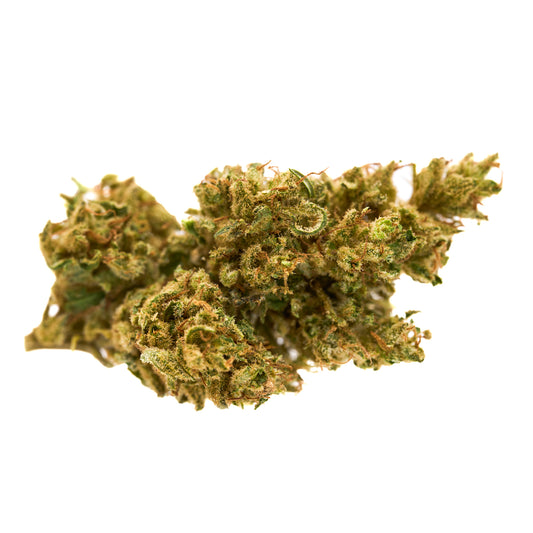
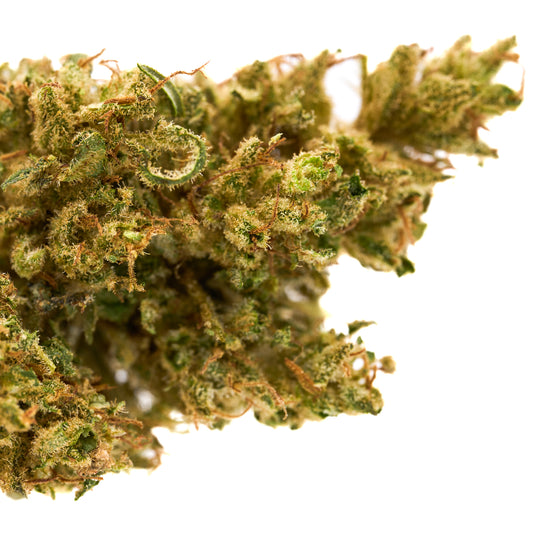
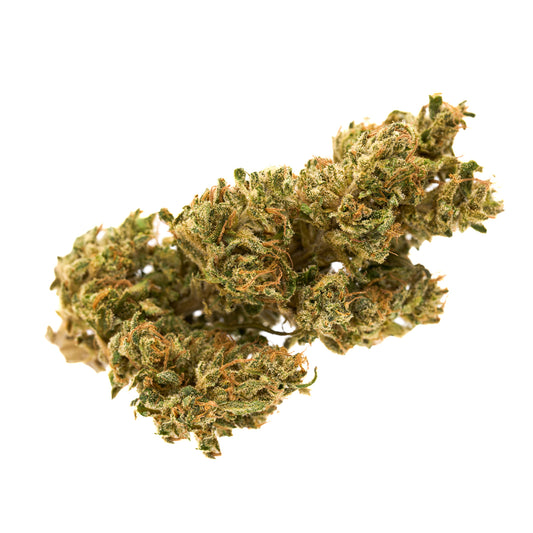
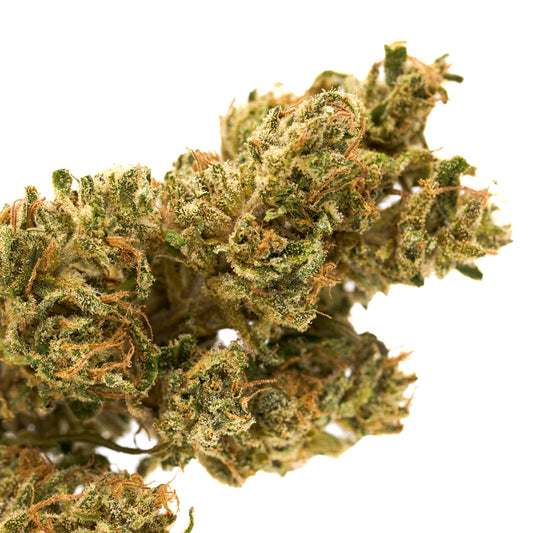
Curious what compliant, high-quality THCA flower looks like under the current rules? Browse our latest THCA releases sourced and tested to today's standards.
The Total THC Standard Explained
For seven years, the hemp industry operated on a single, relatively simple threshold. The 2018 Farm Bill defined hemp as the Cannabis sativa L. plant and any part of it with a delta-9 tetrahydrocannabinol concentration of not more than 0.3 percent on a dry weight basis. That's it. As long as delta-9 THC — the primary intoxicating compound most people associate with marijuana — stayed under 0.3%, the plant qualified as legal hemp no matter what else was in it. Arnold & Porter
That narrow focus on delta-9 alone is exactly what Section 781 eliminates. Under the new law, hemp is redefined as the cannabis plant and its derivatives with a total tetrahydrocannabinols concentration — explicitly including THCA — of not more than 0.3% on a dry weight basis. The total THC vs delta-9 THC distinction is the single most important concept for any grower to understand right now, because it fundamentally changes what "compliant" flower looks like. Harris Sliwoski
Why does this matter so much? Because the old delta-9-only standard is exactly what allowed products high in non-delta-9 cannabinoids — like delta-8, delta-10, and THCA — to legally qualify as hemp, as long as delta-9 concentration stayed below 0.3%. That loophole is what fueled the explosive growth of the THCA flower market over the past several years, since raw THCA itself isn't intoxicating until it's heated (decarboxylated) into delta-9 THC. Under the old rules, a flower could test extremely high in THCA and still be federally compliant, because THCA wasn't part of the calculation. Regulatory Oversight
Section 781 closes that door. Now, total THC definition THCA calculations require labs to account for THCA's potential conversion to delta-9 THC and add that figure to any existing delta-9 THC content. In practical terms, most high-THCA flower that easily passed compliance testing under the 2018 Farm Bill will fail under the new total THC standard, because THCA is no longer exempt from the math.
For growers, this is a genetics and testing problem as much as a legal one. Crops that were bred and cultivated specifically to maximize THCA content — which describes a huge share of the smokable hemp flower market — are the crops most directly affected by this shift. Understanding this THCA regulation update now, well before the effective date, gives you time to plan your next planting cycle, adjust genetics sourcing, or explore product lines that fall within the new limits.

THCA's Inclusion in Potency Calculations — Why It Converts and Why It Counts
To understand the Section 781 THCA impact on your operation, it helps to understand the underlying chemistry, because it explains exactly why regulators decided THCA needed to be folded into the total THC number.
THCA (tetrahydrocannabinolic acid) is the raw, non-intoxicating precursor to THC that naturally occurs in the cannabis plant. In its raw form, THCA does not produce a psychoactive effect. But when exposed to heat — through smoking, vaping, or cooking — THCA undergoes a chemical process called decarboxylation, converting into delta-9 THC, the compound that does produce intoxicating effects.
That means a flower that tests low in delta-9 THC but high in THCA can still get a consumer high the moment it's combusted or heated. Under the 2018 Farm Bill's delta-9-only test, that flower was legally hemp. Once lit, chemically, it behaves like marijuana. Lawmakers and regulators viewed this as a loophole that undermined the entire purpose of the 0.3% threshold, and it's the central rationale behind Section 781's total THC approach.
The new definition of hemp explicitly folds THCA into the total THC calculation, closing what lawmakers have called the "hemp loophole" created by the 2018 Farm Bill. Supporters describe the total THC standard as necessary to prevent unregulated intoxicating hemp products from being sold in gas stations and corner stores, while preserving access to non-intoxicating CBD and industrial hemp. LAPPAFHC
For farmers, the practical takeaway is this: any THCA content in your flower must now be treated as if it were already converted THC for compliance testing purposes. A flower that shows 0.2% delta-9 THC but 18% THCA — a fairly typical profile for premium THCA flower — is nowhere close to compliant under the new total THC math. That's an enormous shift from where the industry stood even a year ago, and it's why genetics selection, cultivation practices, and pre-harvest testing protocols all need to be re-evaluated in light of this THCA regulation update.
Our team continuously monitors compliance standards as they evolve — check the current lineup in our THCA releases collection to see how sourcing has adapted.
The 0.4mg Per-Container Cap — What It Means for Finished Products
If the total THC standard changes how raw flower and biomass get evaluated, the 0.4mg THC cap is where the redefinition hits finished, packaged products the hardest — and it's arguably the most severe provision in the entire law.
Section 781 introduces a strict container-level cap: any final hemp-derived cannabinoid product containing more than 0.4 milligrams per container of total THC, including THCA, and other cannabinoids with similar effects, is excluded from the legal definition of hemp. "Container" is defined as the innermost packaging in direct contact with the final product intended for retail sale — think a jar of flower, a vape cartridge, a tincture bottle, or a bag of pre-rolls. Regulatory OversightShipman
To put 0.4 milligrams in perspective: a typical hemp gummy on shelves today contains somewhere between 2.5 and 10 milligrams of THC — six to twenty-five times over the new limit. This per-container cap sits far below the serving and package limits found in most existing state hemp programs, and it's expected to remove the vast majority of ingestible hemp products — beverages, edibles, tinctures, and many full-spectrum products — from lawful federal commerce unless they're reformulated down to micro-dose levels. FHCRegulatory Oversight
For flower-focused growers and retailers, this cap is a serious complication, since raw or minimally processed THCA flower packaged for retail sale is itself a "final hemp-derived cannabinoid product" under the statute's language, and a single flower jar can easily contain THCA content that converts to far more than 0.4mg of total THC.
Industry estimates make the scale of the impact clear. The U.S. Hemp Roundtable has estimated the amended definition will eliminate approximately 95% of existing hemp-derived cannabinoid products, along with more than 300,000 jobs and $1.5 billion in aggregate state tax revenue. That's not a fringe estimate — it's echoed across multiple industry and legal analyses tracking this issue. Frier Levitt
There is one meaningful carve-out worth understanding: the new definition explicitly includes "industrial hemp," meaning hemp grown for uses like stalk, whole grain, oil, cake, nut, hull, fiber, or non-cannabinoid derivatives, as well as hemp grown for research that doesn't enter commercial markets. If your operation is diversified across fiber, grain, or research-grade production in addition to cannabinoid flower, those product lines face a fundamentally different — and considerably less disruptive — regulatory path. Congress.gov
Explore currently available, compliance-conscious THCA flower options in our new releases collection.
Synthesized Cannabinoid Exclusions — What's Banned vs. What's Still Permitted
Beyond the total THC standard and the container cap, Section 781 draws a hard line around how cannabinoids are produced — and this is where delta-8, delta-10, HHC, and similar compounds land squarely in the excluded category.
Hemp products cannot contain cannabinoids that were synthesized or manufactured outside of the cannabis plant, such as delta-8 THC, or cannabinoids not capable of being naturally produced by the plant, such as HHC. Section 781 explicitly excludes cannabinoids "synthesized or manufactured outside the cannabis plant," effectively banning delta-8, delta-10, HHC, and similar compounds converted from CBD, regardless of their THC concentration. ShipmanFHC
This distinction matters because much of the delta-8 and delta-10 market is produced by chemically converting CBD extracted from hemp into these other cannabinoids — a process that happens in a lab, not naturally within the plant at meaningful concentrations. Under Section 781, that manufacturing process itself disqualifies the resulting compound from the legal definition of hemp, independent of potency.
There's also a category most farmers haven't had to think about before: intermediate materials. The law addresses "intermediate hemp-derived cannabinoid products" — sometimes called work-in-progress or WIP material in the industry — prohibiting those that contain synthesized or non-naturally-occurring cannabinoids, or that exceed 0.3% total THC by dry weight, from being shipped across state lines. This effectively prohibits the interstate shipment of hemp oil, distillates, and isolates that don't meet the total THC threshold, and it's unclear whether the previous workaround of diluting bulk hemp oil in ethanol for transport will remain viable under the new framework. If your operation ships bulk extract, distillate, or crude oil across state lines to processors, this is a provision to flag with your legal counsel immediately. ShipmanShipman
So what's still permitted? A few categories appear to have a clearer path forward:
- Industrial hemp grown for fiber, grain, and non-cannabinoid uses
- CBD isolate products formulated to stay below the 0.4mg total THC per container threshold
- FDA-approved cannabinoid pharmaceuticals, such as Epidiolex
- Hemp grown for research purposes that doesn't enter commercial markets
CBD products and other "known cannabinoids" that don't end up on the FDA's list of substances with "similar effects" to THC should also remain permissible — though those products cannot be added to human or animal food, labeled as dietary supplements, or make unapproved health claims. That last caveat is significant: a huge share of currently marketed hemp-derived CBD food and beverage products already operates in exactly that gray area, and Section 781 doesn't resolve whether federal regulators will continue tolerating it. Harris Sliwoski
One more open question directly affects how these exclusions get enforced: who decides which cannabinoids count as having "similar effects" to THC? That determination falls to the Secretary of Health and Human Services, and within 90 days of enactment the FDA was required to publish lists of cannabinoids naturally produced by the plant, THC-class cannabinoids that occur naturally, and other cannabinoids considered to have similar effects. As you'll see in the timeline section below, that deadline has already come and gone without publication — which adds real uncertainty to how broadly these exclusions will ultimately be interpreted. Harris SliwoskiHarris Sliwoski
See flower sourced from naturally cultivated genetics — not synthesized cannabinoids — in our THCA releases collection.

Timeline & Compliance Deadlines — What Farmers Should Do Now
Here's the compliance calendar every hemp farmer should have marked, along with what's actually happened (and hasn't) at each milestone.
November 12, 2025 — President Trump signed the bill into law, ending a 43-day government shutdown. This is the enactment date, and the clock on every subsequent deadline starts here. Mandelbaum Barrett PC
February 2026 (90 days post-enactment) — The FDA was directed to publish its lists of natural and synthetic cannabinoids and clarify the definition of "container" within 90 days of enactment. That deadline was February 2026, and the FDA missed it. As of May 2026, those lists still had not been published. This missed deadline matters enormously for farmers and processors, because the cannabinoid list is what would clarify exactly which compounds fall under the narrowed definition — without it, plenty of gray area remains around which specific cannabinoids beyond THCA, delta-8, and delta-10 might get swept into the "similar effects" category. Cannabisregulations + 2
November 12, 2026 — This is the hard effective date. The new hemp definition becomes enforceable, and products that don't comply are pushed back into Schedule I controlled substance status under the Controlled Substances Act. Because the CSA excludes "hemp" by cross-referencing the Agricultural Marketing Act's definition, this reclassification happens automatically — there's no separate DEA rulemaking process, no public comment period, and no gradual phase-in beyond the one-year runway already built into the statute. Regulatory OversightRegulatory Oversight
What farmers should do between now and then:
- Get your current inventory tested under the total THC standard, not just delta-9, so you know exactly where your existing crop and product lines stand relative to the 0.3% total THC threshold.
- Review contracts with distributors, processors, and retail partners for provisions tied to hemp's legal definition — force majeure clauses, termination rights, and indemnification provisions could all become relevant if products get reclassified, and prioritizing agreements with the longest terms and largest financial exposure is a reasonable place to start. CannabisregulationsCannabisregulations
- Reassess genetics for future plantings. If your operation depends heavily on high-THCA cultivars for smokable flower, start evaluating what a compliant product line looks like under total THC math — including whether staying under 0.3% total THC while preserving flower quality and market appeal is achievable with your current genetics.
- Monitor state-level responses. The federal redefinition doesn't automatically invalidate state hemp programs — states can continue independently regulating hemp cultivation, processing, and sale — but under the Supremacy Clause, federal law can preempt state law where it allows products prohibited federally, particularly in interstate commerce. Mandelbaum Barrett PC
- Track the FDA's cannabinoid list and "container" definition once published, since it will directly determine compliance obligations for anything beyond the clearly named substances (THCA, delta-8, delta-10, HHC).
- Follow pending legislation closely — because as the next section covers, there's real, active movement in Congress to delay or reshape this timeline.
Ready to work with a supplier actively tracking these deadlines? Browse our current THCA releases.
Delay Legislation Watch — Hemp Planting Predictability Act and HEMP Act Status
The good news, if there is any, is that Section 781 is far from a settled matter in Congress. Multiple bills are actively moving to delay, repeal, or replace it, and farmers should be watching all of them.
Hemp Planting Predictability Act (H.R. 7024). This is currently the highest-profile delay effort. Introduced to amend the Agriculture, Rural Development, Food and Drug Administration, and Related Agencies Appropriations Act, 2026, and delay implementation of the hemp production provision changes, the bill is refreshingly simple in its mechanics: it amends Section 781 by striking "365 days" and inserting "3 years," which would push the effective date from November 2026 to roughly November 2028. Representative Jim Baird (R-IN) introduced the House version on January 13, 2026, and Senators Amy Klobuchar (D-MN), Rand Paul (R-KY), and Jeff Merkley (D-OR) introduced a Senate companion bill, S. 3686, on January 15, 2026. As of late April 2026, the bill had 15 House co-sponsors and public support from the Wine & Spirits Wholesalers of America. The rationale, as Senator Klobuchar put it, is that a one-size-fits-all approach doesn't work for states that already have strong safety standards in place — a direct nod to state programs like Minnesota's that would otherwise be disrupted by the federal timeline. Congress.gov + 5
American Hemp Protection Act of 2025 (H.R. 6209). Introduced by Representative Nancy Mace (R-SC) on November 17, 2025, and co-sponsored by Representatives Massie, Lofgren, and Baird, this bill takes a more aggressive approach: it would strike Section 781 in its entirety, restoring the original 2018 Farm Bill definition. Some industry participants have criticized this approach because it proposes no regulatory framework to replace the repealed provision — meaning it solves the immediate crisis without addressing the underlying concerns that motivated Section 781 in the first place. Frier Levitt + 2
Cannabinoid Safety and Regulation Act (CSRA). Senators Wyden and Merkley, both of Oregon, introduced this 84-page bill in December 2025. Rather than simply repealing Section 781, it would replace the prohibition with a federal regulatory framework establishing THC limits of 5 milligrams per serving and 50 milligrams per container for edibles, a federal minimum purchase age of 21, mandatory third-party testing, standardized packaging and labeling, and restrictions on pesticides and heavy metals — while expressly preserving state authority to impose stricter regulations, including outright prohibitions. This is a meaningfully different approach — regulation rather than pure rollback — and it's worth watching as a template that could shape whatever eventually replaces Section 781. Frier Levitt + 2
HEMP Act. Referenced in industry analysis as a comprehensive regulatory framework bill (the "Griffiths Bill") that could supersede Section 781 entirely, this legislation represents another possible path toward a durable regulatory structure rather than a simple delay or repeal. Vicente LLP
Farm, Food, and National Security Act of 2026 (H.R. 7567). House Agriculture Committee Chairman Glenn Thompson (R-PA) filed an 802-page draft of this bill in February 2026, and as passed in the House, it would amend the testing standard to total THC rather than delta-9 THC and require state and federal hemp production plans to further differentiate between industrial hemp and hemp grown for cannabinoid purposes — potentially creating separate testing and licensing tracks for industrial versus cannabinoid-focused growers. Vicente LLPCongress.gov
Where things stand. None of these reform bills have passed as of the most recent tracking, and the same fast-moving appropriations process that quietly enacted the ban in the first place could, in theory, just as quickly amend or repeal it, since appropriations bills require a different — and often lower — vote threshold than standalone legislation. In tandem with the April 2026 medical marijuana rescheduling, the Executive Branch has signaled a desire for Congress to amend the hemp language to preserve CBD access, which offers at least some indication that a full, unmitigated ban isn't the only likely outcome. Frier Levitt + 2
For farmers, the practical guidance here is: don't plan your entire operation around any single bill passing. Several credible paths exist — outright repeal, a multi-year delay, or a new regulatory framework — but as of mid-2026, Section 781 remains enacted law with a fixed November 12, 2026 effective date, and that's the reality to plan around until something changes.
Frequently Asked Questions
What is Section 781?
Section 781 is a provision within the Continuing Appropriations, Agriculture, Legislative Branch, Military Construction and Veterans Affairs, and Extensions Act, 2026, signed into law on November 12, 2025. It rewrites the federal definition of "hemp" under the Agricultural Marketing Act of 1946, shifting from a delta-9-only THC standard to a total THC standard (inclusive of THCA), adding a 0.4mg total THC per-container cap for finished products, and excluding cannabinoids synthesized outside the plant, such as delta-8 THC and HHC.
When does the hemp ban take effect?
The new definition becomes enforceable on November 12, 2026 — one year after enactment. There's no phased rollout; the change happens automatically because the Controlled Substances Act references the Agricultural Marketing Act's definition of hemp.
Will THCA still be legal after 2026?
Under Section 781 as currently written, THCA content is folded into the total THC calculation. Flower or products where combined THCA and delta-9 THC exceed 0.3% on a dry weight basis (for raw material) or 0.4mg per container (for finished products) will no longer meet the legal definition of hemp after November 12, 2026, unless legislation changes this before then. Several bills currently in Congress could delay, repeal, or reshape this outcome, so the situation remains fluid.
Does this affect CBD products too?
Potentially, yes. The 0.4mg per-container cap applies to any hemp-derived cannabinoid product, not just THCA or delta-8 products. Industry estimates suggest a large share of current CBD formulations — including many wellness products — exceed that threshold and would need reformulation to remain compliant.
Is there anything farmers can do right now?
Yes. Get current inventory tested under the total THC standard, review contracts for hemp-definition-dependent clauses, evaluate genetics for future plantings, monitor your state's regulatory response, and track both the FDA's still-overdue cannabinoid list and the status of pending congressional bills like the Hemp Planting Predictability Act.
Stay Ahead of the Curve
Regulatory change in the hemp industry moves fast, and farmers who plan ahead — rather than reacting after the fact — are the ones who come out the other side of a transition like this with their operations intact. Keep testing your crops against the total THC standard, keep an eye on Congress, and keep your genetics and product strategy flexible.
Want to see how compliance-conscious sourcing looks in practice? Explore our continually updated new THCA releases collection — and check back often as this regulatory picture develops.
