



What the Latest 2026 CBD Studies Say About Anxiety Relief

Every morning, somewhere between their second cup of coffee and the first ping of work emails, millions of Americans quietly reach for a CBD tincture, a hemp gummy, or a pre-roll — hoping it takes the edge off. No prescription required. No appointment necessary. Just a product they read about online, picked up at the local dispensary or wellness shop, and started using because a friend swore it helped them sleep, breathe easier, or just feel like themselves again.
The numbers are staggering. According to recent consumer surveys, an estimated one in four American adults has tried CBD for anxiety at least once — and a growing portion use it daily. But for years, there's been an uncomfortable gap between what millions of people report experiencing and what peer-reviewed science could actually confirm. Anecdotes are compelling. Clinical data, especially randomized controlled trial data, is another thing entirely.
That gap is narrowing in 2026 — faster than many researchers expected.
This year represents something of an inflection point in CBD anxiety research. Larger double-blind trials are publishing results. Neuroimaging studies are showing measurable changes in the brain's fear-processing centers. Cortisol data is giving us a clearer biological picture of how cannabidiol anxiety mechanisms actually work at the hormonal level. And for the first time, we're seeing enough studies with enough participants to start identifying reliable dosing patterns and delivery method differences.
The thesis here is straightforward: the science is finally catching up to the consumer behavior — and what it's saying is more nuanced, more actionable, and frankly more interesting than the simple "CBD cures anxiety" claims that have floated around wellness circles for the past decade.
Let's dig into what the latest research actually shows, what it still can't tell us, and how everyday hemp users can make smarter decisions based on where the evidence stands today.
Why Anxiety Is One of the Most-Studied CBD Applications
To understand why 2026 is such a pivotal year for CBD research anxiety relief, it helps to understand the sheer scale of the problem researchers are trying to solve.
Anxiety disorders are the most common mental health condition in the United States, affecting more than 40 million adults — roughly 18% of the population — in any given year. That includes generalized anxiety disorder (GAD), social anxiety disorder, panic disorder, post-traumatic stress disorder, and a cluster of specific phobias. Combined, these conditions cost the U.S. economy an estimated $1 trillion annually in lost productivity, healthcare costs, and disability claims.
That demand — both from patients looking for alternatives and researchers looking to solve a massive public health problem — is exactly why CBD anxiety study literature has exploded over the past decade.
The research timeline looks roughly like this:
Early 2010s: Animal models dominate. Preclinical studies show CBD reduces anxiety-like behavior in rodents in elevated plus-maze and forced swim tests. Researchers begin identifying the CBD serotonin receptor connection — specifically the 5-HT1A receptor, a serotonin receptor subtype that plays a central role in mood regulation, fear response, and stress adaptation.
2014–2019: Human case studies and small open-label trials emerge. Researchers at the New York University School of Medicine publish early data on CBD's effects on social anxiety. A landmark 2019 Brazilian study shows CBD at 300mg significantly reduces anxiety in simulated public speaking tests.
2020–2023: Larger placebo-controlled trials begin. COVID-19 paradoxically accelerates this research — anxiety rates surge, funding follows, and CBD becomes a priority candidate for adjunct mental health treatment.
2024–2026: Double-blind, randomized controlled trials publish at scale. Neuroimaging becomes a standard research tool. Long-term follow-up studies begin filling the durability gap. We're here now — and the data is getting good.
What makes CBD biologically plausible for anxiety in the first place? Three primary mechanisms drive the scientific interest:
Serotonin receptor activity. CBD acts as a partial agonist at 5-HT1A receptors — the same receptor targets that SSRIs like Zoloft and Lexapro indirectly modulate. This gives it a pharmacological profile that overlaps with existing anxiety medications, without binding to serotonin transporters the way SSRIs do.
GABA modulation. GABA CBD interaction research suggests CBD enhances the activity of GABA-A receptors — the primary inhibitory receptors in the central nervous system. This is the same system targeted by benzodiazepines like Xanax, though CBD's interaction is far gentler and does not appear to carry the same dependency or sedation risk.
Cortisol reduction. CBD has demonstrated a measurable ability to blunt the hypothalamic-pituitary-adrenal (HPA) axis response — the stress cascade that dumps cortisol into your bloodstream when you're under pressure. CBD reduce cortisol studies are among the most consistent in the literature.
It's worth noting: the FDA has not approved CBD for anxiety disorders. The only FDA-approved CBD medication is Epidiolex, indicated for specific seizure disorders. But the regulatory landscape and the research landscape are two different things — and the science is accelerating regardless of where the FDA currently stands.

Key 2026 Findings on CBD and Anxiety Relief
The headline finding from the most recent wave of CBD anxiety study literature is this: CBD demonstrates consistent, statistically significant reductions in subjective anxiety measures across multiple trial designs, population types, and anxiety subtypes — with a particularly strong signal in acute stress scenarios and social anxiety contexts.
Here are the key research threads shaping the 2026 picture:
Neuroimaging: The Amygdala Connection
One of the most compelling advances in recent CBD research has come from functional MRI (fMRI) studies examining how CBD affects the brain's fear-processing circuitry. The amygdala — the almond-shaped structure deep in the temporal lobe — is ground zero for fear and anxiety responses. In people with anxiety disorders, the amygdala tends to be hyperreactive, firing disproportionately in response to perceived threats.
Recent neuroimaging research has shown that CBD measurably reduces amygdala activation in response to threat stimuli. In trials where participants viewed threatening facial expressions or stress-inducing imagery, those who received CBD showed significantly blunted amygdala responses compared to placebo groups. This isn't just participants reporting feeling less anxious — it's a measurable change in the brain's fear-processing architecture, visible on a scanner.
This research is important because it establishes a direct neurological mechanism — not just self-reported outcomes — connecting does CBD help anxiety to actual brain-level activity changes.
Cortisol Studies: The Stress Hormone Data
The CBD reduce cortisol data has become one of the stronger threads in the 2026 literature. Multiple studies now show that CBD supplementation — particularly at moderate-to-high doses (150–300mg) — measurably blunts cortisol output in response to acute psychosocial stressors.
In one frequently cited design, participants undergo the Trier Social Stress Test (TSST) — a standardized laboratory stressor involving a mock job interview and mental arithmetic in front of evaluators — while either taking CBD or a placebo. CBD groups consistently show attenuated cortisol spikes, faster cortisol recovery after the stressor ends, and lower subjective anxiety ratings on validated scales like the State-Trait Anxiety Inventory (STAI).
For everyday users, this matters because cortisol dysregulation is at the root of many chronic anxiety patterns. Chronically elevated cortisol contributes to sleep disruption, digestive issues, immune suppression, and the kind of persistent low-grade tension that many people describe as "always being on edge." Blunting that response — even modestly — has compounding benefits.
Dosage Range Findings
This is where things get genuinely complicated — and where 2026 research is doing some of its most important work.
Clinical studies examining CBD dosage for anxiety have consistently found effective dose ranges in the 150–600mg-per-day window. That's a wide range with significant variability between individuals, and it's substantially higher than what most consumer products deliver.
The most commonly cited clinical threshold for statistically significant anxiety reduction sits around 300mg in single-dose, acute-stress studies. Some research suggests an inverted U-curve — meaning moderate doses outperform both very low doses and very high doses — though this finding isn't uniform across all studies.
For context: a typical 1,500mg CBD tincture bottle, used at one dropper per day, delivers roughly 50mg per dose. Most CBD gummies contain 10–25mg. The gap between clinical dosing and consumer dosing is real, and it's something the research community is actively wrestling with. One emerging hypothesis is that inhaled CBD — via hemp flower for anxiety or pre-rolls — may achieve therapeutic blood plasma levels more efficiently than oral routes, making lower total milligram amounts more clinically meaningful.
Limitations: What the Research Still Can't Tell Us
Honesty matters here. The 2026 literature is more robust than anything we had in 2020 or 2022, but it still has real limitations:
- Most trials are still relatively short-term (4–12 weeks). Long-term efficacy and safety data — particularly for daily use over 12+ months — remains sparse.
- Population diversity in trials has improved but still skews toward younger, healthier adults without complex comorbidities.
- Standardization of CBD products used in trials varies, making direct cross-study comparisons difficult.
- Interaction effects with other medications, supplements, or substances are understudied.
The trajectory is positive. But consumers and researchers alike should approach the current evidence with calibrated enthusiasm — not unbridled hype.
Full Spectrum CBD vs. Isolate for Anxiety — What the Research Prefers
One of the more practically important debates in CBD for anxiety 2026 research centers on whether full spectrum CBD anxiety products outperform CBD isolate — and increasingly, the evidence leans toward the entourage effect being real and therapeutically meaningful.
The entourage effect refers to the synergistic interaction between cannabidiol and the hundreds of other compounds found in whole-plant hemp — including minor cannabinoids like CBG, CBN, and CBC, as well as terpenes, flavonoids, and fatty acids. The theory holds that these compounds working together produce effects that are greater than isolated CBD alone.
Terpene research has become a particularly active area in this space. Several terpenes found in high-CBD hemp strains have demonstrated independent anxiolytic properties in preclinical and early clinical research:
Linalool — the terpene associated with lavender — has been shown to interact with GABA-A receptors, potentially amplifying CBD's calming effect on the inhibitory nervous system.
Beta-caryophyllene — found in black pepper, cloves, and many hemp strains — is unique among terpenes for its ability to bind directly to CB2 cannabinoid receptors, potentially contributing to anti-inflammatory and anxiolytic effects.
Myrcene — the most abundant terpene in most hemp varieties — has demonstrated mild sedative and muscle-relaxing properties in animal models, and may synergize with CBD's calming effects.
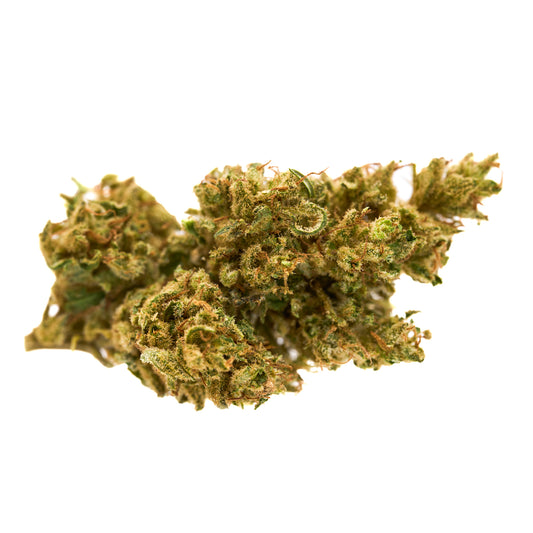
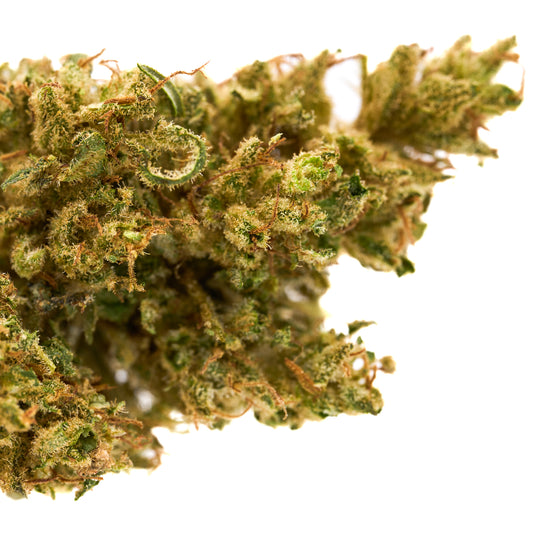
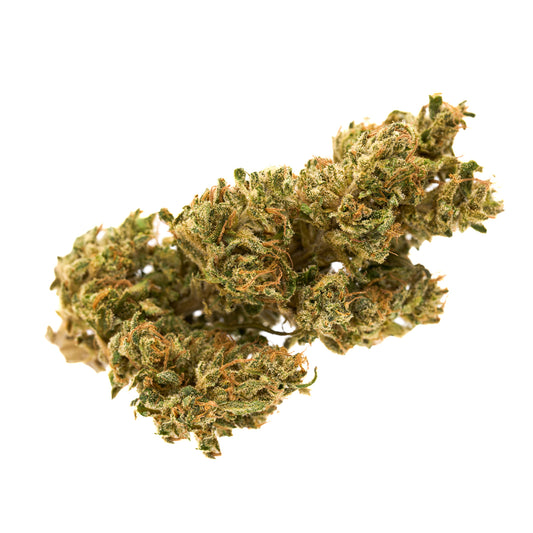
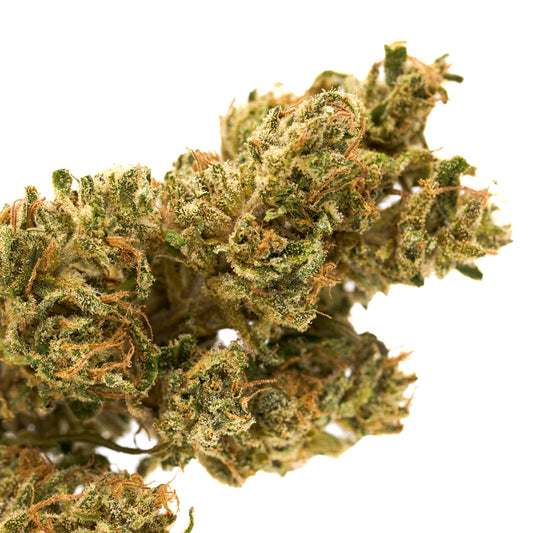
The practical implication: if you're using CBD without THC anxiety products and finding isolate tinctures or pure CBD capsules underwhelming, the terpene-rich profile of full spectrum CBD anxiety hemp flower may deliver a more nuanced, layered calming effect. Whole-plant products preserve these compounds in their natural ratios — something isolates and broad-spectrum distillates can't fully replicate.
The 2026 research trend is clear: for anxiety specifically, whole-plant hemp CBD calming products appear to outperform isolate in head-to-head comparisons, even when total CBD content is held constant.

What Delivery Method Works Best for Anxiety?
Not all CBD is created equal — and the delivery method you choose has a dramatic impact on how quickly, how completely, and for how long the CBD calming effects kick in. Here's what the bioavailability data says:
Inhaled Hemp Flower: Fastest Onset, Highest Bioavailability
Smoking or vaporizing hemp flower for anxiety delivers CBD directly into the bloodstream through the lungs, bypassing the digestive system entirely. Onset is near-immediate — typically within 2–5 minutes — and bioavailability in inhaled form ranges from roughly 11–45% (some studies cite up to 56% under optimized conditions). This compares favorably to oral bioavailability, which typically falls between 6–19%.
For acute anxiety episodes — a meeting that went sideways, a panic attack building, a social situation that feels overwhelming — inhaled CBD from whole-plant hemp flower is the most pharmacologically responsive option available without a prescription.
Sublingual CBD Oil: Fast and Predictable
Sublingual tinctures — oil held under the tongue for 60–90 seconds before swallowing — achieve meaningful onset within 15–30 minutes by absorbing partially through the sublingual mucosa before the remainder passes through digestion. Bioavailability is better than swallowed capsules but lower than inhaled CBD.
This is a popular choice for users who want faster onset than edibles without the act of smoking or vaping.
Edibles and Capsules: Slow and Steady
Oral CBD products take the scenic route — absorbed through the gastrointestinal tract, processed by the liver (where first-pass metabolism significantly reduces the active dose), and delivered into systemic circulation 45–90 minutes after ingestion. Bioavailability is lowest in this category.
The advantage? Duration. Oral CBD tends to produce longer-lasting, more sustained effects — making capsules and edibles a better fit for generalized anxiety disorder CBD management, where the goal is baseline stress reduction throughout the day rather than rapid-response relief.
Matching Delivery Method to Anxiety Type
- Acute anxiety / panic: Inhaled hemp flower or sublingual oil
- Social anxiety before events: Sublingual oil taken 30 minutes prior; hemp flower for immediate top-up
- Generalized/daily anxiety management: Capsules or edibles for sustained release; hemp flower as needed
- Sleep-related anxiety: Capsules or edibles taken 60–90 minutes before bed
Explore Oregon Hemp Flower's full collection for high-quality, lab-tested options across all these use cases.
How Does CBD Compare to Conventional Anxiety Treatments?
Any honest conversation about CBD vs anxiety medication has to resist two temptations: overstating CBD's efficacy and dismissing it as irrelevant next to pharmaceuticals. The truth sits somewhere more nuanced.
SSRIs: Zoloft, Lexapro, Prozac
Selective serotonin reuptake inhibitors are the first-line pharmacological treatment for most anxiety disorders. They work by blocking the reabsorption of serotonin in the brain, increasing serotonin availability at synapses. They're effective — but they're not perfect. SSRIs typically take 4–6 weeks to reach therapeutic effect, carry side effects including sexual dysfunction, weight changes, and emotional blunting, and require careful titration under physician supervision. Discontinuation syndrome is a real concern.
CBD interacts with the same CBD serotonin receptor systems through a different mechanism and timeline — providing faster-acting, lighter-touch modulation without the same side effect burden. It is not a replacement for SSRIs in clinically diagnosed anxiety disorders — but for subclinical stress, mild anxiety, or as an adjunct to ongoing treatment, the evidence increasingly supports its role.
Benzodiazepines: Xanax, Valium, Klonopin
Benzos work fast and work well for acute anxiety — but at significant cost. They carry a high dependency and abuse potential, produce tolerance rapidly, impair cognition and motor function, and can cause dangerous withdrawal. The GABA CBD interaction data is interesting precisely because CBD appears to modulate similar receptor systems without triggering tolerance or dependency in clinical studies — a potential advantage in long-term management.
Therapy: CBT and Other Evidence-Based Approaches
Cognitive behavioral therapy remains the gold-standard non-pharmacological intervention for anxiety disorders, with strong long-term outcome data. CBD doesn't replace therapy — but some researchers are exploring whether CBD's ability to reduce fear-conditioned responses might actually enhance the effectiveness of exposure therapy by making patients more receptive to habituation protocols. This is an active research area.
The Bottom Line on CBD Advantages
CBD vs anxiety medication comparisons generally highlight the same set of advantages: no dependency risk at therapeutic doses, mild and manageable side effect profile (primarily drowsiness and dry mouth at higher doses), no prescription required, accessible across most U.S. states, and a growing evidence base.
The clear limitation: CBD is not appropriate as a standalone treatment for diagnosed anxiety disorders — particularly severe GAD, panic disorder, or PTSD. These conditions require professional diagnosis, evidence-based treatment, and ongoing clinical monitoring. CBD may play a meaningful supportive role — but always consult a physician before altering or replacing prescribed anxiety medication.
What CBD Dosage Do Studies Recommend for Anxiety?
The CBD dosage for anxiety question is one of the most common search queries in the cannabis wellness space — and honestly one of the hardest to answer definitively, because individual response varies significantly based on body weight, metabolism, endocannabinoid tone, and the delivery method used.
Here's how the clinical and practical data breaks down:
Low Dose: 10–25mg Per Day
For mild everyday stress, this range is where most consumer-facing products sit. Some users respond well here, particularly those using high-bioavailability delivery methods (inhaled or sublingual). Clinical trials have generally found this range insufficient for diagnosable anxiety disorders but potentially useful for subclinical stress management.
Moderate Dose: 25–75mg Per Day
The sweet spot for many daily users combining oil tinctures or capsules with occasional hemp flower. This range shows meaningful effects in some anxiety study designs, particularly for social anxiety CBD outcomes and pre-event acute stress.
High Dose: 150mg+ Per Day
The range where most clinical trial efficacy data lives. Doses in the 150–600mg range consistently outperform placebo in double-blind trials for generalized anxiety, social anxiety, and acute stress response. For most consumers, reaching these doses economically and safely requires either pharmaceutical-grade tinctures or regular use of whole-flower products with high bioavailability.
The Microdosing Trend
An emerging — if still underresearched — approach to CBD dosage for anxiety is microdosing: taking small, sub-perceptual amounts (5–15mg) multiple times per day rather than single large doses. The theory is that consistent low-level endocannabinoid support keeps the system primed without producing pronounced effects in either direction. Early anecdotal reports are interesting, and some researchers are beginning to design trials around this approach.
The Universal Starting Advice
Start low. Titrate slowly. Give any dose change at least one week before assessing. Track your response. Use whole-plant hemp CBD calming products when possible for the entourage effect. And if you're managing a diagnosed anxiety condition, run your dosing decisions by a healthcare provider — especially if you're also taking other medications.
Frequently Asked Questions
Does CBD help with anxiety immediately?
Onset depends heavily on delivery method. Inhaled hemp flower for anxiety works within 2–5 minutes — the fastest non-prescription option available. Sublingual CBD oil reaches meaningful effect in 15–30 minutes. Edibles and capsules take 45–90 minutes. So yes, CBD calming effects can be felt quickly — but "immediately" depends on how you're using it.
Is CBD better than melatonin for stress?
They address different things. Melatonin is a sleep-onset hormone that helps regulate circadian rhythm — it doesn't directly address anxiety, just the sleep disruption that often accompanies it. CBD for anxiety 2026 research targets the anxiety and stress response directly through serotonin receptor and cortisol mechanisms. Many users combine both: CBD for stress reduction and melatonin for sleep onset. They work on different systems and can be complementary.
Will CBD make me feel high if I use it for anxiety?
No — not if you're using CBD without THC anxiety products, or hemp-derived full spectrum CBD with legally compliant THC levels (under 0.3% delta-9 THC on a dry weight basis). CBD is non-intoxicating. The psychoactive effects associated with cannabis come from THC, not CBD. At normal consumer doses, CBD produces calm and mild relaxation — not intoxication.
How long does it take CBD to work for anxiety?
For acute effects: minutes to 90 minutes depending on delivery method. For cumulative, sustained effects on generalized anxiety disorder CBD patterns: most clinical evidence suggests 2–4 weeks of consistent daily use before users and researchers see meaningful baseline changes in anxiety scores. Think of it less like a pill and more like a supplement — regular use builds the most durable results.
Can I take CBD with my anxiety medication?
This is a question for your prescribing physician, not a blog post. What the research does indicate is that CBD is metabolized through the CYP450 liver enzyme pathway — the same pathway used by many psychiatric medications, including some SSRIs and benzodiazepines. This means potential drug interactions are possible, and any CBD use alongside prescribed anxiety medication should be disclosed to and approved by your doctor.
Shop Full Spectrum CBD Hemp Flower for Natural Anxiety Support
The science of 2026 is telling us something important: cannabidiol anxiety research has crossed a meaningful threshold. We're past the era of "maybe it helps." We're into the era of how, how much, and for whom — and the answers are increasingly practical for everyday users.
What the evidence consistently supports: whole-plant, full spectrum CBD anxiety products outperform isolates. Bioavailability matters enormously — inhaled hemp flower delivers CBD into your system faster and more completely than most other formats. Consistent daily use outperforms intermittent dosing for baseline anxiety management. And the GABA CBD interaction and CBD serotonin receptor data give us real biological reasons to take this plant seriously.
If you're looking for clean, lab-tested, terpene-rich hemp flower to support your anxiety management routine — sourced from farms that prioritize cannabinoid profiles and third-party testing — explore the full collection at Oregon Hemp Flower.
Whether you're new to hemp flower for anxiety or a longtime user who wants to optimize their approach based on the latest research, there's a strain, format, and dose level that fits where you are. The science is pointing the way — and it's more encouraging than ever.
