




2026 Farm Bill Hemp Changes: A Complete Breakdown

The hemp industry has operated under the same basic rulebook since 2018: if a plant tested under 0.3% delta-9 THC by dry weight, it was legal hemp, full stop. That loophole is what allowed THCA flower, high-potency vapes, and delta-9 gummies to exist as a federally legal product category in the first place.
That rulebook is being rewritten. The 2026 farm bill hemp changes — enacted through Section 781 of the Continuing Appropriations and Extensions Act, 2026 — represent the most significant shift in federal hemp regulation since the original 2018 Farm Bill legalized hemp nationwide. Instead of measuring only delta-9 THC, the law moves to a "total THC" standard that folds in THCA and other cannabinoids, adds a strict milligram cap on finished products, and draws a hard line around synthetic cannabinoids.
If your business touches THCA flower, concentrates, vapes, or infused edibles, this farm bill hemp update isn't a background policy story — it's an operational deadline. Below is a complete breakdown of what's changing, when it takes effect, how the farm bill THC definition actually works, and what it means for the future of the industry.
Timeline: What Changes and When
Understanding the new hemp laws 2026 starts with the calendar, because timing is the single most consequential detail in this entire story.
November 12, 2025 — President Trump signed the Continuing Appropriations, Agriculture, Legislative Branch, Military Construction and Veterans Affairs, and Extensions Act, 2026 (Public Law 119-37) into law. Buried inside Division B of that appropriations package was Section 781, which amends the underlying hemp definition first established in the 2018 Farm Bill (7 U.S.C. §1639o).
November 12, 2026 — This is the statutory effective date, set exactly 365 days after enactment. Unless Congress intervenes before this date, the new total THC standard and the 0.4 mg per-container cap on finished hemp-derived cannabinoid products become federal law. Industry groups, including the U.S. Hemp Roundtable, have estimated that roughly 95% of hemp-derived cannabinoid products currently on shelves would fall outside the legal definition of hemp the moment this takes effect.
What could change that date. Several bills are actively moving through Congress, and none has passed as of this writing:
- The Hemp Planting Predictability Act (H.R. 7024), introduced by Rep. Jim Baird in January 2026, would push the effective date back two years, to November 2028. A Senate companion, S. 3686, has bipartisan sponsorship.
- The American Hemp Protection Act of 2025 would strike Section 781 entirely, reverting the hemp definition back to the original 2018 delta-9-only standard.
- H.R. 9830, introduced by Rep. Andy Barr in July 2026, would repeal Section 781 outright and replace it with a 1% total THC threshold — a far more permissive standard than the 0.3% currently on the books.
- A broader regulatory framework bill would replace the Section 781 prohibition with federal serving and container limits (5 mg per serving, 50 mg per container for edibles) alongside mandatory testing, labeling, and a 21+ purchase age, while preserving states' ability to regulate more strictly.
- In early August 2026, the Senate passed a continuing resolution that would push the deadline for naturally-derived hemp THC products to December 11, 2026 — but the House passed a different stopgap without that provision, so the chambers still need to reconcile the two before anything changes in law.
The practical takeaway: as of today, November 12, 2026 remains the operative deadline. Businesses that wait for a legislative rescue before adjusting formulations, testing protocols, or SKUs are taking on real compliance risk.
The New Total THC Definition
The centerpiece of the farm bill THC definition change is a shift from measuring one cannabinoid to measuring a combined total.
The old standard (2018–2026): Hemp was legal if it contained no more than 0.3% delta-9 THC on a dry weight basis. Nothing else counted. That's the loophole that let THCA — which converts to intoxicating THC when heated — exist in flower and concentrates at levels far above what anyone would consider "non-intoxicating," because THCA itself wasn't part of the measurement.
The new standard (effective November 12, 2026): Hemp is redefined as cannabis with a total THC concentration — explicitly including THCA — of no more than 0.3% on a dry weight basis. Industry testing labs and USDA hemp production rules generally calculate this using the formula:
Total THC = Delta-9 THC + (0.877 × THCA)
That conversion factor accounts for the fact that not all THCA converts to active THC, but the practical effect is dramatic. A THCA flower product testing at 20–25% THCA — well within what's sold today as "hemp flower" — calculates out to roughly 17–22% total THC once the formula is applied. That's dozens of times over the legal threshold. Under the new definition, that product simply isn't hemp anymore; it's legally indistinguishable from marijuana at the federal level.
The per-container cap. Beyond the plant-level definition, Section 781 adds a second, separate restriction for finished consumable products: no more than 0.4 milligrams of total THC per container. This applies on top of the 0.3% dry weight rule and is aimed squarely at gummies, beverages, tinctures, and other infused products that have used the old delta-9-only math to pack in meaningful doses while staying "compliant." A 0.4 mg cap is a small fraction of what a typical delta-9 edible on the market today contains, meaning the entire finished-product category built around the old rules needs reformulation, not just relabeling.
What this means practically. Products affected by the shift in the 2026 farm bill hemp changes include:
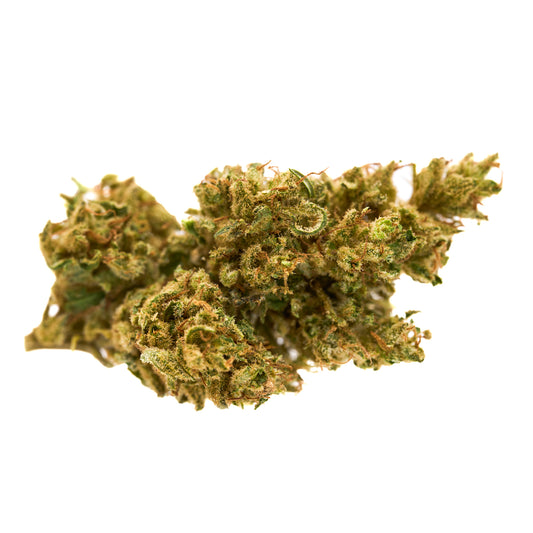
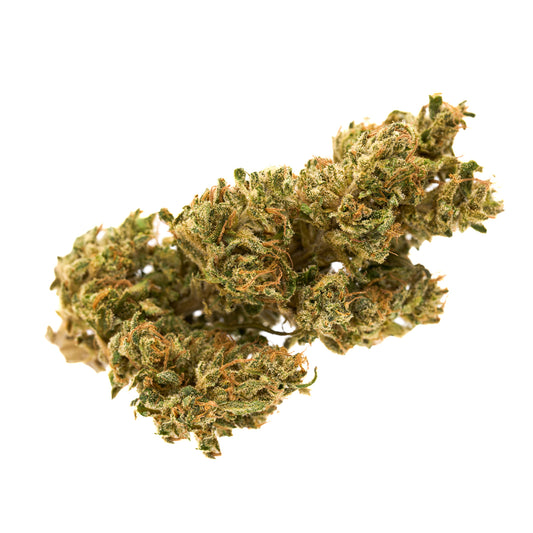
- High-THCA flower and pre-rolls
- THCA diamonds, live resin, and other high-potency concentrates
- Delta-9 THC gummies and beverages formulated to the old milligram thresholds
- Any product where THCA, rather than delta-9, was doing the heavy lifting to stay under 0.3%
Products with genuinely low total cannabinoid content — CBD isolate, broad-spectrum CBD with no meaningful THCA, and true full-spectrum hemp with trace-only cannabinoid profiles — are far more likely to remain compliant, since they were never relying on the loophole in the first place.

Synthesized Cannabinoid Exclusions
The second major pillar of this hemp industry regulation update deals with where cannabinoids come from, not just how much of them a product contains.
Section 781 explicitly excludes synthetic and non-naturally-occurring cannabinoids from the federal definition of hemp. That's a direct response to years of FDA warning letters and consumer safety alerts around products like delta-8 THC, THC-O, HHC, and other lab-converted cannabinoids that technically derived from CBD but weren't naturally occurring in the plant at meaningful concentrations. Regulators had already flagged these as a "farm bill loophole" — low delta-9 on paper, intoxicating in practice, and in some cases sold in packaging that looked indistinguishable from candy and snack foods.
Under the new law, this exclusion happens regardless of what else changes. Even the pending bills aimed at softening or delaying the total THC standard generally don't touch the synthetic cannabinoid exclusion — it has bipartisan support and stems from a genuine consumer safety problem, not just a regulatory technicality. If your product line includes delta-8, HHC, THC-O, or other converted or isomerized cannabinoids, this exclusion applies to you on November 12, 2026 independent of whatever happens with the total THC deadline.
The FDA's role. The law directs the FDA to publish three specific lists:
- Cannabinoids that occur naturally in the cannabis plant
- Cannabinoids classified in the THC class
- Cannabinoids the FDA determines produce similar intoxicating effects to THC, even if chemically distinct
These lists will ultimately determine which specific compounds survive as legal hemp derivatives and which don't — a level of regulatory specificity the hemp market has never had before. Businesses building 2026–2027 product roadmaps should expect these FDA determinations to shape formulation decisions well beyond the November deadline itself.
Why this matters beyond compliance. The synthetic cannabinoid exclusion is arguably where the new hemp laws 2026 and public health policy overlap most directly. Congressional research pointed to documented adverse event reports, including cases involving children, tied to synthetic and semi-synthetic cannabinoid products sold with minimal oversight. Brands that get ahead of this — moving toward naturally-derived, lab-verified formulations now — aren't just reducing legal exposure; they're positioning themselves against a wave of consumer and media scrutiny that's already building around synthetic cannabinoids.

State-Level Compliance Requirements
Federal law sets a floor, not a ceiling — and that gap is where the 2026 farm bill hemp changes get genuinely complicated for multi-state operators.
Section 781 changes what "hemp" means under federal law, but it doesn't override individual state hemp statutes. States retain the authority to regulate more strictly than the federal government, and many already have. That means the practical, on-the-ground impact of November 12, 2026 will look completely different depending on where a business operates:
- States with existing total THC standards. A number of states already measure hemp products against combined THC content rather than delta-9 alone. In these states, the federal change brings national law into closer alignment with what's already required locally — meaning less disruption for compliant operators already selling there.
- States that currently allow THCA products under the old delta-9-only framework. These states will see the most disruption. Products that are fully legal today under state law may lose their federal hemp status on the same date, creating a conflict between what a state technically permits and what federal law recognizes as hemp — with implications for interstate shipping, banking, and payment processing.
- States with outright hemp-derived THC bans or restrictive frameworks. These states are largely unaffected in practice, since the products in question were already restricted or prohibited locally.
Interstate shipping. Section 10114 of the broader law preserves protections for the shipment of hemp produced in accordance with federal law, but that protection is only as strong as the underlying federal definition — once a product falls outside the new total THC standard, it loses that shipping protection regardless of state-level legality.
What compliance teams should be doing now:
- Auditing every SKU against both the pending federal total THC standard and each state's individual hemp statute
- Confirming current lab testing protocols report total THC (delta-9 + 0.877 × THCA), not delta-9 alone
- Reviewing state-by-state shipping and marketplace restrictions ahead of the November 12 deadline
- Building formulation contingency plans for any product currently relying on the THCA loophole
Because state law operates independently of the federal timeline, businesses can't assume that federal delay legislation — even if passed — would resolve state-level compliance questions. The two tracks need to be managed separately.
What This Means for the Hemp Industry Long-Term
Regardless of whether Congress delays, softens, or lets the November 12, 2026 deadline stand as written, the direction of travel for the hemp industry is now clear, and it's worth planning around rather than waiting out.
The THCA loophole era is ending. Whether it closes in November 2026, gets pushed to 2028 under the Hemp Planting Predictability Act, or gets replaced with a 1% total THC threshold under a repeal bill, every serious legislative proposal on the table moves toward measuring total THC rather than delta-9 alone. Products built entirely around the old delta-9-only math don't have a long-term future in their current form, even in the most industry-favorable scenarios being discussed in Congress.
Reformulation, not just relabeling, is coming. The 0.4 mg per-container cap for finished products is strict enough that most current THC-forward edibles and beverages will need genuine reformulation — different cannabinoid ratios, different serving structures — rather than a simple label update. Brands that start this work now, ahead of a hard deadline, will have a real advantage over competitors scrambling in Q4 2026.
Synthetic cannabinoids are on their way out regardless. Because the synthetic exclusion has support across nearly every version of pending legislation, this is closer to a certainty than the total THC deadline itself. Product lines built on delta-8, HHC, or other converted cannabinoids should be treated as a near-term liability, not a long-term category.
Consolidation is likely. An estimated 95% non-compliance rate under the strict reading of the law is not a small disruption — it's an extinction-level event for a large share of current SKUs. Expect market consolidation around brands and cultivators who can pivot to compliant total-THC formulations, invest in more rigorous lab testing, and diversify beyond THCA-dependent product lines.
Regulatory clarity is, paradoxically, good for legitimate operators. A federal total THC standard, enforced consistently with FDA-published cannabinoid lists, gives serious hemp businesses something the 2018 framework never provided: a clear, defensible compliance target. The disruption is real, but so is the long-term opportunity for brands that treat this as the moment to build genuinely compliant, transparent, lab-verified product lines rather than the moment to look for the next loophole.
Frequently Asked Questions
Is the 2026 Farm Bill the same thing as Section 781?
Not exactly. Section 781 is part of a 2026 continuing appropriations act (P.L. 119-37), not a standalone Farm Bill. However, it amends the same underlying hemp statute the 2018 Farm Bill created, and it's widely referred to in the industry as the "2026 Farm Bill hemp changes" because of its scope and impact.
When do the new hemp laws actually take effect?
The statutory effective date is November 12, 2026 — exactly 365 days after the law was signed on November 12, 2025. Several bills could delay, repeal, or modify this date, but none had passed as of this writing.
Will THCA flower be illegal after November 2026?
Under the total THC standard as written, most current THCA flower would exceed the 0.3% dry weight threshold once THCA is included in the calculation, making it fall outside the federal legal definition of hemp. Its status would then depend on individual state law.
Does this affect CBD products?
Products with low total cannabinoid content — true CBD isolate or broad-spectrum products without significant THCA — are far less likely to be affected, since they weren't relying on the THCA loophole to begin with.
What happens to delta-8 and other synthetic cannabinoids?
Section 781 excludes synthetic and non-naturally-occurring cannabinoids from the federal hemp definition, independent of the total THC deadline. This exclusion has support across nearly all pending legislative proposals, making it one of the more certain elements of the new law.
Could Congress still change or delay this before November 2026?
Yes. Multiple bills — including delay legislation, repeal proposals, and a replacement regulatory framework — are actively moving through Congress. As of this writing, none has been enacted, and the statutory deadline remains in effect.
