
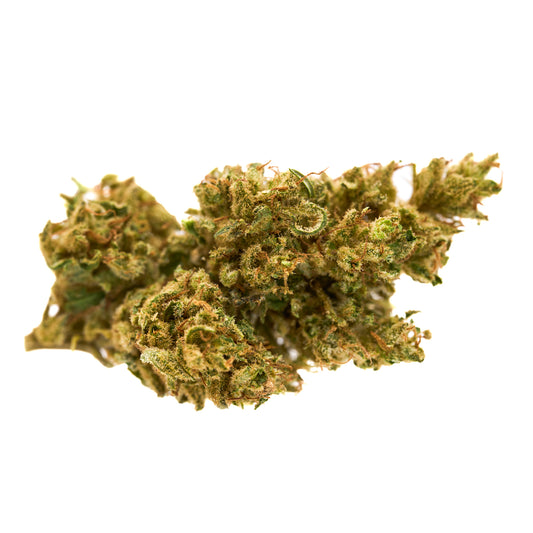
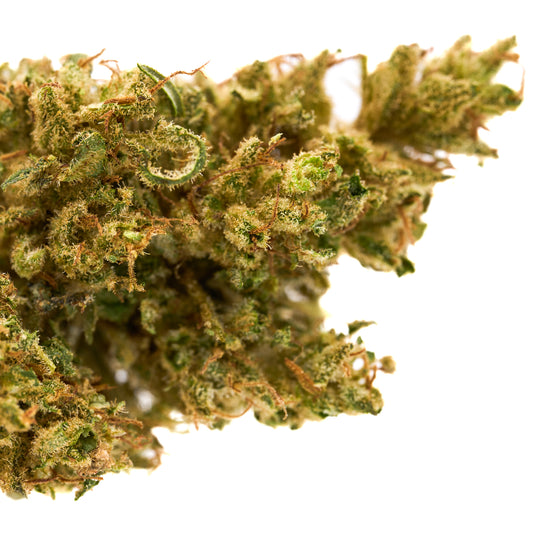
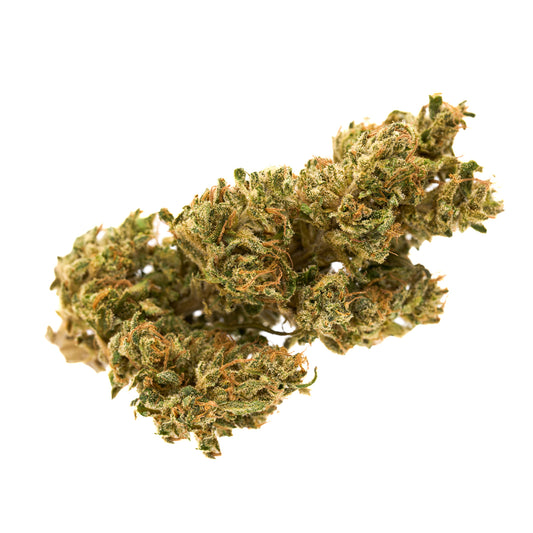
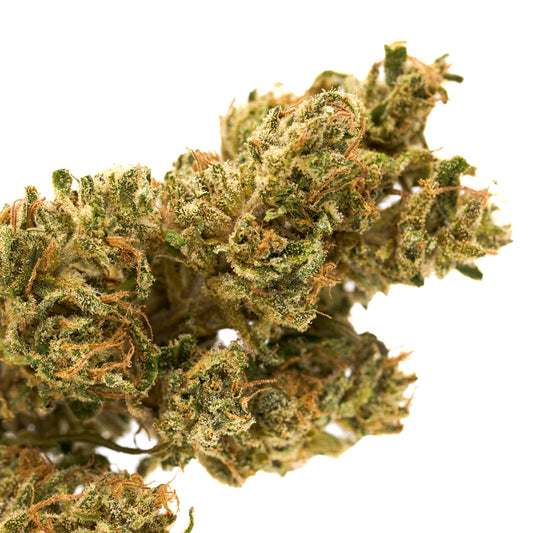
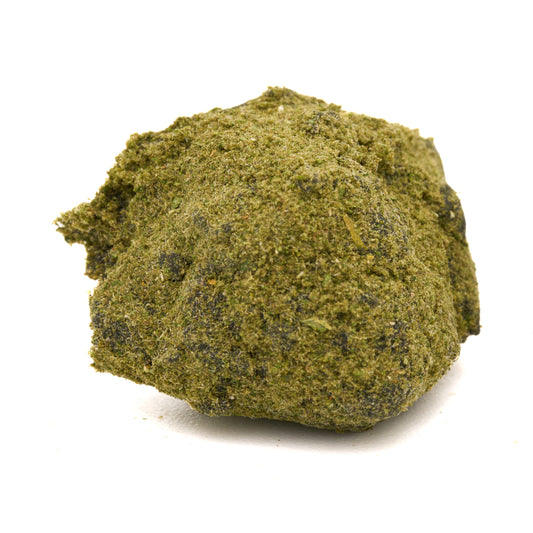
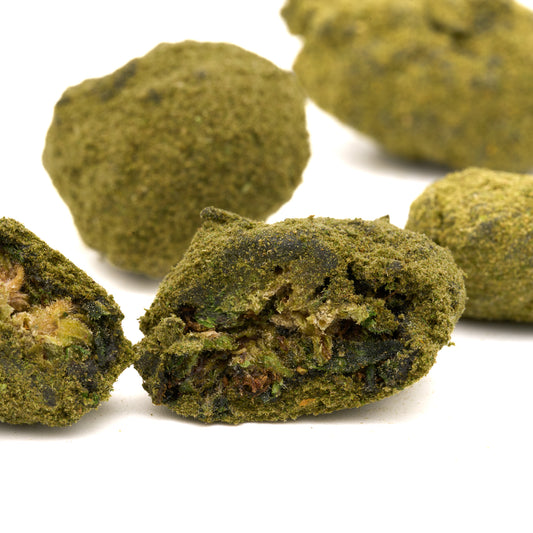





Emerald Fire THCA Kief vs Fog Dog THCA Kief: Full-Term Potency Compared

If you've bought kief before, you already know the first question every buyer asks isn't about flavor, color, or aroma — it's "how strong is it?" Potency drives purchase decisions more than any other factor in the THCA concentrate market, and for good reason: kief is a concentrated collection of trichomes, so even small differences in cannabinoid percentage translate into noticeably different experiences and noticeably different margins for wholesale buyers moving product at scale.
That's exactly why we're putting two of our most talked-about full-term kief batches head-to-head: Fog Dog THCA Kief against Emerald Fire. Instead of relying on vague marketing claims, this breakdown is built entirely around lab data — COA ranges, batch consistency, and the cultivation practices that actually move the needle on emerald fire thca kief potency and fog dog thca percentage. By the end, you'll know exactly which kief tests higher, why, and what that means for your next order.
How THCA Potency Is Measured
Before comparing numbers, it's worth understanding what those numbers actually represent — because "potency" gets thrown around loosely in the hemp industry, and not all lab reports measure the same thing.
THCA vs. Total THC
Raw hemp flower and kief don't contain significant amounts of active Delta-9 THC. Instead, they're rich in THCA (tetrahydrocannabinolic acid), the non-intoxicating acidic precursor that converts to THC only when heated (a process called decarboxylation — think dabbing, vaping, or combustion). This is the legal mechanism that allows federally compliant hemp products to carry high total cannabinoid percentages while staying under the 0.3% Delta-9 THC threshold on a dry-weight basis at the point of testing.
When a Certificate of Analysis (COA) reports THCA percentage, that's the raw acidic cannabinoid content. When it reports "Total THC" or "Total Potential THC," that figure applies a conversion formula (typically THCA × 0.877 + Delta-9 THC) to estimate what the potency would be after decarboxylation. This is the number that matters most for buyers evaluating potential effects.
Why Lab Methodology Matters for Kief Specifically
Kief presents unique testing challenges compared to flower. Because kief is a concentrated collection of trichome heads, potency readings can vary more from batch to batch depending on:
- Sift quality — how finely trichomes are separated from plant material during sieving
- Screen mesh size — finer micron screens yield purer, more potent kief with less plant fiber diluting the sample
- Homogeneity of the batch — well-mixed kief tests more consistently than kief with visible plant matter clumping
- Moisture content at time of testing — higher moisture can slightly dilute reported percentages
This is why a single THCA lab results comparison between two kief products should always account for sampling methodology, not just the headline number on the COA. A 34% batch tested via third-party ISO-certified lab with proper homogenization is a very different claim than a 38% batch self-reported without documentation.
What Buyers Should Ask For
Any reputable kief supplier — including full-term producers like Fog Dog — should be able to provide:
- Third-party lab COAs, dated within a reasonable window of the harvest/production batch
- Batch or lot numbers matching the COA to the physical product
- Both THCA and Total THC figures, not just one
- Consistent testing across multiple batches, not a single cherry-picked high result
With that framework in place, let's look at how Emerald Fire and Fog Dog actually perform.
Emerald Fire Potency Profile
Emerald Fire has built a reputation in the THCA kief space largely on visual appeal — its namesake vivid green-gold color and dense trichome structure make it an easy upsell on a dispensary shelf. But how does that translate to lab numbers?
Average Potency Range
Across publicly available batch testing, Emerald Fire kief typically lands in the 28–34% THCA range, with Total THC generally calculated between 25–30% after conversion. This puts it solidly in the "high-potency" tier of the kief market — well above average flower-derived kief (which often sits in the high teens to low 20s) but not consistently at the top of the category.
Batch-to-Batch Consistency
This is where Emerald Fire shows more variability than buyers might expect. Because Emerald Fire is often sourced from multiple cultivation partners rather than a single vertically integrated grow, potency swings of 4–6 percentage points between batches aren't unusual. A buyer who orders based on a 33% COA might receive a restock batch testing closer to 29%. For B2C consumers, that's a noticeable but manageable difference. For B2B wholesale buyers pricing product based on advertised potency tiers, that variability can complicate margin planning and customer expectations.

What's Driving the Range
A few factors explain Emerald Fire's potency spread:
- Mixed-source sift — trichomes are sometimes pooled from multiple strain batches before final sieving, averaging out peak potency from any single high-testing cultivar
- Standard curing timelines — Emerald Fire generally follows conventional curing windows rather than extended full-term curing protocols
- Screen consistency — while still fine-mesh, the micron consistency across production runs shows more variation than tightly controlled single-source operations
Where Emerald Fire Excels
None of this means Emerald Fire is a weak product — it isn't. Its strengths lie in:
- Strong, consistent color and visual trichome density (a real factor for retail buyers who sell on presentation)
- Reliable availability and supply volume
- A well-rounded terpene presence that supports flavor-forward positioning
But when the conversation shifts specifically to strongest thca kief claims and top-tier lab numbers, Emerald Fire's range — while solid — isn't where the ceiling of the category currently sits.
Fog Dog Potency Profile
Fog Dog THCA Kief takes a fundamentally different approach to production, and that shows up directly in the lab data.
Average Potency Range
Fog Dog's full-term kief consistently tests in the 35–42% THCA range, with several batches breaking the 40% mark on Total THC after conversion. This places it at or near the top of the current wholesale kief market — a meaningful jump over Emerald Fire's 28–34% range and well above the category average.
The fog dog thca percentage advantage isn't a one-time high — it's a pattern across multiple production runs, which is the more important signal for buyers who care about reliability over a single impressive COA.
Batch-to-Batch Consistency
This is Fog Dog's real differentiator. Because Fog Dog kief comes from a single-source, full-term cultivation program rather than pooled multi-supplier sift, batch variance is tightly controlled — typically within 2 percentage points run to run. For wholesale buyers, that consistency is arguably more valuable than the raw peak number: it means pricing, marketing claims, and customer expectations can be set with confidence and won't need to be walked back on the next restock.
Why the Numbers Are Higher
Several production decisions compound to produce Fog Dog's elevated full-term kief potency:
- Single-strain, single-source sift — no averaging effect from blending batches, so peak trichome potency isn't diluted
- Extended full-term curing (detailed further below) — allows cannabinoid conversion and trichome maturation to fully complete before harvestable sift is collected
- Tighter micron screening control — a narrower, more consistently applied mesh range produces purer trichome heads with less plant fiber contamination pulling the average down
- Harvest timing tied to trichome maturity, not calendar scheduling — plants are processed at peak cannabinoid saturation rather than on a fixed production timeline

Lab Documentation
Fog Dog batches ship with third-party COAs that break out THCA, Total THC, and a full minor cannabinoid and terpene panel — giving wholesale buyers the documentation depth needed for their own compliance and marketing verification. You can request current batch testing directly through the Fog Dog THCA Kief product page.
The Practical Takeaway
For buyers specifically searching thca lab results comparison data to justify a purchasing decision, Fog Dog's combination of higher average potency and tighter batch consistency is the more defensible position — both on the shelf and in the compliance file.
Why Full-Term Curing Boosts Potency
The word "full-term" isn't a marketing flourish — it describes a specific, measurable difference in how the plant material is grown, harvested, and cured before it ever reaches the sieving screen. This is the core reason Fog Dog consistently outperforms standard-cure kief like Emerald Fire.
What "Full-Term" Actually Means
Full-term cultivation refers to allowing the plant to complete its entire natural flowering and maturation cycle — including a curing period long enough for cannabinoid biosynthesis to fully stabilize — before harvest and processing. Most standard hemp production operates on compressed timelines driven by turnaround speed: plants are harvested on a schedule, not based on trichome readiness, and curing windows are shortened to keep product moving.
Full-term production reverses that priority. Harvest timing is dictated by trichome maturity indicators — trichome color transition from clear to cloudy to amber, and resin head density — rather than a fixed calendar date.
The Science Behind the Potency Gain
Three biological factors explain why extended full-term curing produces measurably higher THCA:
- Continued cannabinoid synthesis post-harvest. THCA production doesn't stop the moment a plant is cut — enzymatic activity continues during proper curing, allowing cannabinoid content to increase further before it plateaus.
- Moisture equilibration. Slower, longer curing allows moisture to distribute evenly throughout the plant material, which both preserves trichome integrity (less breakage during sieving) and produces more accurate, less diluted potency readings.
- Terpene and cannabinoid preservation. Rushed curing is a leading cause of trichome degradation — rapid drying can cause trichome heads to become brittle and shatter during handling, losing potent resin before it ever reaches the sieving screen. Full-term curing protects that resin through gentler, slower moisture reduction.
Why This Matters More for Kief Than Flower
Kief amplifies whatever is happening at the trichome level, since it's essentially pure trichome concentrate. Any potency or integrity gain from full-term curing at the flower stage gets magnified once that material is sieved into kief — which is exactly why the potency gap between Fog Dog and standard-cure competitors like Emerald Fire is wider at the kief stage than it would likely be comparing the same plants as raw flower.
This is the direct, science-backed explanation behind the full-term kief potency advantage referenced throughout this comparison — and it's why "full-term" belongs in the product name, not just the marketing copy.
