





How Strong Is THCA Kief? Potency Explained

Kief has a reputation as the "good stuff" — the fine, powdery layer of trichomes that collects at the bottom of a grinder or falls off flower during handling. But when it comes to THCA kief potency, a lot of consumers are working off vague impressions rather than real numbers. Is it really stronger than flower? How much stronger? And what do the percentages on a lab report actually mean for how it feels?
This guide breaks down how strong is THCA kief in plain terms — what the lab data says, how to read it, how much to use if you're new to it, and what makes one batch of kief hit harder than another.
Why Kief Has Higher Cannabinoid Concentration Than Flower
To understand THCA kief strength, it helps to understand what kief actually is. Kief is made up almost entirely of trichomes — the tiny, mushroom-shaped resin glands that grow on the surface of the cannabis flower. Trichomes are where the plant produces and stores nearly all of its cannabinoids and terpenes. The rest of the flower — the plant matter, the fibrous stem structures, the leafy material — contributes very little cannabinoid content and mostly serves as structural support for the trichomes themselves.
When you smoke or vaporize raw flower, you're consuming a mix of that plant material along with the trichomes. The cannabinoid content gets "diluted" by everything else that isn't resin. Kief strips that dilution away. By separating trichomes from the plant matter — usually through a fine mesh screen, either in a grinder's kief catcher or through a dedicated sifting box — kief collects nothing but that concentrated resin.
This is the core reason a potent THCA concentrate like kief consistently tests higher than the flower it came from. A flower might test at 20-28% total THCA, which is already considered strong by flower standards. The kief sifted from that same flower will often test significantly higher, because you've removed most of the non-cannabinoid mass while keeping all of the resin.
It's worth being precise about the mechanism here, because "kief is stronger than flower" gets thrown around without explanation. It's not that kief contains a different or more potent form of THCA — it's the same compound. What's different is the ratio of cannabinoid-rich material to inert plant matter in the sample. A gram of kief simply packs in more trichome heads, and therefore more THCA, than a gram of ground flower where much of the weight comes from leaf and stem fragments that carry almost no cannabinoid content at all.
This also explains why not all kief is created equal. Kief quality exists on a spectrum determined by how selectively it was sifted — a distinction covered in more detail further down, since it directly affects THCA kief percentage results on a COA.
Reading THCA Percentage on a Kief COA
If you want a real answer to "how strong is THCA kief," the certificate of analysis (COA) is where you'll find it — not the label copy, not the color of the powder, not how sticky it feels. A COA is a lab report generated by a third-party testing facility that breaks down the exact cannabinoid content of a batch.
Here's what to actually look for on a THCA kief lab results report:
Total THCA percentage. This is usually the headline number, and for high-quality kief it commonly falls in the 50-70% range, with some exceptional batches testing even higher. Compare that to flower, which typically lands in the 15-30% range, and the gap becomes obvious. A batch listed at 60% THCA means that just over half of the sample's total weight is THCA itself — an unusually concentrated figure for something that still looks and handles like a powder rather than a true extract.
Total THC (or "Total Potential THC"). THCA is not intoxicating in its raw form. It only converts to active, intoxicating THC through decarboxylation — the process of applying heat, which happens naturally when you smoke, vape, or dab kief. Labs account for this conversion with a formula (commonly Total THC = THCA × 0.877 + THC), because THCA loses a bit of mass when it sheds its acid group during that conversion. This "Total THC" or "Total Potential THC" figure is the more useful number for understanding real-world THCA kief thc content after it's been activated, since it reflects what you're actually consuming once heat is applied.
Cannabinoid breakdown beyond THCA. A thorough COA will list minor cannabinoids too — CBGA, CBCA, CBNA, and trace THC that hasn't converted yet. These won't swing potency dramatically on their own, but they matter for the overall effect profile and are worth a glance if you're comparing batches.
Contaminant panels. Because kief concentrates everything in the trichome — including anything the plant was exposed to — a trustworthy COA should also test for pesticides, heavy metals, residual solvents, and microbials. High THCA kief percentage numbers mean nothing if the product hasn't cleared these screens. Any reputable source selling kief should make this documentation available, not just the cannabinoid summary.
One important distinction when comparing thca kief potency comparison figures across different sellers: make sure you're comparing the same metric. Some product listings advertise "Total THCA," others advertise "Total THC," and a small number cherry-pick whichever number tests higher for marketing purposes. Cross-check the actual COA rather than relying on a percentage printed on packaging.

How Much Kief to Use When Starting Out
Given how much more concentrated kief is compared to flower, dosing deserves real attention — especially for anyone used to flower-only consumption. Because THCA kief thc percentage so consistently outpaces flower, a habit built around flower-sized amounts doesn't translate directly.
Start with a pinch, not a pinch of flower. A common approach is topping a bowl or joint of flower with a small amount of kief rather than smoking it entirely on its own the first time. Even a light dusting — roughly the size of a grain of rice spread across the surface — meaningfully raises the potency of that session, since you're adding a highly concentrated dose on top of an already-active baseline.
If smoking kief on its own, go slow. Because of how concentrated it is, kief burns hot and fast, and it's easy to underestimate a dose visually since the amount is so small relative to its strength. Taking a single small inhale and waiting several minutes before deciding whether to continue is a far more controlled approach than loading a full bowl the way you might with flower.
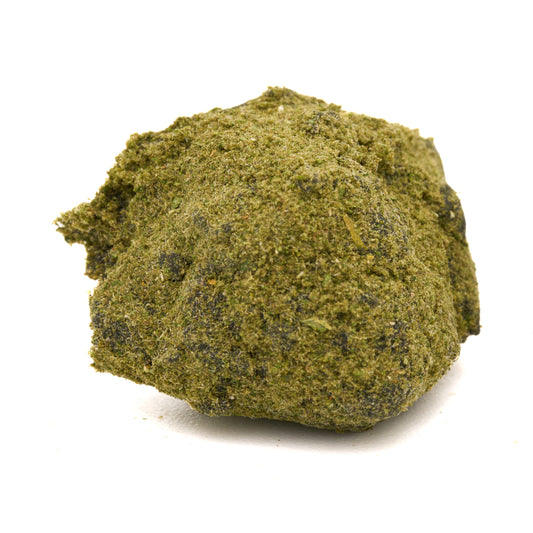
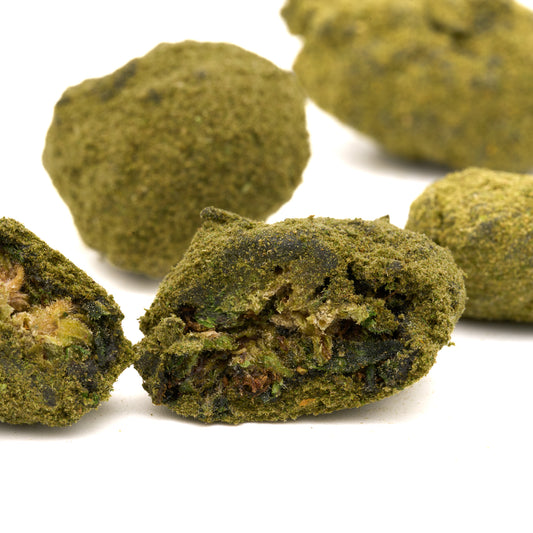
Consider a moon rock or kief-coated joint context. Kief is frequently used to coat flower (sometimes over a layer of concentrate, in what's often called a "moon rock" style product) rather than consumed in isolation. In these combined formats, potency stacks — flower plus concentrate plus a kief coating adds up quickly, so portion control matters even more.
Give it time to take effect before adding more. This applies to any cannabinoid product, but it's especially relevant with something this concentrated. Waiting a full 10-15 minutes between inhalations of kief (longer if consumed via edible-style preparation) avoids the common mistake of stacking doses before the first one has had a chance to be felt.
Storage affects your dosing consistency too. A batch of kief that's been left exposed to air, heat, or light degrades over time, which means the same "pinch" won't deliver a consistent experience batch to batch if storage conditions vary. Keeping kief in an airtight, opaque container in a cool, dark space helps keep dosing predictable session to session.
For anyone specifically asking how strong is THCA kief relative to their normal flower routine, the practical rule of thumb is to treat kief as roughly double to triple the potency of flower by weight, though the actual multiplier depends entirely on the specific lab numbers for both the kief and the flower you're comparing it to.
Factors That Affect Potency (Sift Quality, Strain, Freshness)
Not all kief tests the same, even when it comes from a similar-looking strain. Several variables shape where a batch lands on the kief strength guide spectrum.
Sift quality and screen size. Kief is typically separated using mesh screens of varying micron sizes. Finer screens (smaller micron ratings) capture more pure, isolated trichome heads with very little plant contamination, resulting in higher, cleaner potency readings. Coarser screens let through more plant fragments and stalk material along with the trichomes, which dilutes the final product and drags down the THCA kief percentage on the resulting COA. Multiple-pass sifting, where kief is run through progressively finer screens, tends to produce the highest-grade, most consistently potent material — sometimes referred to as "dry sift" when done with particular care rather than as a byproduct of routine grinding.
Strain genetics. Just as with flower, the underlying cultivar matters. Some genetic lines are simply higher-yielding in trichome density and cannabinoid production than others, and that carries through to the kief sifted from them. A strongest THCA kief product is almost always sourced from a strain that already tested unusually high as flower — the sifting process amplifies what's already there rather than creating potency from a low-testing plant.
Trichome maturity at harvest. Trichomes develop and change over the course of a plant's flowering cycle, and cannabinoid content shifts as they mature. Flower harvested at peak trichome maturity produces kief with meaningfully different potency than flower harvested too early or too late, even within the same strain and grow.
Freshness and storage after sifting. THCA is not a particularly stable compound outside of ideal storage conditions. Heat, light, and prolonged air exposure accelerate the natural degradation of THCA into other compounds over time, and because kief has so much surface area relative to its volume, it's more vulnerable to this degradation than whole flower. Kief that's been sitting loosely exposed for months will generally test lower than the same batch tested fresh, which is why freshness matters just as much as sourcing when evaluating high potency kief.
Processing method beyond basic sifting. Some kief is further refined through techniques like heat pressing (to make hash) or additional screening passes, which can concentrate potency further by removing remaining plant debris. This is part of why a thca kief vs flower potency comparison isn't a single fixed ratio — it depends heavily on how the kief in question was actually processed.
Taken together, these factors are why two kief products can look nearly identical and still test dramatically differently. The only reliable way to know THCA kief effects strength for a specific batch is to check its actual lab results rather than assume based on strain name or appearance alone.
Frequently Asked Questions
Is THCA kief stronger than THCA flower?
Generally, yes. Because kief is made almost entirely of trichomes — the part of the plant where cannabinoids are produced and stored — it typically tests at a much higher THCA percentage than the flower it was collected from. Flower usually falls in the 15-30% THCA range, while quality kief commonly tests between 50-70%.
What percentage should I look for in high-quality kief?
There's no single universal benchmark, but kief testing above 50% THCA is generally considered strong, and anything in the 60%+ range is considered exceptional. Always check the COA rather than relying on visual cues like color or texture, since these don't reliably indicate potency.
Does THCA kief get you high the same way flower does?
THCA itself is non-intoxicating until it's decarboxylated (converted through heat) into active THC. Once that conversion happens — through smoking, vaping, or dabbing — the resulting experience is similar in character to flower, just more concentrated given the higher starting percentage.
Why does kief potency vary so much between products?
Sift quality, strain genetics, trichome maturity at harvest, and freshness after processing all affect the final percentage. Two products labeled the same strain name can test very differently depending on how carefully they were sifted and stored.
How should I store kief to preserve potency?
Keep it in an airtight, opaque container away from heat, light, and humidity. THCA degrades faster in kief than in flower because of its high surface-area-to-volume ratio, so proper storage matters more here than with most other product formats.
Can I use kief the same way I use flower?
Kief can be sprinkled on top of a flower bowl or joint, pressed into hash, used to coat pre-rolls, or vaporized on its own in the right equipment. Because it's so concentrated, most people use much smaller quantities than they would with flower alone.
Is a higher THCA percentage always a better choice?
Not necessarily. Potency is one factor, but terpene content, freshness, and how a product is grown and processed all shape the overall experience. A slightly lower-testing batch with a fresher, well-preserved terpene profile can offer a more balanced experience than a higher-testing but stale one.
Ready to Experience High-Potency Kief for Yourself?
Now that you understand what drives potency, the next step is checking the numbers for yourself. Shop high-potency THCA kief and review the lab results directly to find a batch that matches the strength and experience you're looking for.
