




How to Maximize THCA Potency: Growing Techniques That Actually Work

If you've ever compared two THCA flower buds side by side and wondered why one tests at 24% and the other tests at 31%, you already understand the central question every serious grower eventually asks: what actually separates average potency from exceptional potency? The honest answer is that how to increase THCA potency isn't a single trick — it's a stack of deliberate cultivation decisions made across the entire life of the plant.
Genetics set the ceiling. A cultivar bred for low cannabinoid expression will never outperform a genetically potent strain no matter how skilled the grower. But genetics only set the potential — they don't guarantee it gets expressed. The gap between a plant's genetic ceiling and its actual lab-tested percentage is where technique lives, and that gap can be enormous. Two clones from the same mother plant, grown under different light spectrums, feeding schedules, and training methods, can finish with a five-to-ten-point spread in final THCA percentage.
This guide breaks down the cultivation methods commercial growers actually rely on to maximize THCA percentage — not folklore, not Instagram myths, but techniques with real physiological reasoning behind them. If you're sourcing finished flower rather than growing it yourself, you can see how these techniques play out in real results by browsing current high-potency THCA drops.
What Actually Determines THCA Potency
Before diving into specific THCA growing techniques, it's worth understanding the biology driving all of them. THCA is produced and stored in the trichomes — the tiny, mushroom-shaped resin glands covering the flower, sugar leaves, and to a lesser extent the fan leaves. Trichomes aren't decorative; they serve the plant. They're believed to function as a defense mechanism, protecting the flower from UV radiation, pests, and pathogens, and cannabinoid production appears to be tied directly to that defensive role.
That single fact is the thread connecting nearly every technique on this list. Anything that increases trichome density, anything that mimics an environmental threat serious enough to trigger a defensive resin response, and anything that keeps the plant's energy focused on cannabinoid synthesis rather than vegetative growth — all of it moves the needle on final potency.
This is why boost THCA production strategies tend to cluster around a few themes: light manipulation, controlled stress, nutrient timing, and trichome-preserving handling from harvest through cure. None of these methods work in isolation particularly well. A grower who nails UV-B supplementation but rushes the dry-and-cure process will still lose potency. A grower who trains plants perfectly but overfeeds nitrogen through week six of flower will suppress cannabinoid development regardless of how much light penetration they engineered. Potency is cumulative — it's the product of every decision made from clone to cure, not any single silver bullet.
Low-Stress Training (LST) and Defoliation
Of all the THCA growing techniques available to cultivators, low-stress training is one of the most consistently effective because it addresses a simple physical problem: light doesn't reach the lower half of an untrained plant.
Left alone, cannabis plants grow with strong apical dominance — a single dominant cola shoots upward while lower branches remain shaded and underdeveloped. Those lower bud sites still produce flower, but with a fraction of the light exposure, they develop noticeably less trichome density and finish at a lower cannabinoid percentage than the top cola. On an untrained plant, it's common to see a 5–8 point THCA gap between the top cola and the lower third of the canopy.
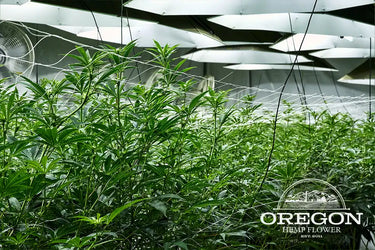
Low stress training THCA methods solve this by bending and securing branches — using soft ties, tomato cages, or a screen (SCROG) — to create a flat, even canopy where every bud site receives comparable light intensity. Instead of one dominant cola towering over a shaded lower canopy, the plant develops multiple evenly-lit colas at roughly the same height.
Strategic defoliation compounds this effect. Removing select fan leaves — particularly the large "umbrella" leaves shading bud sites directly below them — opens light penetration and improves airflow through the canopy. Airflow matters for potency too: dense, poorly ventilated canopies trap humidity around lower bud sites, which not only raises mold risk but also creates a microclimate that isn't conducive to healthy trichome development.
The timing matters. Most commercial growers perform their heaviest defoliation during the transition from vegetative growth into early flower (roughly weeks 1–3 of flower), then do lighter touch-up defoliation around week 5–6 to expose bud sites that have since become shaded again as the plant fills out. Defoliating too late in flower — inside the final two weeks — can stress the plant without enough recovery time to benefit, so most experienced growers stop major leaf removal by week 6.
Done correctly, LST and defoliation don't just improve potency — they improve consistency. Instead of a harvest with a wide potency spread across colas, growers see a much tighter, more uniform distribution, which matters enormously for anyone producing flower that needs to meet a consistent lab-tested percentage across every batch. That consistency is exactly what shows up in tested, high-potency THCA releases — uniform trichome development across the whole plant, not just the top cola.
UV-B Supplementation
If there's one technique that separates hobbyist grows from serious commercial cultivation programs chasing top-tier lab numbers, it's targeted UV light THCA growing supplementation.
The theory is grounded in the plant's own defense chemistry. THCA is increasingly understood to function, at least in part, as a natural UV-protectant — the resin coating absorbs and reflects UV radiation before it can damage the plant's reproductive tissue (the flowers, which contain the seeds in a non-feminized environment). When researchers and growers expose flowering cannabis to supplemental UV-B light — the same band of ultraviolet radiation responsible for sunburn in humans — plants respond by ramping up trichome production and, correspondingly, cannabinoid synthesis.
Standard full-spectrum grow lights, especially LEDs, typically emit little to no UV-B. That means indoor growers relying exclusively on standard grow lighting are missing an entire environmental trigger that outdoor, high-altitude, or greenhouse-grown plants experience naturally. This is part of why cultivars grown at elevation — where atmospheric UV exposure is naturally higher — often test at higher potency than genetically identical plants grown at sea level.
Supplementing indoors typically means adding dedicated UV-B bulbs or fixtures during the final 3–4 weeks of flower, timed to run for a limited window each day (commonly the last 1–3 hours of the light cycle) rather than for the full photoperiod. This timing matters for two reasons: UV-B exposure is cumulative and can cause genuine tissue damage — bleaching, leaf curling, reduced yield — if overdone, and the potency benefit is most pronounced in the final stretch of flower when the plant is already prioritizing resin production over vegetative growth.
Growers new to UV light THCA growing should introduce it gradually — starting with short daily exposure windows and monitoring the upper canopy for stress signs like leaf bronzing — before extending exposure time. Ramping too aggressively can do more harm than good, undercutting yield without a proportional potency gain.
Combined with proper LST (so light, including supplemental UV-B, reaches more of the canopy rather than just the top cola), UV-B supplementation is one of the most direct levers growers have to increase trichome production and push finished flower toward the top of a strain's genetic potency range.

THCA Nutrient Schedule and Timing
Feeding schedule is where a lot of well-intentioned growers accidentally sabotage their own potency numbers. A properly designed THCA nutrient schedule isn't just about avoiding deficiency — it's about actively signaling the plant to shift its energy allocation from vegetative growth toward flower and resin production.
Nitrogen is the culprit most commonly responsible for suppressed cannabinoid development. Nitrogen drives vegetative growth — leaf and stem development — which is exactly what you want during the vegetative stage and the first couple weeks of flower stretch. But nitrogen needs to taper significantly as flower progresses. Growers who continue feeding vegetative-level nitrogen concentrations into weeks 5, 6, and beyond often see lush, dark green foliage alongside disappointingly average bud density and potency. The plant is still investing energy in leaf growth instead of committing fully to flower and trichome development.
The fix is a deliberate nutrient transition. By week 3–4 of flower, most experienced cultivators shift to bloom-specific formulations that are lower in nitrogen and higher in phosphorus and potassium (often shown as the "P-K" numbers on nutrient packaging). Phosphorus supports flower and root development; potassium supports overall plant metabolic function, including resin and oil production. This ratio shift tells the plant, chemically, that it's time to commit remaining resources to reproductive structures — the flowers and their trichomes — rather than continued leaf growth.
Some growers go a step further with "bloom boosters" or PK-heavy supplements in the final 2–3 weeks specifically to support resin production, though these should be used cautiously — overcorrecting into phosphorus or potassium excess can cause its own set of deficiency lockouts (commonly showing up as calcium or magnesium deficiency symptoms).
Micronutrients matter too, even though they're often overlooked. Sulfur, in particular, has been associated with terpene and cannabinoid production in some cultivation research, and cultivars grown in nutrient programs deficient in trace minerals tend to underperform their genetic potential even when the macro-nutrient (N-P-K) schedule looks correct on paper.
The broader principle behind any effective THCA nutrient schedule: match the feed to the growth stage, not the calendar. A plant that stretches longer or shorter than expected, or that shows stress from training or environmental adjustments, may need its nutrient transition shifted earlier or later than a rigid week-by-week chart would suggest. Growers who watch plant response — leaf color, growth rate, trichome development under magnification — and adjust feeding accordingly consistently outperform growers following a fixed schedule regardless of what the plant is actually telling them.
Controlled Environmental Stress
This is the technique that makes newer growers the most nervous, and for good reason — it's a genuine balancing act. But controlled, deliberate environmental stress is a well-established lever to boost THCA production, rooted in the same defensive-resin logic driving UV-B supplementation.
The concept: cannabis, like most plants, responds to mild environmental threats by activating defense mechanisms — and for cannabis, one of those defense mechanisms is increased resin (and therefore cannabinoid) production. Growers exploit this by introducing small, controlled stressors in the final 1–2 weeks before harvest, after the bulk of bud development is already complete and yield is largely locked in.
Common methods include:
- Slightly reduced watering in the final week or two, letting the growing medium dry out a bit more between waterings than during peak flower, signaling mild drought stress without pushing the plant into genuine wilting.
- A modest nighttime temperature drop — dropping ambient temperature by roughly 10–15°F during the final dark cycles has been associated with increased anthocyanin expression (the purple/red pigmentation some strains show) and, in some grower experience, modest potency and trichome density increases.
- Brief light stress, such as a short period of light deprivation or a minor light schedule adjustment, though this is a more advanced technique with a narrower margin for error.
The critical word in every version of this technique is mild. This is not about maximizing stress — it's about applying just enough of a defensive trigger to nudge resin production without damaging the plant's ability to finish developing flower properly. Overdo drought stress and you risk reduced density, smaller flower structure, or in severe cases, hermaphroditism (the plant producing seeds as a survival response), which tanks both yield and bag appeal. Overdo temperature stress and you can slow metabolic activity enough to actually reduce late-stage development.
Growers experimenting with controlled stress for the first time should apply it conservatively — small adjustments, monitored closely — and should only introduce it in the final stretch of flower, never earlier, when the plant still has significant development ahead of it and can't afford the energy diversion.
Harvest Timing Precision
You can execute every technique above flawlessly and still leave significant potency on the table with one mistake: harvesting at the wrong time. THCA potency tips almost universally circle back to this point because it's the single most common — and most avoidable — potency mistake growers make.
THCA content isn't static throughout flower; it builds toward a peak and then, if left too long, begins to degrade as THCA slowly converts toward other cannabinoids (and eventually, with UV/heat/time exposure, toward CBN) once the plant has passed peak maturity. Harvest too early and the plant simply hasn't finished converting its cannabinoid precursors into peak THCA content. Harvest too late and you're watching potency decline from its peak, even though the buds may look "more ready" to an inexperienced eye due to continued color development.
Visual cues like pistil color are unreliable on their own — pistils (the hair-like structures) darkening and curling is a rough general indicator but varies by strain and doesn't correlate precisely enough with cannabinoid content to use as a sole harvest signal.
The reliable method is trichome examination under magnification — a jeweler's loupe or a handheld digital microscope (30x–60x magnification is typically sufficient). Trichomes progress through a predictable color cycle:
- Clear trichomes indicate the plant hasn't reached peak cannabinoid development yet — harvesting now sacrifices potential potency.
- Cloudy/milky trichomes indicate peak cannabinoid content — this is generally the target window most cultivators aim for when maximizing THCA specifically.
- Amber trichomes indicate the cannabinoid profile has begun shifting past peak THCA, with some conversion toward more sedative or degraded compounds.
Most growers targeting maximum THCA percentage aim to harvest when trichomes are 80–90% cloudy with a small percentage just beginning to amber — capturing peak cannabinoid content before meaningful degradation sets in. Because trichome maturity isn't perfectly uniform across the whole plant, experienced growers check multiple bud sites — top cola, mid-canopy, and lower colas — rather than relying on a single check point, since the LST work done earlier in the grow means different sites may finish at slightly different times.

Drying and Curing: Locking In Potency
Here's an uncomfortable truth a lot of grow guides skip: you can produce genuinely exceptional flower through every technique above and still lose meaningful potency in the final 10–14 days of the process. Drying and curing don't add potency — but done poorly, they actively destroy it, which functionally has the same negative effect on your final lab number.
THCA is a fragile, heat- and light-sensitive compound. Rushed drying — high heat, direct light exposure, poor airflow control — accelerates degradation and can also lock in chlorophyll and unwanted plant compounds that affect flavor and perceived quality even if the milligram content survives.
The standard commercial approach is a slow dry: hanging or rack-drying whole plants or branches in a dark, temperature-and-humidity-controlled space (typically 60–70°F and 50–60% relative humidity) for 7–14 days, until stems snap rather than bend. Drying too fast — high heat or low humidity — can trap chlorophyll and moisture unevenly inside the bud structure, while drying too slow in overly humid conditions risks mold.
Curing follows drying and is where a lot of potency-conscious growers see genuine quality improvement, even if raw THCA percentage is already essentially locked in by this point. Curing in sealed, airtight containers (glass jars are standard) with periodic "burping" to release excess moisture allows for a slower, more even final moisture equalization throughout the bud structure, which improves flavor, smoothness, and shelf stability. A proper cure typically runs 2–4 weeks at minimum, with some cultivators curing significantly longer for premium flower.
Throughout both stages, trichome preservation is the priority. Trichomes are physically fragile — friction, excessive handling, and improper trimming technique (especially machine trimming versus careful hand trimming) can knock trichomes off the flower entirely, which is a direct, irreversible potency loss that has nothing to do with the plant's biology and everything to do with post-harvest handling. This is one reason hand-trimmed, carefully cured flower commands a premium — and consistently tests higher — than flower that was rushed through processing.
Putting It All Together: A Sample Potency-Focused Grow Timeline
For growers wanting a rough framework to apply these THCA cultivation techniques in sequence:
- Weeks 1–3 of flower: Heavy LST and initial defoliation; nutrient schedule still transitioning from vegetative to early-bloom ratios.
- Weeks 3–4: Complete nitrogen taper; shift to phosphorus/potassium-heavy bloom nutrients; light touch-up defoliation as needed.
- Weeks 5–7 (mid-to-late flower): Begin UV-B supplementation (short daily windows); monitor canopy for even light distribution from earlier training work.
- Final 1–2 weeks: Introduce controlled environmental stress (mild watering reduction, modest nighttime temperature drop); begin daily trichome checks under magnification.
- Harvest: Timed to trichome color (majority cloudy, slight amber), checked across multiple canopy positions.
- Dry: 7–14 days, dark, temperature/humidity-controlled, slow.
- Cure: Minimum 2–4 weeks in sealed containers with regular burping.
No single step on this timeline is responsible for maximum potency on its own — it's the cumulative discipline across every stage that separates flower testing in the low-to-mid 20s from flower pushing into the 28–32%+ range.
Frequently Asked Questions
What is the single most impactful technique to increase THCA potency?
There isn't one universal answer, because it depends on where a given grow is currently falling short. That said, most experienced cultivators point to the combination of proper light penetration (via LST/defoliation) and correct nutrient timing as the foundation — techniques like UV-B supplementation and controlled stress amplify results but can't compensate for uneven canopy light or an incorrect feeding schedule.
Can you increase THCA percentage after harvest?
No — the plant's cannabinoid production is complete at harvest. Post-harvest handling (drying, curing, trimming) can only preserve or degrade the potency already produced; it cannot add to it. This is why careful post-harvest handling is treated as equally important as pre-harvest technique.
Does UV-B light actually work, or is it a myth?
It's grounded in real plant physiology — cannabinoids, including THCA, are believed to serve a UV-protectant function for the plant, and supplemental UV-B exposure during late flower has been associated with increased trichome and cannabinoid production in both grower experience and available research. That said, it must be applied carefully; overexposure causes tissue damage without a proportional potency benefit.
How much does genetics matter compared to growing technique?
Genetics set the ceiling — a strain simply isn't going to test at 35% if its genetic potential caps out around 20%, regardless of technique. But most plants are grown well below their genetic ceiling, so cultivation technique is usually the larger lever available to a grower working with a fixed set of genetics.
Is controlled stress actually safe for the plant?
Mild, well-timed stress in the final stretch of flower is a widely used commercial technique, but it carries real risk if overdone — excessive drought or temperature stress can reduce yield, stall development, or in severe cases trigger hermaphroditism. It should always be introduced conservatively and only after the bulk of flower development is complete.
How long should curing take to maximize potency retention?
A minimum of 2–4 weeks in sealed, regularly burped containers is standard, though many cultivators producing premium flower cure considerably longer. The goal isn't adding potency at this stage — it's preventing the degradation that comes from rushed, uneven moisture equalization.
Conclusion
Maximizing THCA potency isn't about chasing a single hack — it's about stacking disciplined technique across every stage of the grow, from the first weeks of flower training through the final days of cure. Low-stress training and defoliation create even light exposure. UV-B supplementation and controlled stress trigger the plant's natural defensive resin response. Nutrient timing keeps energy focused on cannabinoid production rather than vegetative growth. And precise harvest timing followed by careful drying and curing locks in everything the plant worked to produce.
For growers and buyers who want to see what this level of cultivation discipline actually produces, Oregon Hemp Flower's current THCA releases reflect exactly the kind of technique-driven potency this guide describes — consistent, lab-tested flower grown with the methods outlined above.
