









Pre Roll Sizes Explained: Grams, Millimeters and Pack Counts

A pre-roll’s size is three separate numbers: the weight of flower inside (0.35 g to 1 g and up), the length of the cone in millimeters (70 mm to 109 mm), and the pack count (a single or a multipack). The label usually shows only the weight, and the weight is the number to compare, but it is only reliable when you also know the cone and the flower. This guide explains each measurement, why two “1 g” rolls can look nothing alike, and how to read a hemp, CBD or THCA pre-roll label so you buy the amount you expect. Our own pre-roll collection lists the gram weight of each product so you can compare directly.
TL;DR
- “Size” means fill weight, cone length or pack count. Industry guides separate all three, and a label often shows only one.
- The four common cones are 70 mm, 84 mm, 98 mm and 109 mm. They hold roughly 0.25 g to 1 g of flower.
- Two same-length cones can hold different weights because flower density, grind, moisture and packing pressure differ.
- Multipacks are often built to land on 3.5 g, the eighth-ounce unit, so compare total grams, not the number of joints.
- Weight does not show potency. Check the cannabinoid percentage on the lab report and the label.
Table of Contents
- The three meanings of “size”
- Standard pre-roll cone lengths and fill weights
- Why two 1 g pre-rolls can look different
- How the label weight is counted
- Reading multipacks
- Standard versus infused pre-rolls
- Which size fits which use
- Pre-roll sizes for wholesale buyers
- How hemp pre-rolls are made
- Examples from our pre-roll range
- Our view on pre-roll sizes
- Where to buy
- FAQ
- Sources
The three meanings of “size”
Shoppers searching for pre-roll sizes are usually mixing up three measurements that the industry treats separately.
- Fill weight. The grams of flower, such as 0.35 g, 0.5 g, 0.75 g or 1 g.
- Cone length. The physical length of the rolled cone in millimeters, such as 70, 84, 98 or 109 mm.
- Pack size. Whether you get a single tube, a 3-pack, a 5-pack or more.
A “1 g” label tells you about the first. It tells you little about the second, and nothing about the third. That is why a photo of a 1 g roll from one brand can look half the size of a 1 g roll from another. Both can be accurate.
Standard pre-roll cone lengths and fill weights
Most pre-rolls are built on four cone lengths. One production guide estimates that these four cover roughly 90% of products sold in US dispensaries. Packaging guides give slightly different weight ranges, because fill depends on the flower. The table shows the typical figures.
| Cone length | Common name | Typical fill | Typical use |
|---|---|---|---|
| 70 mm | Dogwalker, mini | About 0.25 g to 0.5 g | Minis, multipacks |
| 84 mm | 1¼ size, classic | About 0.5 g to 0.75 g | Half-gram rolls, packs |
| 98 mm | 98 Special | About 0.75 g to 1 g | Mid-size singles |
| 109 mm | King size | About 1 g to 1.25 g | One-gram singles |
A packaging guide for cone lengths gives a similar ladder: 109 mm king about 1 g, 98 mm about 0.75 g, 84 mm about 0.5 g, and the 70 mm dogwalker about 0.25 to 0.33 g. Treat these as design targets, not guarantees.
What the cone dimensions look like
Length is only part of the shape. Cones also differ in opening width and in the filter (also called the crutch or tip). One cone maker’s published specifications for hemp-paper cones show an 84 mm cone with a 10.8 mm top opening and 26 mm crutch designed for about 0.5 g, and a 109 mm cone with a 12.5 mm top opening designed for about 1 g. The same source says capacities are guidelines, since flower density, grind size, moisture and packing pressure change the final fill.
The standard filter is 26 mm long, with 21 mm also popular. The most common shape is the “W” fold. A longer filter means less of the cone’s total length is flower, which is one more reason length alone does not predict weight.
Why two 1 g pre-rolls can look different
This is the question behind most of the confusion. The reasons are physical and easy to check.
Flower density
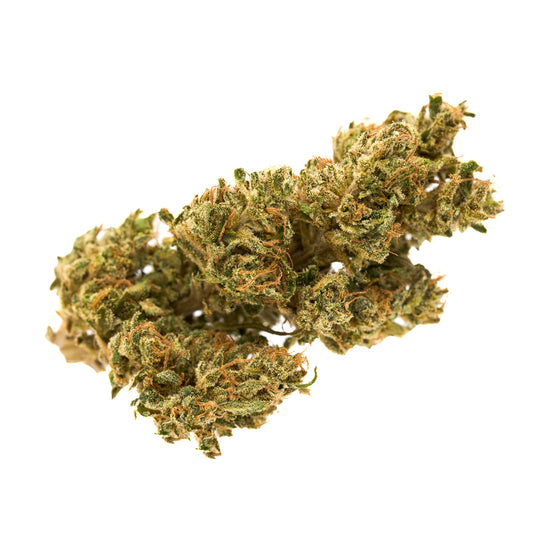
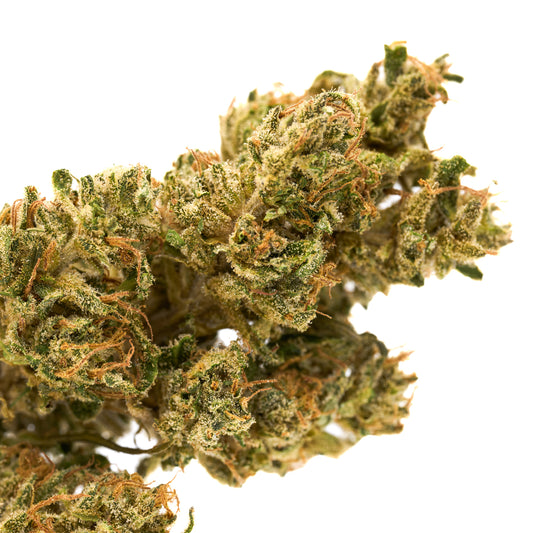
Fluffy, airy flower takes up more space per gram. Dense, compact flower packs more weight into the same volume. One production guide describes two identical 98 mm cones filled to the same visual level holding 0.7 g with one strain and 0.9 g with another. A second guide using the tobacco term “filling power” gives a wider example, 0.6 g against 0.9 g, and notes that this is why commercial machines are calibrated by weight rather than by volume.
So a short, thin roll may simply hold dense flower, while a long, airy roll may hold the same weight of lighter flower.

Grind and packing pressure
A finer grind packs tighter and looks shorter. A looser pack looks longer and burns faster. A regional guide to pre-rolls notes that grind consistency, pack tightness, cone shape and moisture all change appearance while the total flower weight stays the same. A tightly packed roll that looks small is not a smaller portion.
Paper weight
The wrap adds weight too. One production source notes that thicker hemp wrap paper adds measurable weight, so a roll labeled 1 g in heavy wrap may hold slightly less than a gram of flower. Whether the label counts the paper depends on the state and the brand, which is the next point.
How the label weight is counted
Rules on this vary by state. Oregon is a useful example. Its cannabis regulator defines a plain pre-roll as usable marijuana plus unflavored rolling paper and a filter, tip or cone. In the same bulletin, potency percentages use only the flower weight, not the paper and filter. The bulletin’s example: a 1 g pre-roll with 0.5 g of paper and filter that tests at 200 mg THC is labeled 20% THC, because the percentage is calculated on the 1 g of flower alone… as the bulletin’s arithmetic is stated for its program, other states and hemp products may count differently.
The practical lesson holds anywhere: read whether the label states the net weight of flower or the weight of the whole item, and read the percentage as a share of the flower.

Reading multipacks
Multipacks are where “size” gets confusing, because the joint count is not the amount.
- A pack is usually a box, tin or tube holding two to ten pre-rolls, often minis of 0.35 g to 0.5 g.
- Common packs are built to reach the eighth-ounce retail unit of 3.5 g: ten rolls at 0.35 g, seven at 0.5 g, or five at 0.7 g all land there.
- A 1 g package is often sold as one roll, but it can also be two half-gram cones. The 84 mm half-gram cone is the most popular cone size overall, while the 1 g package is the most popular size at just under 50% of sales.
A worked example
Suppose you compare two listings.
- Listing A: a 5-pack of 0.5 g rolls. Total flower: 5 × 0.5 g = 2.5 g.
- Listing B: a 5-pack of 1 g rolls. Total flower: 5 × 1 g = 5 g.
Both say “5-pack”, but B holds twice the flower. If the prices are close, B has the lower cost per gram. Always divide the pack price by total grams before comparing. On our site, the Hempress Delta 8 1 g 5-pack is named by both the roll weight and the count, so the total is simple to work out.
Standard versus infused pre-rolls
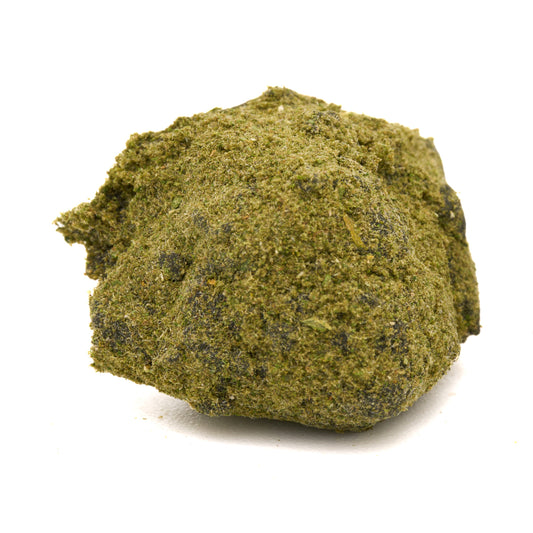
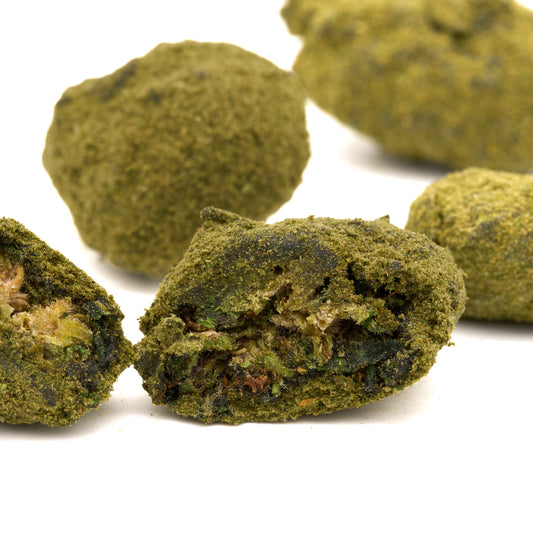
An infused pre-roll adds something beyond flower, paper and filter, such as kief. Under Oregon’s rules, infused rolls fall under “other cannabinoid products” and may only be made by recreational processors. For sizing, the point is that a 1 g infused roll and a 1 g standard roll can differ in strength even though they weigh the same. Weight describes quantity. The cannabinoid percentage describes strength. Compare strength on the lab report, not on the gram count.
Which size fits which use
| If you want | Look at | Why |
|---|---|---|
| A short, single-sitting smoke | 70 mm or 84 mm, 0.35 g to 0.5 g | Smaller fill, less time to finish |
| A standard roll for one or two people | 98 mm, about 0.75 g | Mid-range fill |
| A longer session or sharing | 109 mm, about 1 g, or larger | The most common single size |
| Several smaller portions | A 5-pack or more of minis | Lets you spread out use |
| Lower cost per gram | Total pack grams divided by price | Fair comparison between packs |
Time is not just about length. Tight packing burns slower and loose packing burns faster, so the same weight gives a comparable total amount, though the pace differs. Choose by flavor, strength and budget rather than by how the roll looks.
Pre-roll sizes for wholesale buyers
Resellers and brand builders have a different set of questions: which cone to specify, and how the roll will be packaged.
- Match tube to dimensions, not weight. A packaging guide notes that length and diameter decide whether a cone fits a tube, while weight only decides what goes on the label.
- Tubes have their own lengths. The same guide lists typical tube lengths of 90, 92, 98 and 116 mm, so a 98 mm cone does not necessarily fit a 98 mm tube.
- Plan for density. On automated lines, overly dense flower may not leave room for the cone to close at the twisting station, so some cultivars suit machine filling better than others.
For bulk hemp supply, see our wholesale listings for THCa, CBD and Delta 8.
How hemp pre-rolls are made
The fill weight you see on a hemp pre-roll depends on how it is made: the trim, the grind, the cone and the packing. Our guide on how hemp pre-rolls are made follows the process from harvest to ready-to-smoke. If you want to see what a multipack looks like, our 5-pack pre-rolls in eight strains are described there.
Examples from our pre-roll range
Our range shows several sizes and cannabinoid profiles. Use the product pages for the weight, count and lab details of each.
- Sour Hawaiian Haze hemp flower pre-rolls, 1 gram: a 1 g size.
- Organic CBD pre-rolls, 1.4 g: a larger roll in a palm leaf wrap.
- Organic 30% CBD pre-rolls and the Bubba Kush 30% CBD pre-rolls: CBD-forward options.
- CBG Silver Haze pre-rolls: a CBG option.
- D8 CBG hemp pre-rolls and D8 Hempress pre-rolls: Delta 8 options.
Our products are for adults 21 and over.
Our view on pre-roll sizes
Most size confusion comes from reading one number as if it were all three. A 1 g label is a statement about flower weight. It does not tell you how long the cone is or how the flower was packed, and it does not tell you how strong the roll is.
That is why we think the useful habit is to look at total grams and the cannabinoid percentage together. Our flower is organically grown without pesticides or synthetics and hand-trimmed, and we offer a 100% satisfaction guarantee. We would rather you read the weight, the count and the lab details on each page and choose the size that suits you.
For buyers who want a roll that is easy to compare, we name the gram weight and the pack count in the product title, so the arithmetic from the worked example above takes a few seconds.
Michael
Where to buy
If you are ready to choose, browse the pre-roll collection. Each product states its size, so you can pick a single or a multipack and compare total grams. Orders over $85 ship free.

If you prefer loose flower to fill your own cones, the hemp flower collection is the place to start.
FAQ
What is the most common pre-roll size?
The 1 g package is the most popular, at just under 50% of sales. It is often sold as a single 109 mm king roll, though some 1 g packages are two half-gram cones. The 84 mm half-gram cone is the most popular cone length overall.
How many grams is a standard pre-roll?
It depends on the cone. Plain 84 mm cones are built for about 0.5 g, 98 mm cones for about 0.75 g, and 109 mm king cones for about 1 g. Minis at 70 mm hold roughly a quarter to a third of a gram. Actual fill varies with density and packing.
Why does my 1 g pre-roll look smaller than another brand’s?
Flower density, grind size, moisture and how tightly the roll is packed all change the length and width. Two identical cones can hold 0.7 g and 0.9 g at the same visual fill. A compact roll is not necessarily a smaller portion.
Does a bigger pre-roll mean a stronger one?
No. Weight tells you how much flower there is, and the cannabinoid percentage tells you how concentrated it is. Infused rolls can differ in strength from standard rolls of the same weight, so compare the lab results on the product page.
Sources
- OLCC OMMP bulletin on pre-roll definitions and weights
- Pre-roll sizes: cone lengths, tubes and packaging guide
- Pre-roll size: weights, lengths and packaging
- Pre-roll packs and mini pre-rolls: sizes and counts
- Pre-roll sizes for cone selection and production setup
- Pre-roll sizes guide 2026
- Pre-rolled cone sizes for every type of pre-roll
- Pre-roll master class: rolling paper science
- Pre-rolled cones FAQ
- Pre-rolls in Ohio
