


THCA Concentrates vs THCA Flower: Which Delivers a Stronger Experience?

THCA is having its moment. In 2026, hemp-derived THCA products are everywhere — stacked on smoke shop shelves, filling online catalogs, and dominating hemp enthusiast conversations across the country. And for consumers who are serious about their experience, one question keeps coming up: when it comes to THCA concentrates vs flower, which one actually hits harder?
It's a fair and important question — and the honest answer is that it depends on a handful of factors that are worth understanding in depth. Both formats contain THCA as their primary active compound. Both are broadly legal under the 2018 Farm Bill when derived from hemp and tested at compliant levels. Both are widely available from reputable vendors. But that's roughly where the similarities end.
The way each product is made, how it's consumed, how quickly it takes effect, how intense the experience is, and what kind of consumer it's best suited for — all of these differ dramatically between flower and concentrates. This post walks through every meaningful dimension of that comparison so you can make an informed, confident choice.
Whether you've been exclusively using THCA flower potency as your benchmark and you're wondering if concentrates are worth exploring, or you're brand new to THCA products and trying to figure out where to start, this guide covers it all.
What Is THCA, and Why Does It Matter?
Before diving into the flower-versus-concentrate debate, a quick primer on THCA itself is worth having.
THCA — tetrahydrocannabinolic acid — is the raw, unactivated precursor to THC. In its natural state, THCA is non-intoxicating. It does not produce psychoactive effects on its own. But when heat is applied — through smoking, vaping, or dabbing — THCA undergoes a chemical transformation called decarboxylation. During this process, the molecule loses a carboxyl group and converts into Delta-9 THC, which is the compound responsible for the psychoactive effects that hemp and cannabis consumers seek.
This is a critical distinction that explains why THCA products can be sold legally as hemp-derived products (with THCA content, not THC content, listed on lab reports) while still delivering a THC-equivalent experience when consumed through inhalation.
Every THCA product on the market — whether it's flower, diamonds, crumble, live resin, or isolate — works through this same mechanism. You heat it, it decarboxylates, and you experience the effects of THC. What differs between product types is how much THCA is present per gram, how efficiently the conversion happens, how quickly effects arrive, and what else is present alongside the THCA.

Potency by the Numbers: Why Concentrates Win on Paper
Let's start with the most fundamental comparison: raw potency per gram.
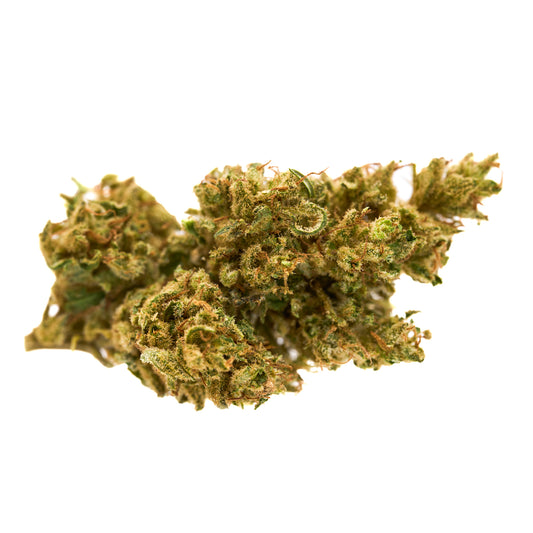
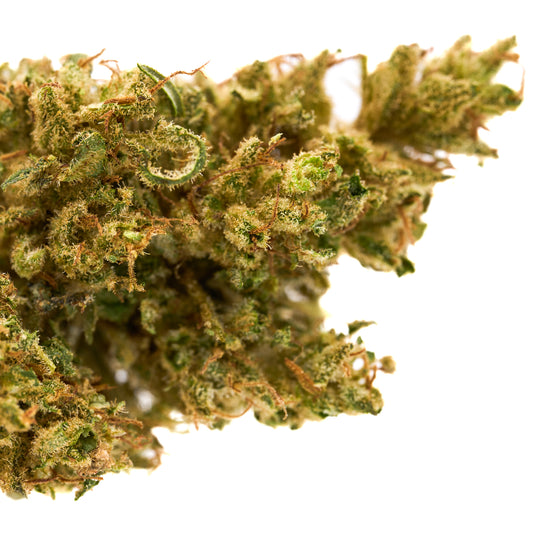
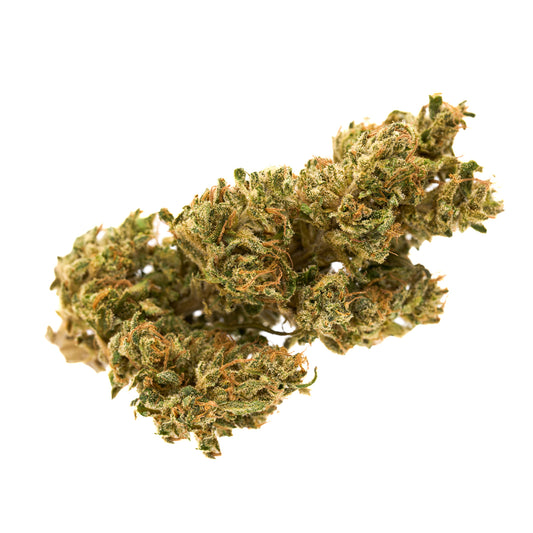
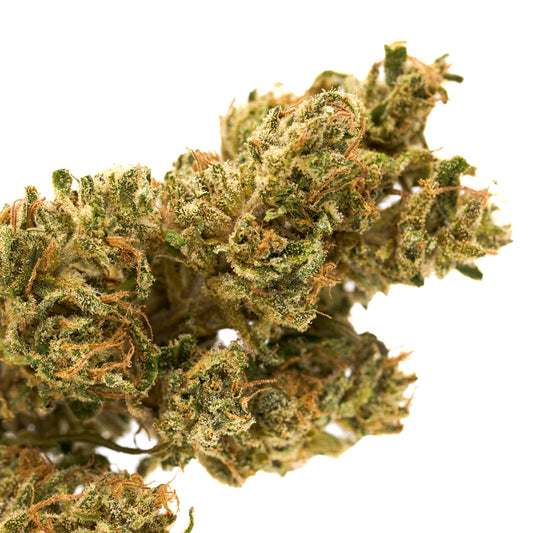
THCA Flower: Premium hemp-derived THCA flower typically tests between 18% and 30% THCA. That means a single gram of top-shelf THCA flower contains roughly 180–300mg of THCA. More common mid-range flower might test at 15–22%, putting the per-gram THCA content at 150–220mg.
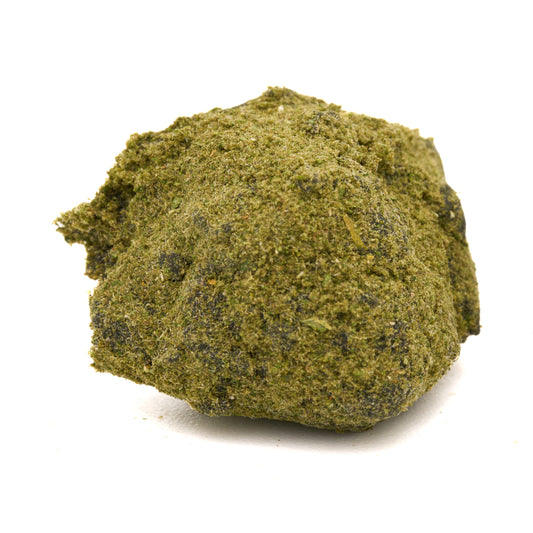
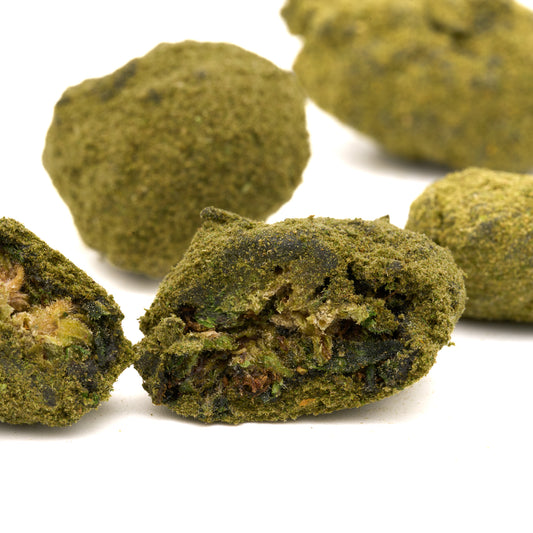
THCA Concentrates: This is where the numbers get dramatic. Depending on the concentrate type, THCA content can range from 70% to 99%+. A gram of THCA crumble testing at 80% contains 800mg of THCA. A gram of THCA diamonds testing at 97% contains 970mg of THCA. Even a more modest concentrate at 70% contains 700mg per gram — still more than double the best flower on the market.
The conclusion from these numbers is clear: THCA concentrate stronger than flower isn't just a marketing claim — it's a quantifiable fact. Per gram, concentrates contain three to five times the THCA content of premium flower and six to eight times the THCA content of average flower.
But the story doesn't stop at per-gram content. How these products are actually consumed matters just as much.
Typical Flower Session: Most flower consumers use 0.3–0.5g per session (a moderate bowl pack or half a joint). At 25% THCA, a 0.4g session delivers approximately 100mg of THCA.
Typical Concentrate Session: Most concentrate users consume 0.05–0.15g per session — a small to medium dab. At 80% THCA, a 0.1g dab delivers 80mg of THCA. A slightly larger 0.15g dab at 90% delivers 135mg.
The takeaway: even though concentrate sessions involve a tiny fraction of the physical material used in a flower session, the THCA dose per session is remarkably similar — or even higher, especially as tolerance increases and dab sizes grow. And this is precisely why THCA flower vs concentrate potency discussions require looking at dose efficiency, not just per-gram numbers.
Onset Speed: How Fast Do They Hit?
Both THCA flower and THCA concentrates are consumed through inhalation, which is the fastest delivery method for any cannabinoid product. Compare both to edibles (which can take 45–90 minutes to produce effects) and inhalation clearly wins for speed. But within the inhalation category, concentrates have a distinct edge.
THCA Flower (Smoked or Vaped): Effects typically begin to appear within 1–5 minutes of consumption. Peak effects generally arrive over a 10–20 minute window as the cannabinoids fully enter the bloodstream. The onset is relatively gradual, which gives experienced users time to assess where they're at before deciding to consume more.
THCA Concentrates (Dabbed or Vaped): The onset of a THCA dab vs smoke comparison is one of the most noticeable real-world differences between these formats. Dabbed concentrates — especially those consumed through a properly heated rig — produce detectable effects within seconds to two minutes. Peak effects arrive within 5–10 minutes.
This faster onset has two important implications. First, it allows for tighter session management: you know within a couple of minutes exactly where a given dose has put you, making it easier to calibrate. Second, it demands more caution from newer users. If you're not accustomed to how quickly concentrates take effect and you make a second move before the first one has fully hit, you can end up in a much more intense place than intended.
For experienced consumers, the rapid and precise onset of concentrate effects is actually a feature, not a bug. For newcomers, the slower ramp of flower is more forgiving.
Intensity and the Character of the High
Potency numbers and onset speed are measurable. The qualitative character of the experience is harder to quantify but equally important for consumers making this decision.
When comparing THCA concentrate effects vs flower, experienced users consistently report a few key differences:
Intensity: For equivalent THCA doses, most users report that concentrate effects feel more intense than flower effects. Part of this is the speed of onset — rapid delivery tends to produce a more pronounced initial peak. Part of it is delivery efficiency: dabbing at appropriate temperatures converts THCA to THC more completely than smoking, which involves some combustion loss.
Clarity: A frequently mentioned characteristic of concentrate effects is that they often feel "cleaner" or "clearer" than flower effects. This is commonly attributed to the absence of combustion byproducts. When you smoke flower, you're inhaling not just cannabinoids and terpenes but also carbon monoxide, tar, particulate matter, and a range of other combustion products that are created when plant material burns. Concentrate vapor — when properly produced and consumed at the right temperature — contains primarily cannabinoids and terpenes, without those extraneous compounds.
Duration: Both flower and concentrate effects typically last 1–3 hours for most users, though this varies significantly based on tolerance, dose, and individual metabolism. The onset is faster with concentrates, and the peak can be sharper, but the total duration of effect isn't dramatically different.
The Terpene Factor: The entourage effect — the synergistic interaction between cannabinoids and terpenes — is a real and meaningful part of the overall experience. A terpene-rich live resin or hash rosin can produce a noticeably different qualitative experience than a THCA diamond that's been stripped of terpenes, even at the same THCA dose. Similarly, a flower with a rich myrcene-dominant terpene profile will feel different from the same dose of a limonene-forward flower. When evaluating which is stronger THCA flower or concentrate, keep in mind that terpene content influences the character of the effect, not just the THCA number.
THCA Concentrate vs Smoking: The Respiratory Dimension
One of the most practically significant differences in the THCA concentrate vs smoking debate is what these methods do — and don't do — to your respiratory system.
Smoking THCA Flower: Combustion of any organic material produces smoke, and smoke contains carbon monoxide, polycyclic aromatic hydrocarbons, particulate matter, and various other byproducts. Chronic smoke inhalation — whether from tobacco, cannabis, or hemp — is associated with airway irritation, increased respiratory mucus, and potential longer-term respiratory effects with sustained heavy use. Most regular flower smokers report some degree of cough and throat irritation.
Dabbing THCA Concentrates: Properly executed dabbing produces vapor, not smoke. There is no combustion, and therefore no carbon monoxide or combustion-related particulates. Many consumers who transition from smoking flower to dabbing concentrates report meaningful improvement in respiratory comfort — less coughing, less throat irritation, and generally a cleaner inhalation experience.
Two important caveats: First, "properly executed" matters. Dabbing at excessively high temperatures — a common beginner mistake — can partially combust material and significantly reduce the quality of the vapor. A thermal banger or an electronic nail with precise temperature control produces a much cleaner experience than guesswork with a butane torch. Second, inhaling any vapor, even clean concentrate vapor, is not without effect on the respiratory system — it's simply a substantially reduced exposure compared to smoke.
For consumers who have respiratory sensitivities or who have been smoking flower for years and are noticing it, the shift to concentrates is worth considering on this basis alone.

Flavor and Aroma: A More Nuanced Competition
On the flavor front, the comparison between THCA flower vs dab is more nuanced than the straightforward potency comparison.
THCA Flower Flavor: Well-grown, properly cured THCA flower can have a remarkably complex and enjoyable flavor profile. The natural terpene expression of a high-quality flower strain — consumed through a clean vaporizer at the right temperature — can be genuinely exceptional. The full-spectrum nature of the experience, with hundreds of different compounds present from the whole plant, creates a flavor complexity that's hard to replicate.
THCA Concentrate Flavor: This varies enormously by concentrate type:
- Live Resin: Extracted from fresh-frozen material to preserve the full terpene profile, live resin can be extraordinarily flavorful — often exceeding dried-and-cured flower in terpene complexity and intensity.
- Hash Rosin: Solventless, full-spectrum extraction that preserves terpenes exceptionally well. One of the most flavorful concentrate formats available.
- Crumble and Budder: Made through solvent extraction with post-processing that preserves reasonable terpene content. Solid, enjoyable flavor.
- Diamonds: Crystalline THCA that can be nearly flavorless on its own. Often paired with terpene sauce in "diamonds and sauce" products to reintroduce flavor.
- Isolate: Pure THCA, essentially flavorless. Used for its precision rather than its sensory experience.
The bottom line on flavor: the best concentrates — particularly live resin and rosin — can be genuinely spectacular in flavor. For consumers who prioritize flavor as part of their experience, premium concentrates are a revelation. For those who simply want a familiar, plant-forward experience, quality flower holds its own.
Cost: Per Gram vs. Per Session — A Critical Distinction
At first glance, THCA concentrates vs flower cost comparisons seem to favor flower heavily. Quality THCA flower typically runs $8–$20 per gram. Quality THCA concentrates typically run $30–$70+ per gram. That's a significant premium.
But per-gram cost is only part of the picture. Per-session cost, accounting for how much material you actually consume, often tells a very different story:
Flower example: $14/g flower, 0.5g per session = $7.00 per session, delivering approximately 125mg THCA at 25%.
Concentrate example: $45/g crumble at 80% THCA, 0.1g per session = $4.50 per session, delivering 80mg THCA.
Larger concentrate session: Same $45/g crumble, 0.15g session = $6.75, delivering 120mg THCA — nearly identical THCA dose to the flower session at a slightly lower cost.
The math doesn't always land this favorably for concentrates, and it depends heavily on your dose habits and the specific products you're comparing. But the point stands: concentrates are significantly more cost-effective per dose than their per-gram price suggests. For high-frequency consumers especially, the economics of concentrates are worth calculating carefully.
Equipment and Accessibility: Where Flower Wins
There's one area where THCA flower has a clear and unambiguous advantage over concentrates: accessibility and ease of entry.
Smoking THCA flower requires equipment that virtually everyone already has or can acquire for a few dollars — a pipe, some rolling papers, or a basic one-hitter. Even a quality desktop or handheld dry herb vaporizer that significantly improves the flower experience runs $50–$100 for a solid entry-level option.
Dabbing concentrates requires a meaningful equipment investment. A basic dab rig setup — rig, quartz banger, butane torch, carb cap, dab tool, and a cleaning kit — runs at least $80–$150 for decent-quality components. Electronic nails (e-nails) and purpose-built dab vaporizers that make the process more consistent and accessible run $100–$300+. If you're not already set up for concentrates, there's a real upfront cost and a real learning curve.
This is a genuine barrier that matters, especially for consumers who are curious about concentrates but aren't yet sure whether the experience is right for them. For those consumers, starting with flower and working toward concentrates as interest and commitment develop is a sensible approach.
The Strongest THCA Product: What's Actually at the Top?
If raw potency is your primary criteria, here's a quick ranking of THCA product formats from most to least potent:
- THCA Isolate / Diamonds (90–99%+ THCA): The highest potency THCA products available. Nearly pure THCA with minimal other compounds.
- THCA Crumble / Wax / Shatter (70–90% THCA): Extremely potent, often with preserved terpenes for a fuller experience.
- THCA Budder / Badder (65–85% THCA): Creamy texture, solid potency, good terpene preservation.
- THCA Live Resin (60–80% THCA): Slightly lower potency than some other concentrates, but exceptional terpene content and entourage effect.
- THCA Hash Rosin (50–75% THCA): Solventless and full-spectrum; slightly lower potency but premium flavor and quality.
- THCA Flower (18–30% THCA): The starting point for most consumers, accessible, enjoyable, and still genuinely potent.
Who Should Use Concentrates, and Who Should Stick with Flower?
Choose THCA Flower If:
- You're newer to THCA or hemp-derived products
- You prefer a gradual, manageable onset
- You value the familiar ritual of flower consumption
- You don't want to invest in specialized equipment
- You consume casually and infrequently
- You're building tolerance before stepping up to higher-potency formats
Choose THCA Concentrates If:
- You're an experienced hemp or cannabis consumer with an established tolerance
- You want maximum efficiency — maximum effect from minimum material
- You've already invested in (or are willing to invest in) concentrate equipment
- You're interested in the pinnacle of flavor and terpene complexity
- You're a high-frequency consumer for whom the economics of concentrates make sense
- You're specifically seeking the cleaner, vapor-based experience that concentrates provide
FAQ: Real Questions About THCA Concentrates vs. Flower
Q: Is THCA concentrate actually stronger than THCA flower? A: Yes, significantly. THCA concentrates test at 70–99% THCA versus 18–30% for premium flower. When understanding THCA concentrate stronger than flower in real terms: per gram, concentrates contain three to five times more THCA. Per session, the dose difference narrows because concentrate sessions use much less material, but concentrates still produce a more intense effect at equivalent doses.
Q: Can I feel the difference between dabbing and smoking right away? A: Absolutely. The THCA dab vs smoke experience difference is immediately noticeable — faster onset, higher intensity, and (for most users) a cleaner feeling without the heaviness that sometimes accompanies smoking plant material.
Q: What type of THCA concentrate is best for beginners? A: If you're transitioning from flower to concentrates, crumble and budder are often recommended starting points. They're easier to handle than liquid consistencies, they have good terpene content for a full experience, and they're available at potency levels (70–80%) that are strong but approachable. Diamonds are best saved until you have some dabbing experience, as their near-pure potency can be overwhelming.
Q: Do THCA concentrates smell as strong as flower? A: It varies significantly by concentrate type. Live resin and rosin have strong, complex terpene aromas comparable to high-quality flower. Diamonds and isolate are nearly odorless. In terms of ambient odor during consumption, concentrate vapor typically dissipates more quickly than flower smoke, which can be an advantage in certain settings.
Q: Is the entourage effect present in concentrates? A: Yes, in terpene-rich concentrates like live resin, rosin, and high-quality crumble and budder. The entourage effect describes the synergistic interaction between cannabinoids and terpenes, and full-spectrum or broad-spectrum concentrates preserve enough terpene content to produce this effect. Pure THCA isolate, by contrast, lacks terpenes and does not produce a full entourage effect.
Q: How do I get the most flavor from a THCA concentrate? A: Temperature is everything. Lower temperature dabs (around 400–450°F) preserve terpenes and produce flavorful vapor. Higher temperature dabs (550°F+) vaporize more efficiently but destroy terpenes and produce harsher vapor. Investing in a quality e-nail or dab thermometer is worth it if flavor is a priority.
Q: Are THCA concentrates legal in 2026? A: Hemp-derived THCA concentrates occupy the same regulatory space as THCA flower — legal at the federal level as hemp derivatives under the Farm Bill when the source material meets the definition of hemp. State-level regulations vary, and you should check your specific state's rules before purchasing or possessing THCA concentrates.
Conclusion: Strong Is Relative — But Concentrates Win on Every Potency Metric
The THCA flower vs dab debate really does have a clear answer on the potency question: concentrates win, and it's not particularly close. Higher THCA per gram, equivalent or higher THCA per session, faster onset, more intense peak effects, and (for most users) a cleaner overall experience — concentrates deliver a fundamentally stronger experience than flower across every objective measure.
But "stronger" isn't always better. For consumers who are new to THCA, who prefer a familiar and forgiving experience, or who simply enjoy the ritual of flower consumption, THCA flower remains an excellent product that's well worth its place in the market. The fact that concentrates are stronger doesn't mean flower is inferior — it just means they serve different purposes and different consumers.
For experienced hemp consumers who are ready to explore what THCA concentrate effects vs flower actually feel like in practice — the answer is: significantly more intense, more immediate, and in many ways more refined. And for that consumer, concentrates represent the next natural step in their THCA journey.
Ready to explore the full spectrum of high-quality THCA concentrates? Browse the complete collection at Oregon Hemp Flower and find the product that matches your experience level, preferences, and goals.
