




Does Growing Method Affect THCA Potency? Indoor vs Outdoor Explained

Walk through any online hemp shop and you'll notice something: "indoor grown" gets treated like a luxury label. It's listed alongside premium pricing, high COA numbers, and marketing language that implies — but rarely explains — superiority. So the question is fair: does growing method actually affect THCA potency indoor vs outdoor, or is the indoor premium mostly branding?
The honest answer sits somewhere in the middle. Yes, growing environment has a real, measurable impact on THCA cannabinoid levels. But it's not the only factor — and it's not always the most important one. Genetics, cultivation technique, harvest timing, post-harvest handling, and even the skill of the individual grower all contribute to what shows up on a THCA lab results sheet.
This guide breaks it all down. We'll look at how the hemp plant actually produces THCA, what indoor and outdoor environments each bring to the table, how to read potency data the right way, and what growing method really means for your experience as a consumer. By the end, you'll know exactly what to look for when comparing THCA percentage flower across different products — and how to choose with confidence instead of guessing.
How the Hemp Plant Produces THCA
Before comparing grow methods, it helps to understand what you're actually measuring. THCA — tetrahydrocannabinolic acid — is the raw, acidic precursor to THC. In its natural state inside a living hemp plant, it exists as THCA rather than THC. It only converts to THC through decarboxylation THCA, a process triggered by heat. When you smoke, vape, or cook THCA flower, that heat drives the decarboxylation reaction and produces the psychoactive compound you're after.
THCA is synthesized inside trichomes — the tiny, hair-like glands that cover the surface of mature hemp flowers and leaves. These structures look like miniature mushrooms under a microscope, with a stalk and a rounded head. The head is where the action happens. Trichome cells produce cannabinoids through a biosynthetic pathway that starts with cannabigerolic acid (CBGA), sometimes called the "mother of all cannabinoids."
Here's the simplified version of how it works: the plant produces CBGA, and then specialized enzymes convert that CBGA into one of three cannabinoid acids depending on the strain's genetic programming — THCA, CBDA, or CBCA. Strains bred to produce highest THCA hemp have enzyme profiles that strongly favor THCA production.
Several variables determine how much THCA a plant can ultimately produce:
Genetics set the upper limit. No growing environment can push a plant beyond its genetic ceiling. A strain bred for 28% THCA cannot produce that in just any garden, but a strain with a 16% ceiling won't hit 28% regardless of how well it's grown. Genetics always come first.
Light intensity and spectrum drive photosynthesis and cannabinoid synthesis. The more quality light the plant receives — especially in the right wavelengths — the more energy it has to produce cannabinoids and terpenes.
Controlled stress is a counterintuitive but real factor. Moderate, targeted stressors — particularly UV-B radiation exposure and temperature drops near harvest — signal the plant to ramp up trichome production. This is a natural defense mechanism: trichomes protect the plant from UV damage, so more UV exposure means more trichomes.
Nutrient availability during the flowering stage directly impacts bud density and cannabinoid development. Phosphorus and potassium play especially important roles in late-stage flower production.
Harvest timing is more critical than most casual consumers realize. THCA peaks at a specific point in trichome maturity, then begins to degrade into CBN as the plant ages. Harvesting too early or too late both reduce the final THCA reading.
Understanding these factors makes it much easier to evaluate what indoor and outdoor growing environments actually offer — and where each falls short.

Indoor Cultivation: Why It Leads in THCA Levels
Indoor THCA strength has a well-earned reputation. Indoor grows dominate the top end of THCA lab results charts, and there are concrete, science-backed reasons why.
Precision Light Control
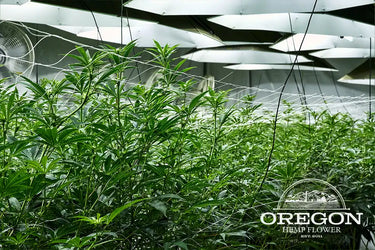
Light is the single most important environmental variable for cannabinoid production, and indoor growers have total command over it. Modern cultivation facilities use high-powered LED arrays that can be tuned to deliver specific light spectrums at precise intensities at every stage of growth. During vegetative growth, plants get blue-spectrum light that promotes leaf and stem development. During flowering, the spectrum shifts toward red wavelengths that drive bud production.
Many professional indoor cultivators add a UV-B supplementation period during the final two to four weeks of flower. Research on cannabis plants indicates that UV-B exposure triggers trichome proliferation as a defense response — the plant produces more and larger trichome heads to protect itself from radiation. More trichomes means more THCA production, which translates directly into higher percentages on THCA lab results.
Outdoor plants receive some natural UV-B from sunlight, but the dose is inconsistent. Cloud cover, atmospheric filtering, and seasonal changes in sun angle all reduce outdoor UV-B delivery. Indoor growers can dial in exactly the right intensity for the right duration at exactly the right time.
Environmental Stability
Outdoor plants spend their entire lives adapting to a changing environment. Temperature swings, humidity fluctuations, wind, rain, and unexpected weather events all force the plant to redirect energy toward survival rather than production. Every resource the plant spends dealing with environmental stress is a resource not spent on trichome and cannabinoid synthesis.
Indoor grows eliminate this variability. Temperature stays within a tight range around the clock. Humidity is managed precisely — typically higher during vegetative growth, lower during flowering to prevent mold and encourage trichome development. CO2 levels can be elevated beyond atmospheric norms to supercharge photosynthesis. Air circulation is managed to strengthen stems and prevent hot spots.
The plant operates in a near-perfect environment where essentially all of its energy goes toward doing what growers want it to do: produce dense, resinous, cannabinoid-rich flowers.
Precision Nutrient Management
Indoor grows — particularly hydroponic systems — give cultivators exact control over what nutrients reach plant roots and in what concentrations. This allows feeding schedules that are precisely calibrated to each growth stage. During early flower, higher nitrogen supports leafy growth. As flowering progresses, phosphorus and potassium ramp up to drive bud development and resin production. A strategic nutrient flush in the final week or two before harvest removes salt buildup and can improve the final flavor and quality of the cured flower.
Outdoor plants draw nutrients from soil, which varies significantly in mineral content, pH, microbial activity, and organic matter. Skilled outdoor growers amend soil carefully, but they can never achieve the same precision as a controlled hydroponic or coco-based indoor system.
What Indoor Numbers Look Like
The practical result of all these advantages: THCA levels growing method data consistently shows indoor flower at the top. Premium indoor cultivars routinely test between 22% and 30%+ THCA, with some exceptional phenotypes pushing even higher. These are the numbers associated with the question does indoor THCA get you higher — and statistically, if you're chasing raw percentage, indoor is where you'll find the ceiling.
Outdoor Cultivation: Real Potency With Different Trade-Offs
Outdoor THCA potency deserves more credit than it typically gets in marketing conversations. Outdoor flower can be genuinely excellent — but it operates under different constraints, and understanding those constraints helps you evaluate it fairly.
The Natural Light Advantage
Full-spectrum natural sunlight is something no indoor LED fully replicates. Sunlight delivers a complete range of wavelengths — including UV-B — at intensities that even high-powered grow lights don't always match at the canopy level. During peak summer in the right climate, outdoor plants receive enormous amounts of light energy, which feeds robust photosynthesis and terpene production.
This full-spectrum exposure, combined with natural diurnal cycles (warm days and cool nights), creates conditions that many cultivators argue allow plants to express their genetics more completely. Outdoor plants often develop richer, more complex terpene profiles than their indoor counterparts — which has real implications for the quality of your experience even if raw THCA percentage flower numbers are lower.
The Variability Problem
The fundamental challenge with outdoor cultivation is consistency. Weather is unpredictable. A late-summer rain event during flowering can invite mold. Cloudy weeks during critical trichome development reduce cannabinoid synthesis. Temperature anomalies — an unexpected heat wave or early frost — can stress plants in ways that reduce final potency or force an early harvest.
Skilled outdoor cultivators manage these risks through site selection, strain choice, and responsive practices, but they can never eliminate environmental variability entirely. This is why outdoor THCA flower shows more batch-to-batch variation than indoor.
Soil Complexity
One genuine advantage outdoor grows sometimes have over indoor: soil. Living soil teems with microbial life — bacteria, fungi, beneficial nematodes, and other organisms that form symbiotic relationships with plant roots. These relationships, particularly mycorrhizal fungi networks, help plants access nutrients and water more efficiently. They also influence the plant's secondary metabolite production in ways that aren't fully understood but that many experienced cultivators observe in their final product.
The argument isn't that soil makes flower more potent in terms of raw THCA percentage — it often doesn't. The argument is that soil complexity can produce a more complete plant, one with a fuller terpene and minor cannabinoid expression that contributes to a richer overall effect.
Outdoor Potency Ranges and Climate Dependence
Well-cultivated outdoor THCA hemp flower typically lands in the 15% to 22% THCA range. This is a broad window, and where within that window a crop lands depends heavily on climate. Regions like southern Oregon, parts of Colorado, and the Midwest during late summer provide hot, sunny days with cool nights — conditions that promote trichome development and THCA synthesis. Humid, overcast climates produce notably lower THCA cannabinoid levels and greater disease pressure.
Oregon specifically has a well-established reputation for outdoor hemp cultivation quality precisely because the climate aligns well with what hemp plants want: abundant summer sun, low humidity during the critical late-flowering period, and cool nights that stress the plant in the beneficial way that drives resin production.
Greenhouse Growing: The Middle Path
No conversation about THCA levels growing method comparison is complete without addressing greenhouse cultivation. Greenhouse grows occupy a distinct middle ground that combines advantages from both worlds.
In a greenhouse, plants grow in natural sunlight — getting the full-spectrum benefit that outdoor cultivation provides — while also being protected from rain, excessive humidity, and temperature extremes. Growers can supplement with artificial lighting to extend photoperiods or boost canopy light intensity. Environmental controls manage temperature and humidity to levels that approach indoor conditions.
The result: greenhouse flower often tests higher than open-air outdoor but doesn't consistently reach the peaks of premium indoor grows. Typical greenhouse THCA ranges fall between 18% and 25% — above average outdoor, below the top-tier indoor ceiling.
Greenhouse cultivation also tends to produce more consistent terpene profiles than outdoor due to environmental protection, while often retaining some of the natural complexity that comes from real sunlight exposure. From a value standpoint, greenhouse flower frequently offers an excellent balance of potency, quality, and price.
Does Higher THCA Percentage Actually Mean a Stronger Experience?
This is the most important nuance in the entire conversation, and it's where THCA potency indoor vs outdoor discussions often miss the point.
Raw THCA percentage is a measure of potential potency — it tells you how much THCA is present in the unheated flower. After decarboxylation THCA converts to THC during consumption, that potential becomes actual potency. But percentage alone doesn't determine your experience.
The entourage effect describes the way cannabinoids and terpenes interact synergistically to shape the character, intensity, and duration of effects. THCA doesn't act alone — it works alongside CBD, CBG, CBC, CBN, and dozens of terpenes including myrcene, limonene, caryophyllene, linalool, and pinene. Each of these compounds influences how the others behave and how you ultimately feel.
A 17% THCA outdoor flower with abundant myrcene, caryophyllene, and linalool might deliver a deeply satisfying, full-body experience that a 25% indoor flower with minimal terpene development simply can't match. On the other hand, a high-potency indoor cultivar with a rich terpene profile delivers on both dimensions.
The practical takeaway: don't filter exclusively by THCA percentage when shopping for the highest THCA hemp. Look at the full COA — total cannabinoids, minor cannabinoid presence, and terpene data when available. A complete chemical profile almost always delivers a better experience than a sky-high THCA number attached to a thin terpene panel.

How to Read THCA Lab Results for Potency
THCA lab results can look intimidating if you don't know what to focus on. Here's a straightforward breakdown of what matters:
THCA % is the starting point. This is the raw THCA content in the unheated, unprocessed flower. It represents the maximum THC potential if the flower is completely decarboxylated.
Delta-9 THC % tells you how much THC is already present in the flower before any heating. For hemp-derived THCA flower to be federally compliant under the 2018 Farm Bill, Delta-9 THC must remain at or below 0.3% by dry weight. High THCA percentage flower can be fully compliant as long as this number stays within legal limits.
Total THC is typically calculated using the formula: (THCA × 0.877) + Delta-9 THC. The 0.877 factor accounts for the mass lost when THCA converts to THC during decarboxylation. This figure gives you the estimated potency of the flower after consumption.
Total Cannabinoids sums all detected cannabinoids. A high total cannabinoid reading alongside your THCA number indicates a chemically rich flower with good entourage effect potential.
Terpene Panel — not always included on COAs but increasingly common among quality producers — identifies which terpenes are present and in what concentrations. This is valuable data for predicting the character of effects.
Always verify that the lab issuing a COA holds ISO 17025 accreditation. This internationally recognized standard for testing laboratory competence ensures the results are generated using validated methods under quality-controlled conditions. Without it, potency numbers are difficult to trust.
Key Factors Beyond Grow Method That Affect THCA Potency
Since genetics and cultivation technique matter as much as environment, here are the other variables worth evaluating when comparing indoor THCA strength against outdoor alternatives:
Strain genetics are the foundation. Strains specifically developed for high THCA expression — through selective breeding and phenotype hunting — will outperform generic genetics regardless of growing environment. The best indoor growers work with elite genetics. The best outdoor growers do the same.
Harvest timing is often underappreciated. Trichomes pass through stages: clear (immature), cloudy/milky (peak THCA), and amber (THCA degrading to CBN). Harvesting at peak milky trichome stage maximizes THCA content. Early harvest means lower THCA; late harvest means degraded THCA and higher CBN, which changes the effect profile significantly.
Curing and drying affect both potency preservation and user experience. A proper slow cure — typically 60 to 90 days in controlled humidity environments — allows chlorophyll to break down, moisture to equalize, and terpenes to develop fully. Rushed drying degrades terpenes rapidly and can cause THCA to oxidize. Even great flower grown in ideal conditions can be compromised by poor post-harvest handling.
Storage conditions from harvest through packaging matter for the same reason. THCA degrades when exposed to excessive heat, light, and oxygen. Quality producers store cured flower in airtight, light-protected containers and ship in packaging that protects the flower during transit.
Comparing Indoor vs Outdoor THCA: A Practical Summary
| Factor | Indoor | Outdoor | Greenhouse |
|---|---|---|---|
| Typical THCA Range | 22–30%+ | 15–22% | 18–25% |
| Consistency | High | Variable | Moderate-High |
| Terpene Complexity | Moderate-High | High (climate dependent) | Moderate-High |
| Price Point | Premium | Accessible | Mid-range |
| Environmental Control | Maximum | Minimal | Moderate |
| UV-B Exposure | Controlled/Supplemented | Natural/Variable | Natural + Supplemented |
| Best For | Max potency seekers | Value + natural preference | Balanced buyers |
Frequently Asked Questions
Does indoor THCA get you higher than outdoor?
Generally, yes — if you're comparing equivalent consumption methods and amounts. Does indoor THCA get you higher is one of the most searched questions in the hemp space, and the answer is: indoor flower delivers more THCA per gram on average, which means more THC post-decarboxylation. However, terpene profiles and the entourage effect mean that a particularly well-grown outdoor strain can compete with or exceed the experiential quality of a mediocre indoor product.
What's a good THCA percentage for flower?
For consumers seeking noticeable effects, anything above 18% THCA is solid. Premium THCA percentage flower from top indoor cultivators regularly hits 25–30%. Anything above 30% THCA is exceptional and should be verified carefully against COA data.
Does growing method affect terpene content as well as THCA?
Absolutely. Outdoor and greenhouse plants typically develop more complex terpene profiles due to natural environmental stressors and full-spectrum light exposure. Indoor terpene profiles can be impressive — especially from top cultivators — but the natural variability of outdoor growing often produces more nuanced and unique terpene expressions.
How does decarboxylation affect THCA content?
Decarboxylation THCA is the chemical process that converts THCA into THC. Heat removes a carboxyl group from the THCA molecule, producing THC and CO2. This happens automatically when you smoke or vape flower. The conversion isn't 100% efficient — the standard calculation uses a 0.877 conversion factor to account for mass lost in the process. Raw THCA flower contains no significant Delta-9 THC until it's heated.
Can outdoor THCA flower be as effective as indoor?
Yes — effectiveness isn't determined by percentage alone. Well-grown outdoor THCA hemp with a rich terpene profile and 18%+ THCA can deliver an exceptional experience. Many experienced users prefer outdoor flower for the complexity of effects it produces, even if the raw potency numbers are lower than top indoor products.
Why do some indoor THCA products test lower than outdoor ones?
Because genetics, harvest timing, and post-harvest handling can override the environmental advantage. A premium outdoor cultivar harvested at perfect trichome maturity and properly cured can absolutely outperform poorly grown or improperly handled indoor flower. The grow environment sets the potential — everything else determines whether that potential is realized.
How do I verify that THCA lab results are accurate?
Look for COAs from ISO 17025-accredited laboratories. Check that the document includes the testing date, sample ID, method references, and laboratory signature or accreditation number. The most reliable producers make current COAs available directly on product pages or via QR code on packaging. If a retailer can't produce a COA, that's a significant red flag.
Is greenhouse THCA worth buying?
Greenhouse THCA flower represents one of the best value propositions in the market. You get THCA percentages that frequently exceed average outdoor levels, terpene complexity that benefits from real sunlight, and pricing that sits below premium indoor. For buyers who want strong flower without paying the highest tier of indoor pricing, greenhouse is an excellent middle ground.
The Bottom Line: Growing Method Matters, But It's Not the Whole Story
THCA potency indoor vs outdoor is a real and meaningful distinction — not marketing smoke and mirrors. Indoor cultivation's controlled environment consistently produces higher THCA cannabinoid levels by giving the plant optimal conditions to reach its genetic potential. If your primary goal is the highest possible THCA percentage, indoor-grown flower is statistically your best bet.
But outdoor and greenhouse THCA flower delivers genuine value that purely chasing numbers can cause you to overlook. Natural sunlight, complex soil biology, and the stresses of real-world growing create plants with chemical profiles that percentage alone doesn't capture. The entourage effect is real, and sometimes 17% THCA outdoor with exceptional terpenes hits harder and more satisfyingly than 28% indoor with minimal terp development.
The smartest approach: use THCA lab results as a starting point, evaluate the full COA — THCA, total cannabinoids, terpenes — and factor in your personal priorities around potency, complexity, price, and growing philosophy. Then shop from producers who make that data transparent and verifiable.
Ready to explore THCA levels growing method comparisons for yourself? Browse current indoor, greenhouse, and outdoor THCA percentage flower with full COA data available — so you can shop informed, not just by the label.
