




How Long Does It Take to Grow Hemp? Seed to Harvest Timeline

Most photoperiod hemp plants take roughly 3–5 months from seed to harvest, plus drying and curing time. Here's every stage, week by week.
If you've ever asked how long does hemp take to grow, you've probably gotten an answer like "it depends." That's true, but it isn't very useful. The real answer depends on a handful of factors you can actually pin down: whether you're growing photoperiod or autoflowering genetics, whether you're growing indoors or outdoors, how long you let the plant grow before flowering, and how patient you are with drying and curing.
This guide breaks the entire process into stages, gives realistic time ranges for each, and explains what's happening inside the plant along the way. That includes the part most people really care about: when cannabinoids like THCa and CBDa actually develop, and why the timing of your harvest affects both quality and compliance.
Whether you're a first-time home grower, a farmer planning an outdoor season, or a buyer who simply wants to understand what goes into the flower you purchase, knowing the full thca flower grow time helps you make better decisions. A plant that's rushed, harvested early, or dried too fast will never match the potency, aroma, or smoothness of one given the time it needs.
Let's start with the big picture.
Hemp Growth Stages at a Glance
Here's the full life cycle of a typical photoperiod hemp plant grown for flower:
| Stage | Typical Duration | What's Happening |
|---|---|---|
| Germination | 1–7 days | Seed cracks, taproot emerges |
| Seedling | 2–3 weeks | First true leaves, root system establishes |
| Vegetative | 3–8+ weeks (outdoors, until days shorten) | Rapid leaf, stem, and root growth |
| Flowering | 8–11 weeks for most photoperiod cultivars | Buds form, trichomes and cannabinoids develop |
| Drying | 7–14 days | Moisture slowly leaves the harvested flower |
| Curing | 2–8 weeks | Flavor, smoothness, and aroma improve |
Add it up and you get roughly 14–22 weeks from seed to harvest, followed by another 3–10 weeks of drying and curing before the flower is at its best. Here's what happens in each stage.
Germination (1–7 Days)
Germination is the moment a dormant seed wakes up. With warmth (roughly 70–80°F), moisture, and darkness, the seed absorbs water, the shell splits, and a small white taproot pushes out. Fresh, high-quality seed often pops in 24–72 hours. Older seed or seed kept too cold can take a full week or fail entirely.
Common germination methods include the paper towel method, soaking seeds in water for 12–24 hours, or planting directly into a starter plug or lightly moistened soil. Direct sowing is the norm on large farms; home growers often pre-germinate to confirm viability before planting.
Timing tip: Germination rate matters as much as speed. Buying stabilized, feminized seed from a reputable breeder saves you from wasting weeks on seeds that never sprout or turn out male.
Seedling Stage (2–3 Weeks)
Once the taproot anchors itself and the seedling breaks the surface, the first leaves you'll see are the rounded cotyledons. These are followed by the first set of "true" serrated leaves, which is the sign the plant has begun photosynthesizing in earnest.
Seedlings are fragile. They need gentle light, high humidity (around 65–70%), and careful watering, because overwatering is the most common way new growers kill them. Most of the action is happening underground as the root system develops.
By the end of week two or three, a healthy seedling will have several sets of true leaves and will start growing noticeably faster. That's when it's ready for the vegetative stage, and often for transplanting into a larger container or into the field.
Vegetative Stage (3–8+ Weeks)
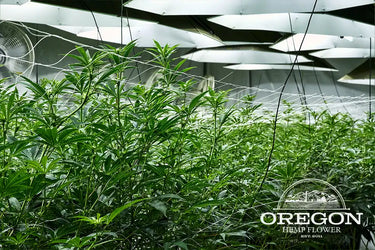
The vegetative stage is when the plant builds the structure that will support its flowers. Stems thicken, branches extend, and leaves multiply. A plant in veg can grow inches per day under good conditions.
Indoors, the grower controls how long veg lasts. Photoperiod plants will keep growing vegetatively as long as they get about 18 hours of light per day. Many indoor growers veg for 3–6 weeks, depending on space and the size of plant they want.
Outdoors, the sun decides. Plants stay in veg as long as days are long and nights are short. In most of the U.S., that means plants put into the ground in late spring will veg through June and July, sometimes for 8–12 weeks or more, before shortening days trigger flowering. That's why outdoor plants are often much larger than indoor plants.
During veg, growers commonly use training techniques like topping, low-stress training (LST), and defoliation to create a wider, more even canopy. These steps don't change the length of the stage much, but they make a big difference in yield and bud quality later.
Key point: Veg is the most flexible stage on the calendar. It's where indoor growers can save or spend the most time.
Flowering Stage (8–11 Weeks)
Flowering is the main event. Once a photoperiod plant detects long, uninterrupted nights, it shifts its energy from growing leaves to producing flowers. The early weeks of flower often include a "stretch," during which plants can double in height before buds begin stacking.
The thca hemp flowering time for most photoperiod cultivars lands between 8 and 11 weeks. Indica-leaning genetics tend to finish on the faster end, around 8–9 weeks. Sativa-leaning and some hybrid cultivars can take 10–12 weeks or longer. Breeders typically list an expected flowering window for each cultivar, and it's worth taking those numbers seriously.
A rough week-by-week look at flowering:
- Weeks 1–3: Transition and stretch. White pistils appear at branch nodes. Vertical growth slows by the end of week three.
- Weeks 4–5: Buds form and fatten. Trichomes become visible and the aroma intensifies.
- Weeks 6–8: Bulking. Buds gain density and weight. Trichome production is at its peak.
- Weeks 8–11: Ripening. Pistils darken and curl, trichome heads turn from clear to cloudy, and the grower watches closely for the harvest window.
This is also the stage where cannabinoids are produced, which we'll cover in detail below.

Drying (7–14 Days)
After harvest, the plant still holds a large amount of water. Drying slowly removes it so the flower can be stored without mold and smoked or vaporized without harshness.
The standard target is about 60°F and 60% relative humidity, in the dark, with gentle air circulation. Under those conditions, whole plants or branches typically dry in 7–14 days. A good test: small stems should snap rather than bend.
Drying too fast, in a hot or dry room, locks chlorophyll into the flower and drives off volatile terpenes. The result tastes grassy and harsh. Drying too slowly or in high humidity invites mold. That 7–14 day window exists for a reason.
Curing (2–8 Weeks)
Curing is where good flower becomes great flower. Dried buds are trimmed and sealed in airtight containers, such as glass jars or curing bins, at around 58–62% humidity. For the first week or two, containers are opened periodically ("burped") to release moisture and gases.
During curing, residual moisture redistributes evenly, chlorophyll continues to break down, and the aroma and flavor become more pronounced. Two weeks is the bare minimum for a noticeable improvement. Many growers and connoisseurs prefer 4–8 weeks.
Curing doesn't add cannabinoids, but it dramatically improves how the flower smells, tastes, and burns, which is a big part of perceived quality.
Photoperiod vs. Autoflower Timelines
One of the biggest variables in how long hemp takes to grow is whether the plant is a photoperiod or an autoflower. They follow very different calendars.
Photoperiod Plants
Photoperiod hemp flowers when nights lengthen. The plant measures uninterrupted darkness, and once nights pass a critical length (roughly 10–12 hours for most cultivars), it switches into flowering.
Indoors, growers trigger this deliberately by flipping lights from an 18/6 schedule to 12/12. Outdoors, it happens naturally as the season moves past the summer solstice. Most plants start flowering in earnest from late July through August, depending on latitude and genetics.
Photoperiod advantages:
- Larger plants and bigger yields
- Grower can extend veg to control size
- Often the most refined, high-potency genetics on the market
Photoperiod drawbacks:
- Longer overall timeline
- Light leaks during the dark period can stress plants or delay flowering
- Outdoors, you only get one natural harvest per year without light-deprivation techniques
Autoflowering Plants
Autoflowers carry genetics from Cannabis ruderalis, a subspecies adapted to short northern summers. Instead of waiting for long nights, they begin flowering based on age, usually 3–5 weeks after sprouting, regardless of light schedule.
Autoflowers often finish in about 10–12 weeks from seed. Some fast cultivars finish in as little as 8–9 weeks, while larger "super autos" can run 14 weeks or more.
Autoflower thca hemp genetics have improved significantly over the last several years. Early autoflowers had a reputation for low potency and small yields, but modern breeding has closed much of that gap.
Autoflower advantages:
- Fastest seed-to-harvest timeline
- No light schedule changes needed. Many growers run 18/6 or 20/4 from start to finish
- Multiple outdoor harvests per season are possible in warm climates
- Compact plants suit small spaces
Autoflower drawbacks:
- Veg can't be extended, so mistakes early on are hard to recover from
- Smaller plants and generally lower yield per plant
- Transplanting and heavy training can stunt them
Side-by-Side Comparison
| Factor | Photoperiod | Autoflower |
|---|---|---|
| Seed to harvest | 14–22+ weeks | 10–12 weeks (typical) |
| What triggers flowering | Long nights | Plant age |
| Veg length control | Fully adjustable | Fixed by genetics |
| Plant size | Medium to very large | Small to medium |
| Yield potential | Higher | Lower per plant |
| Best for | Maximum yield and quality | Speed, small spaces, multiple runs |
When Do Cannabinoids Like THCa and CBDa Develop?
This is the question that separates casual growers from serious ones. Understanding when does thca develop in hemp explains why harvest timing matters so much for potency, flavor, and legal compliance.
Cannabinoids Are Made in the Trichomes
Cannabinoids aren't produced evenly throughout the plant. They're synthesized almost entirely in glandular trichomes, the tiny, mushroom-shaped resin glands that coat flowers and the small "sugar leaves" around them.
Inside each trichome head, the plant first produces CBGA, often called the "mother cannabinoid." Enzymes then convert CBGA into other acidic cannabinoids:
- THCA synthase converts CBGA into THCa
- CBDA synthase converts CBGA into CBDa
- CBCA synthase converts CBGA into CBCa
Which cannabinoid dominates depends on the plant's genetics. High-THCa cultivars carry genes favoring THCA synthase; CBD-type hemp favors CBDA synthase. The raw plant produces these in their acidic forms. They only become THC or CBD after heat (decarboxylation), such as smoking, vaping, or baking.
Trichome Development Through Flowering
THCa trichome development follows a predictable arc:
- Veg and early flower: Trichomes are sparse. Cannabinoid production is minimal.
- Weeks 3–5 of flower: Trichome production accelerates as buds form. Resin becomes visible to the naked eye.
- Weeks 5–8: Trichome density and cannabinoid synthesis are at their highest. This is when most of the plant's cannabinoid content is built.
- Late flower: Trichome heads shift from clear to cloudy (milky). A rising share of amber trichomes signals that the plant is past peak and some THCa is degrading.
Most growers judge ripeness with a jeweler's loupe or digital microscope:
- Mostly clear: Too early. Cannabinoids are still developing.
- Mostly cloudy: Near peak potency for many cultivars.
- Cloudy with 10–30% amber: Often preferred for a fuller, heavier experience.
- Heavy amber: Past peak. Some THCa has started breaking down into CBNa and related compounds.
THCa Levels During Flowering
THCa levels during flowering rise steadily from the middle of flower toward the end. In practice, a plant tested in week five may show a fraction of the cannabinoid content it will reach by week nine. The plant's potential is set by genetics, but how much of that potential shows up in the final flower depends heavily on giving it enough time.
That's the core reason early harvests produce weaker flower. If you cut a 9-week cultivar at week 7, you're leaving a meaningful portion of its cannabinoids, and much of its terpene profile, on the table.
Why Harvest Timing Affects Compliance
Because cannabinoid levels climb as the plant matures, harvest timing directly affects lab results, which matters for anyone growing under a hemp license.
Under current USDA rules, licensed hemp must be sampled within 30 days before harvest, and testing measures total THC. That number combines delta-9 THC with THCa using a conversion factor (total THC = delta-9 THC + 0.877 × THCa). A crop that tests compliant in week seven can test "hot" in week ten simply because the plant kept doing what it naturally does.
For CBD-type hemp farmers, this creates a real tension: waiting longer increases CBDa, but it also increases the small amount of THCa the plant produces. Many growers test early and often in late flower to find the harvest window that maximizes cannabinoids while staying within limits.
Federal rules are also shifting. Changes to the federal hemp definition passed in late 2025 are set to take effect in November 2026, tightening how THC content is counted for finished products. If you grow or sell hemp, confirm current federal and state requirements before you plan your harvest and sale.

Outdoor Season Timeline
Outdoor growing follows nature's calendar, which makes it more predictable in some ways and less forgiving in others. The full outdoor thca hemp harvest timeline usually looks like this in the continental U.S.:
| Month | Activity |
|---|---|
| March–April | Start seeds or clones indoors; prepare soil |
| Late April–May | Harden off seedlings; plant after last frost in warmer regions |
| Late May–June | Typical planting window for most of the U.S. |
| June–July | Vegetative growth; training, irrigation, pest monitoring |
| Late July–August | Flowering begins as nights lengthen |
| September | Bulking and ripening; pre-harvest compliance testing for licensed farms |
| Late September–October | Harvest for most cultivars |
| October–November | Drying and curing |
Latitude Changes Everything
Day length varies by latitude, and that shifts both planting and harvest windows.
- Northern regions (Oregon, Washington, the northern Midwest, the Northeast): Long summer days mean big plants, but fall arrives quickly. Late-finishing cultivars risk running into rain, frost, and mold. Growers here often favor fast-finishing genetics that ripen by late September or early October.
- Southern regions (Texas, Florida, the Southeast, the Southwest): Shorter summer days can trigger flowering earlier, sometimes prematurely if planted too early in spring. Growers often plant later, and in some areas they can run two outdoor cycles per year.
- Mid-latitudes (Colorado, Kentucky, North Carolina): A balance of both, with most harvests landing from mid-September through mid-October.
Cultivar Choice Matters
Each cultivar has its own flowering response. Two plants planted the same day in the same field can finish weeks apart. Before planting outdoors, check the breeder's expected finish date for your latitude and compare it with your region's average first frost and fall rain patterns.
In Oregon's Willamette Valley, for example, autumn rain usually returns in October. Cultivars that finish after mid-October carry a much higher risk of bud rot. Choosing genetics that finish before the rains is often the difference between a premium crop and a lost one.
Light Deprivation: A Middle Path
Many outdoor and greenhouse growers use light deprivation ("light dep"), covering plants with blackout tarps to simulate long nights and force earlier flowering. This allows a summer harvest before fall weather hits, and in some climates two or even three harvests per year. It requires more labor and infrastructure, but it gives outdoor growers some of the timing control indoor growers enjoy.
How to Speed Up (or Not Rush) Your Grow
There are legitimate ways to shorten the seed-to-harvest timeline. There are also shortcuts that cost more in quality than they save in time.
Smart Ways to Shorten the Timeline
1. Shorten veg indoors. Veg is the most flexible stage. Flipping to 12/12 after 2–3 weeks of veg, instead of 6–8, can trim a month or more off the calendar. You'll get smaller plants, but you can compensate by growing more of them in the same space (a "sea of green" approach).
2. Start from clones. Rooted clones skip germination and the seedling stage, saving roughly 2–4 weeks. They also guarantee female plants with known genetics.
3. Choose faster-finishing genetics. Flowering time is largely genetic. An 8-week cultivar will always beat an 11-week cultivar to the finish line. Indica-leaning and many modern hybrid cultivars are bred for speed.
4. Grow autoflowers. If speed is the priority, autoflowers are the most direct route to a 10–12 week harvest from seed.
5. Dial in your environment. Plants grow fastest when nothing is holding them back. Stable temperatures, correct humidity, proper light intensity, healthy roots, and balanced nutrition prevent stress that can stall growth for days or weeks.
6. Use light deprivation outdoors. Forcing flowering earlier in the season gets you to harvest sooner and away from fall weather.
Why Harvesting Early Hurts Quality
It's tempting to cut plants early, especially when buds look frosty at week six or seven. Resist it. Early harvest hurts nearly everything buyers care about:
- Lower potency: Cannabinoid production is still underway. An early harvest locks in a lower ceiling.
- Weaker aroma and flavor: Terpene profiles develop alongside cannabinoids. Early flower often smells muted and tastes "green."
- Lighter, airier buds: The final weeks of flower add significant density and weight. Cutting early sacrifices yield.
- A thinner effect profile: Many users describe early-harvested flower as flat or one-dimensional compared to fully ripened flower.
Don't Rush Drying and Curing Either
The most common way to ruin a good crop happens after harvest. Drying flower in 2–3 days with heat or fans produces harsh, hay-scented buds. Skipping the cure means the flower never develops its full flavor. If you've invested 4–5 months growing a plant, spending another 3–6 weeks drying and curing it properly is worth it.
Sample Timelines
Here's how the stages add up in three common scenarios:
Indoor photoperiod from seed:
Germination (1 week) + seedling (2–3 weeks) + veg (4 weeks) + flower (9 weeks) = about 16–17 weeks to harvest, plus 2 weeks drying and 3–4 weeks curing. Total: roughly 5–6 months to fully cured flower.
Indoor photoperiod from clone:
Rooted clone + veg (3 weeks) + flower (9 weeks) = about 12–13 weeks to harvest, plus drying and curing.
Indoor or outdoor autoflower:
Seed to harvest in about 10–12 weeks, plus drying and curing. Total: roughly 4 months to fully cured flower.
Outdoor photoperiod:
Planted late May to early June, harvested late September to mid-October. Roughly 16–20 weeks in the ground, with cured flower ready by November or December.
Frequently Asked Questions
How long does hemp take to grow from seed to harvest?
Most photoperiod hemp takes roughly 3–5 months from seed to harvest. Autoflowering hemp often finishes in about 10–12 weeks. Add 1–2 weeks for drying and 2–8 weeks for curing before the flower is at its best.
What is the typical THCa flower grow time?
Most THCa flower cultivars take 16–20 weeks from seed to harvest when grown as photoperiods, with 8–11 of those weeks spent in flower. Growing from clones or using autoflower genetics can shorten that timeline.
When does THCa develop in hemp?
THCa is produced in the trichomes, mostly during flowering. Production accelerates around weeks 3–5 of flower and peaks in weeks 5–8, with levels continuing to climb until the plant reaches maturity.
How do you know when THCa hemp is ready to harvest?
Look at the trichomes under magnification. When most trichome heads have turned from clear to cloudy, with some amber, the plant is near peak. Darkened, curled pistils and the breeder's listed flowering time are useful secondary signs.
Do autoflower THCa hemp plants have lower potency?
Older autoflower genetics often did. Modern autoflower breeding has narrowed the gap considerably, though top-shelf photoperiod cultivars still tend to set the ceiling for potency and yield.
Can you harvest hemp early?
You can, but you'll typically get lower potency, weaker aroma, lighter buds, and a less complex experience. For licensed growers, compliance testing sometimes influences harvest timing, but for quality, patience pays.
Why does drying and curing take so long?
Slow drying preserves terpenes and prevents harshness. Curing lets moisture balance throughout the bud and allows chlorophyll to break down, improving flavor and smoothness. Rushing either step noticeably reduces quality.
When is outdoor hemp harvested?
In most of the U.S., outdoor hemp is harvested from late September through mid-October. Exact timing depends on latitude, cultivar, and local weather, particularly the arrival of fall rains and frost.
The Bottom Line
So, how long does hemp take to grow? For most photoperiod plants, expect 3–5 months from seed to harvest, plus several weeks of drying and curing. Autoflowers can cut that to around 10–12 weeks from seed. Indoors, you control the clock through veg length and genetics. Outdoors, the season, your latitude, and your cultivar set the schedule.
The most important lesson is that the final weeks of flowering and the post-harvest cure are where quality is made. That's when cannabinoids peak, terpenes mature, and buds reach their full density. Growers who respect the full thca hemp harvest timeline consistently produce better flower than those who cut corners.
If you'd rather enjoy the results without waiting five months, explore the latest THCa flower releases from Oregon Hemp Flower, grown with patience, harvested at peak ripeness, and properly dried and cured.
