




Sugar Leaf vs Fan Leaf Trim: What's the Difference?

If you've ever shopped for hemp trim, you've probably seen listings that look nearly identical on paper. Same strain name, similar price per pound, the word "trim" in the title. Then the bags arrive, and one is a sparkling pile of frosty little leaves that smell like the flower it came from, while the other is a crunchy green heap of big, flat leaves that looks more like lawn clippings than a cannabinoid product.
The difference between those two bags comes down almost entirely to one question: is it sugar leaf trim, or is it mostly fan leaf?
Understanding sugar leaf vs fan leaf is the single most useful thing you can learn before buying trim, whether you're a home cook making a batch of butter, a small brand filling pre-rolls, or a wholesale buyer sourcing material for extraction. The leaf type determines potency, flavor, what the material is actually good for, and whether the price you're paying makes any sense.
In this guide, we'll break down what each leaf type is, how they compare on potency, flavor, uses, and price, and, most importantly, how to tell what you're actually buying before you hand over your money. By the end, you'll know exactly how to spot quality trim and avoid paying sugar-leaf prices for fan-leaf filler.
What Is Sugar Leaf?
So, what is sugar leaf? Sugar leaves are the small, narrow leaves that grow directly out of the bud itself. Rather than extending out from the main stalk on long stems, they're nestled into the flower cluster, poking out between the calyxes as the bud develops. If you look closely at an untrimmed cola, the little leaf tips sticking out from the bud are sugar leaves.
They get their name from how they look at maturity: coated in so many trichomes that they appear dusted with sugar or frost. That coating is the whole point. Trichomes are the tiny, mushroom-shaped resin glands where the plant produces and stores its cannabinoids and terpenes. Because sugar leaves grow inside the bud structure, they sit right in the plant's most resin-productive zone and pick up a heavy share of that trichome coverage.
Why Sugar Leaf Gets Trimmed Off
If sugar leaves are so resinous, why are they removed at all? It comes down to smoking quality and presentation. Leaves, even frosty ones, burn harsher than calyxes and contain more chlorophyll and plant material. A properly manicured bud looks tighter, smokes smoother, and sells for more. So during the trimming process, growers clip the sugar leaves back to the edge of the bud, and those clippings are collected as trim.
What you get from that process depends on how it's done:
- Hand-trimmed sugar leaf is typically the cleanest and frostiest. Trimmers work bud by bud, and the clippings are almost entirely sugar leaf with minimal stem and little fan leaf mixed in.
- Machine-trimmed material can still be excellent, but tumble and blade trimmers tend to knock off some trichomes and may pull in more stem and larger leaf fragments. Quality varies a lot by machine and operator.
THCA Sugar Leaf and Hemp Sugar Leaf
When the plant is federally compliant hemp, its trim is hemp sugar leaf. Hemp plants bred for high THCA and tested under 0.3% delta-9 THC on a dry-weight basis have been sold under the 2018 Farm Bill framework, and their trim carries the same cannabinoid profile, just at a lower concentration than the finished flower.
THCA sugar leaf is the trim from those high-THCA hemp cultivars. THCA itself isn't intoxicating in its raw form. When it's heated through smoking, vaping, or baking, it converts (decarboxylates) into delta-9 THC. That's why THCA trim has become so popular for edibles and pre-rolls: the right material, properly heated, delivers effects comparable to traditional cannabis trim.
A quick note on the regulatory side: federal hemp definitions are scheduled to change in November 2026, with rules moving toward a total-THC standard that would affect THCA products. State rules vary as well. If you're buying THCA trim, especially at wholesale volume, keep an eye on current federal and state law and buy only from sellers who provide full, batch-matched lab testing. All THCA products are for adults 21 and over.
What Good Sugar Leaf Looks and Smells Like
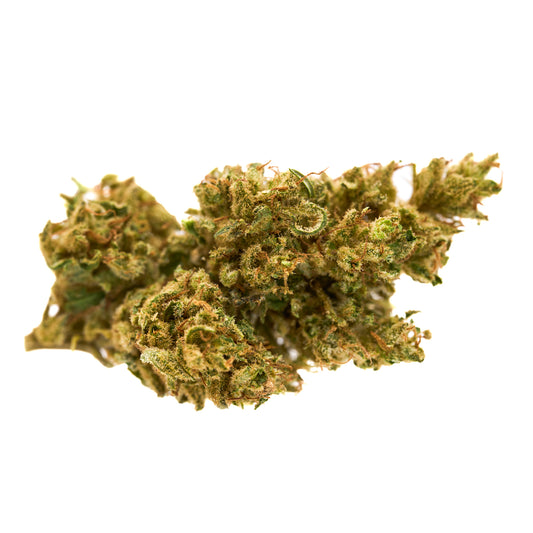
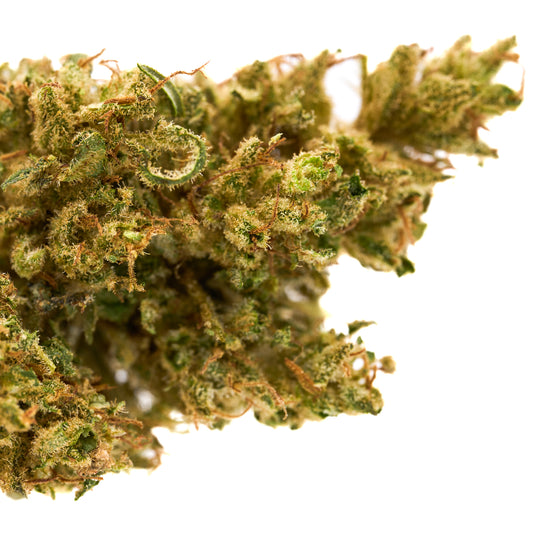
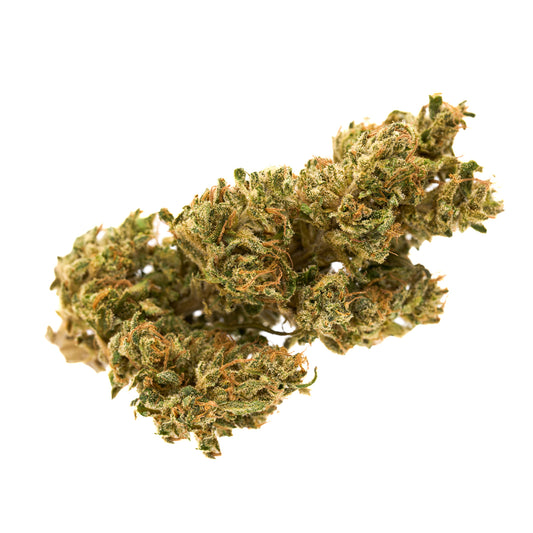
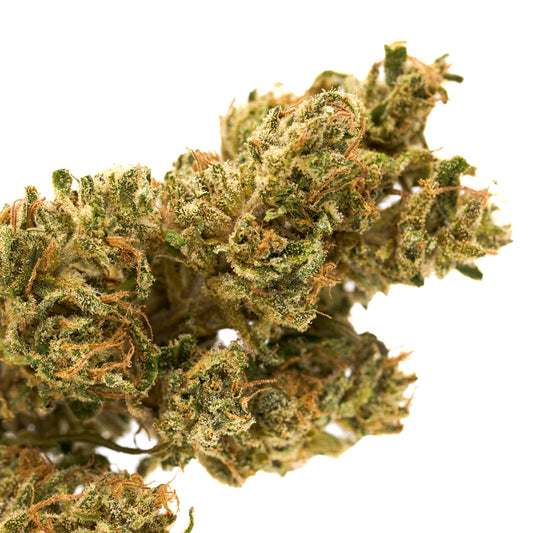
High-quality sugar leaf has a few consistent traits. It's small, usually no longer than a fingertip. It's visibly frosted, often to the point of looking silver or white in good light. It smells like the strain it came from, whether that's gassy, citrusy, sweet, or earthy. And it feels slightly sticky or resinous rather than papery. When you break a leaf apart, trichome heads may cling to your fingers. That's the material you want.
What Is Fan Leaf?
Fan leaves are the large, iconic leaves most people picture when they think of the cannabis or hemp plant: long, serrated leaflets spreading out in a hand-like shape from a single stem. They grow from the main stalk and branches, not from within the bud, and they can reach several inches across.
Their job is photosynthesis. Fan leaves are the plant's solar panels, capturing light and converting it into the energy the plant needs to grow and build flowers. They're essential to a healthy crop, but they're not where the plant concentrates its resin.
Why Fan Leaf Has Low Cannabinoid Content
Fan leaves carry minimal trichomes. You might see a light scattering of glands on the surface, especially near the base of the leaf, but nothing close to the frosted coating on sugar leaves. Since cannabinoids live in trichomes, fewer trichomes means far less cannabinoid content. Fan leaf typically tests at a small fraction of the potency of the flower on the same plant, and often only a small fraction of good sugar leaf.
Fan leaves also carry a lot of chlorophyll, fiber, and bulk. That's why fan-leaf-heavy material tastes grassy and harsh, burns poorly, and yields very little when extracted.
Legitimate Fan Leaf Uses
Low potency doesn't mean fan leaves are useless. There are several real fan leaf uses that make sense for the right person:
- Raw juicing and smoothies. Some people blend fresh, raw fan leaves into juices for the plant's nutrients and raw cannabinoid acids. Because the leaves aren't heated, THCA isn't converted to THC.
- Tea. Dried fan leaves can be steeped into a mild, earthy herbal tea.
- Natural wraps. Large, intact fan leaves are dried and pressed to make hemp leaf wraps for rolling.
- Cooking greens. Fresh leaves can be used like other leafy greens in salads or garnishes.
- Compost and mulch. Growers often return fan leaves to the soil.
- Topicals and experiments. Some home makers infuse fan leaves into oils for salves, though potency will be low.
What fan leaf is not good for is anything where you're paying for cannabinoid content. If a trim product is priced around its potency, fan leaf is filler.

Sugar Leaf vs Fan Leaf: The Comparison
Here's how the two leaf types stack up on the four factors that matter most to buyers: potency, flavor, best uses, and price.
Potency
This is where the gap is biggest. Sugar leaf potency comes from its dense trichome coverage, and quality THCA sugar leaf trim commonly tests in the high single digits to mid-teens for THCA percentage, with standout hand-trimmed lots from potent cultivars sometimes testing higher. The exact number depends on the strain, how late in the flowering cycle the plant was harvested, how the trim was collected, and how it was stored.
Fan leaf, by contrast, usually tests in the low single digits or below. Mix enough fan leaf into a batch of trim and the overall potency drops fast. A bag that's half sugar leaf and half fan leaf might test at little more than half of what a clean sugar leaf lot would.
This matters because almost every use for trim, from edibles to pre-rolls to extraction, scales with potency. Higher potency means stronger results per gram and less material needed to reach your target dose or yield.
Flavor and Aroma
Terpenes, the aromatic compounds behind a strain's smell and taste, are also produced in trichomes. So sugar leaf carries a meaningful share of the strain's terpene profile. Good sugar leaf smells recognizably like its parent flower, and that aroma carries through into pre-rolls and, to a degree, into infused products.
Fan leaf smells and tastes mostly like, well, leaves. It's grassy, green, and vegetal, with a high chlorophyll content that can make infusions taste bitter and smoke taste harsh. If you've ever had homemade butter that tasted like lawn clippings, fan leaf was probably part of the reason.
Best Uses
Sugar leaf is the more versatile material by a wide margin:
- Edibles and infusions. Sugar leaf for edibles is one of the most popular and cost-effective choices out there. Decarboxylate the trim (commonly around 240°F for 30 to 45 minutes in the oven), then infuse it into butter or oil. You get solid potency without paying flower prices, and since you're cooking it, bud appearance doesn't matter. Straining through fine cheesecloth and using a moderate infusion temperature helps reduce the grassy taste.
- Pre-rolls and blends. Sugar leaf is a common ingredient in shake-style pre-rolls and blunts, often mixed with ground flower. Clean, frosty trim burns much better than leafy trim.
- Kief and dry sift. Tumbling or sifting dry, cold sugar leaf through screens knocks loose trichome heads, producing kief that can be sprinkled into bowls or pressed.
- Hash and ice water extraction. Frosty sugar leaf is a decent input for bubble hash, though fresh or whole-plant material usually outperforms it.
- Solvent and rosin extraction. Commercial extractors routinely process trim. Rosin from trim yields less than rosin from flower, but high-grade sugar leaf can still produce usable returns.
- Tinctures. Alcohol or oil-based tinctures work well with decarbed sugar leaf.
Fan leaf is limited to low-potency applications: juicing, tea, wraps, cooking greens, compost, and mild topicals. It's rarely worth extracting commercially because the yield is so low and the chlorophyll load is so high.
Price
Because potency drives value, sugar leaf trim commands a significantly higher price than fan leaf. Clean, hand-trimmed sugar trim THCA from a quality cultivar is priced as a premium trim product, while fan leaf has very little commercial value and is often composted or sold cheaply for niche uses like wraps or juicing.
Here's the trap: some sellers price mixed or fan-leaf-heavy trim close to sugar leaf prices, counting on buyers not to notice. On a per-milligram-of-THCA basis, that "cheap" bag often costs more than clean sugar leaf. The smartest way to compare trim is to think in cost per gram of cannabinoid, not cost per pound of plant material. Divide the price by the THCA percentage on the COA, and the true bargains become obvious.
Quick-Reference Comparison
| Factor | Sugar Leaf | Fan Leaf |
|---|---|---|
| Where it grows | Out of the bud, between calyxes | From the main stalk and branches |
| Size | Small, fingertip-length | Large, several inches across |
| Trichome coverage | Heavy, visibly frosted | Minimal, scattered |
| Typical THCA potency | Moderate to high for trim | Low |
| Flavor and aroma | Carries strain terpenes | Grassy, vegetal, chlorophyll-heavy |
| Best uses | Edibles, pre-rolls, kief, hash, extraction, tinctures | Juicing, tea, wraps, greens, compost |
| Price | Premium trim pricing | Minimal commercial value |
| Value per mg of THCA | Strong | Poor |

How to Tell What You're Buying
Knowing the difference in theory is easy. Spotting it in a product listing, or in a bag in your hands, takes a little more attention. Use these three checks together.
1. Visual Cues: Frost, Size, and Stems
Frost. Quality sugar leaf should look noticeably frosty, with a silvery or white sheen from trichome coverage. Ask for close-up photos or macro shots if you're buying wholesale. Uniformly flat green material with little sparkle is a warning sign.
Size. Sugar leaves are small. If you see lots of large leaf pieces, long leaflet fragments with serrated edges, or anything resembling the classic hand-shaped leaf, fan leaf is in the mix. Machine-trimmed material may be chopped smaller, so look for the flat, broad texture of fan leaf fragments even when they're broken up.
Stems. Some small stem is normal. Heavy stem content adds weight without adding potency, so it lowers your real value per pound.
Color. Healthy sugar leaf ranges from green to deep green, sometimes with purple tones depending on the strain. Brown, yellow, or gray material can indicate age, poor storage, or degradation.
Smell. If you can smell it in person, good sugar leaf smells like the strain. Hay-like, musty, or flat smells suggest fan leaf, old material, or moisture problems.
2. Product Descriptions
Read listings carefully and look for specifics. Useful signals include:
- "Sugar leaf" or "sugar trim" stated clearly, rather than vague terms like "shake," "leaf," or just "trim."
- Hand-trimmed vs machine-trimmed. Neither is automatically bad, but sellers who disclose the method are usually more transparent overall.
- Strain name and cultivar details. Trim from a known, potent cultivar tends to be more consistent.
- Harvest or packaging date. Fresher trim holds more terpenes and cannabinoids.
- Storage details. Trim should be kept cool, dry, and dark. Proper moisture content helps prevent mold while preserving trichomes.
Be cautious with listings that use "trim" as a catch-all with no detail, show only far-away photos, or advertise suspiciously low prices without potency data.
3. COA Numbers
The Certificate of Analysis is the most reliable way to know what you're getting. A legitimate COA comes from an independent, accredited third-party lab (look for ISO/IEC 17025 accreditation) and should match the batch you're buying. Here's what to check:
- THCA percentage. This is the headline number for THCA sugar leaf trim. Compare it against typical ranges for trim. A reading far below what's expected for sugar leaf suggests fan leaf content or degraded material.
- Delta-9 THC percentage. For hemp compliance, this is the number regulators have historically focused on. It should be under 0.3% on a dry-weight basis.
- Total THC. Labs often calculate total potential THC as THCA × 0.877 + delta-9 THC. The 0.877 factor accounts for the weight lost when THCA converts to THC. Knowing this number helps you estimate actual potency after decarboxylation, which is especially useful for dosing edibles.
- Total cannabinoids. A helpful overall measure of material quality.
- Terpene panel. Not every COA includes one, but when it does, it confirms aroma quality.
- Contaminant testing. Look for pesticides, heavy metals, microbials (including mold and yeast), and mycotoxins. Trim can be more susceptible to moisture issues than cured flower, so microbial results matter.
- Batch number and test date. The batch should match your product, and the test should be reasonably recent.
If a seller won't provide a COA, or provides one that doesn't match the batch or strain, move on. With trim, where the gap between great and poor material is so wide, the COA is your best protection.
Red Flags to Watch For
- No COA, or a COA with no batch number
- Photos that don't show the actual product up close
- Potency claims that conflict with the COA
- A strong hay or musty smell
- Lots of long stems or large, flat leaf fragments
- Prices that are dramatically lower than comparable sugar trim without explanation
Which Trim Is Worth Buying?
For nearly every buyer, the best trim to buy is clean, sugar-leaf-rich trim with a batch-matched COA. Here's how that plays out by use case:
Home edible makers: Sugar leaf is the clear pick. It delivers dependable potency for butter, oils, and tinctures at a fraction of flower cost, and a COA lets you estimate dosing with far more confidence.
Pre-roll producers and brands: Choose hand-trimmed or high-grade machine-trimmed sugar leaf with a strong terpene profile. Burn quality and flavor will show in your finished product, and customers notice.
Extractors: Prioritize potency per pound. Pay close attention to THCA percentage and stem content, and calculate your cost per gram of cannabinoid before committing to a lot.
Juicers, tea drinkers, and wrap makers: Fan leaf can make sense for you, but buy it as fan leaf, priced as fan leaf. Don't pay trim-level prices for it.
The bottom line: the cheapest bag per pound is rarely the best value. Frost and COA numbers tell the real story.
FAQ
Is fan leaf worth anything?
Yes, but not much for cannabinoid content. Fan leaf has real value for raw juicing, herbal tea, natural rolling wraps, cooking greens, and compost. It's generally not worth buying for edibles, smoking, or extraction because its potency is low and its chlorophyll content makes products taste grassy. If a trim product is mostly fan leaf, it should be priced accordingly.
Can you smoke sugar leaf?
Yes. Sugar leaf can be smoked on its own or blended with ground flower, and it's a common ingredient in shake pre-rolls and blunts. It burns a bit harsher than trimmed bud because it's still leaf material, but clean, frosty, well-cured sugar leaf smokes far better than fan leaf. When smoked, the THCA converts to delta-9 THC, so expect effects and start with a small amount. THCA products are for adults 21 and over.
How strong is sugar leaf compared to flower?
Sugar leaf is less potent than the bud it came from, usually by a wide margin, because it's still leaf tissue rather than dense calyx. That said, quality THCA sugar leaf is potent enough for edibles, pre-rolls, and kief, and it costs much less per pound than flower. Always check the COA for the exact THCA percentage.
Do you need to decarb sugar leaf for edibles?
Yes. THCA must be heated to convert into THC. A common home method is baking the trim at roughly 240°F for 30 to 45 minutes before infusing it into butter or oil. Skipping this step leaves most of the THCA unconverted.
Is sugar leaf trim legal?
Hemp sugar leaf trim from plants testing under 0.3% delta-9 THC has been sold under the federal hemp framework, but federal hemp rules are scheduled to change in November 2026, and many states have their own restrictions on THCA products. Check the laws where you live and buy only from sellers who provide current, batch-matched COAs.
Shop Sugar-Leaf-Rich THCA Trim
If you're done gambling on leafy mystery bags, start with trim you can verify. At Oregon Hemp Flower, our THCA wholesale collection features sugar-leaf-rich trim sourced from potent, Oregon-grown cultivars, backed by third-party lab testing so you can check the THCA numbers before you buy.
Whether you're making edibles at home, rolling pre-rolls for your brand, or sourcing material for extraction, frosty, clean sugar leaf trim gives you more potency, better flavor, and better value per gram.
