






CBD for Muscle Soreness: What the Research Shows

CBD has not been proven to reduce muscle soreness after hard exercise. Human studies on delayed onset muscle soreness (DOMS) have mostly found no significant effect, and the evidence is limited by small samples and inconsistent dosing. Many adults still add hemp-derived CBD to their recovery routine. If you do, the choices that matter are product quality, verified lab results, sensible use and a talk with your clinician. This guide covers what the studies tested, what the safety agencies say, and how to evaluate CBD flower and other hemp products before you buy.
TL;DR
- Human studies of CBD for exercise-induced soreness, topical and oral, have mostly not found a significant benefit. Dosing and study design vary widely.
- Studies tested oils and creams. We found no checked research on CBD flower for soreness or joint pain, so we make no such claim for it.
- The CDC lists liver injury, drowsiness, diarrhea, appetite and mood changes, and drug interactions among the risks. Talk to a clinician if you take medication.
- Label accuracy is a real problem. Check a third-party certificate of analysis (COA) for cannabinoid content, pesticides and contaminants before you buy.
- Persistent or severe pain needs medical evaluation, not self-treatment.
Table of Contents
- What human studies show about CBD and sore muscles
- Topical vs. oral CBD for post-workout soreness
- What doses have been studied
- CBD buds for joint pain and other aches
- Safety: what to know before you try CBD
- How to evaluate a CBD product before you buy
- Perspective
- Shopping for organic hemp flower
- A sensible way to approach CBD if you decide to try it
- FAQ
- Sources
What human studies show about CBD and sore muscles
The best-studied form of exercise soreness is DOMS. It is the stiffness and tenderness that peaks a day or two after unfamiliar or lengthening (eccentric) exercise. Researchers use it because it can be reproduced in a lab: participants do a set of hard eccentric contractions, take CBD or a placebo, and then report pain and perform strength tests.
The results so far are not what the marketing suggests:
- A small U.S. pilot study gave participants CBD oil around eccentric exercise. It found no significant effect on pain or muscle strength. It had only four participants, and the authors themselves caution against reading the data as findings.
- Another U.S. trial tested 150 mg of CBD oil. It had no effect on noninvasive markers of muscle damage in the upper arm.
- A 2026 review of CBD in athletic settings concluded that topical studies did not confirm efficacy for DOMS, while oral and sublingual results were mixed. It pointed to small samples, variability and nonstandardized dosing as limits.
This does not mean every person’s experience is the same as the group average. Studies this small cannot rule out an effect in some people or at other doses, timing or formulations. It does mean nobody can honestly promise you that CBD will ease sore muscles. A product page that does is making a claim the research has not backed.
Topical vs. oral CBD for post-workout soreness
The two delivery routes have been tested differently, so it helps to separate them.
Topicals (creams, balms, ointments). These are the most popular choice for sore muscles, because you apply them right where it hurts. The same 2026 review reports that studies consistently show topical CBD, even at concentrations like 1000 mg, failed to beat placebo for DOMS or strength recovery. If you like a topical for the massage and the feel of it, that is a personal preference. Do not expect the CBD itself to be proven to do the work.
Oral and sublingual products (oils, tinctures, edibles). Results here are described as mixed. Some small studies point to a modest effect on perceived soreness, others find none. Absorption varies with the product, the person and whether it is taken with food, which is one reason doses across studies are hard to compare.
Inhaled or smoked flower. The studies above did not test flower. We found no checked research showing that smoking or vaping hemp flower reduces muscle soreness, so it is not something we can claim.

What doses have been studied
Readers often ask how much CBD to take for soreness. There is no established, evidence-based dose for it. What exists are the amounts researchers chose to test:
| Study type | Amount tested | Finding |
|---|---|---|
| Pilot study, CBD oil with eccentric exercise | 2 mg/kg and 10 mg/kg of body weight | No significant difference between conditions in pain, strength or IL-6 |
| Upper-arm muscle damage trial | 150 mg of CBD oil | No effect on noninvasive muscle damage markers |
| Topical studies (review) | Up to 1000 mg in creams and ointments | No efficacy shown for DOMS or strength recovery |
These numbers describe experiments, not recommendations. For a 70 kg adult, 10 mg/kg is 700 mg, far above what a typical consumer product serving contains, and the pilot did not show a benefit at that level either. If you decide to try CBD, start with the lowest serving on the label, change one thing at a time and ask a clinician about your situation first.
CBD buds for joint pain and other aches
People searching for soreness often also ask about CBD buds for joint pain or general pain relief. The honest answer is narrower than most product pages suggest.
Some published reviews of CBD oil have looked at chronic conditions such as arthritis, fibromyalgia and neuropathic pain, and Harvard Health summarizes them in an article on whether CBD oil can help manage pain. Those are studies of oils and extracts, usually in clinical conditions, not of smokable hemp flower. Exercise soreness is also a different problem from joint disease. It is short-lived and usually resolves on its own within days.
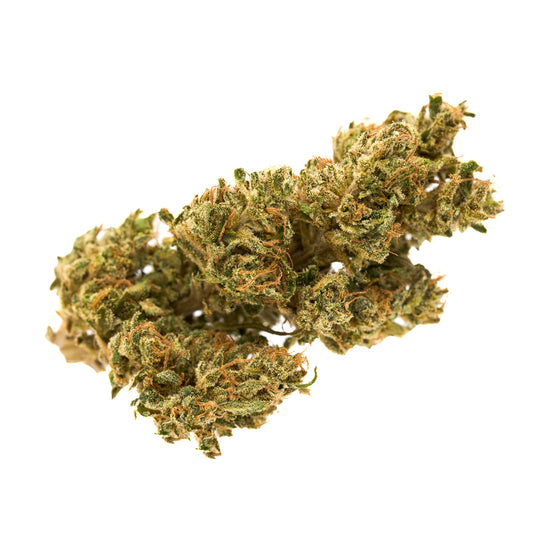
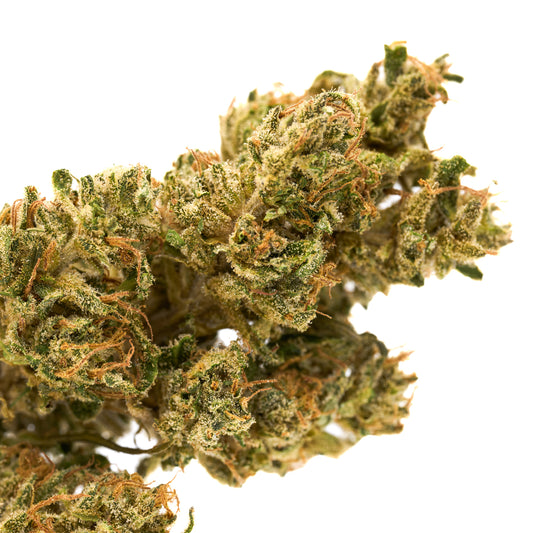
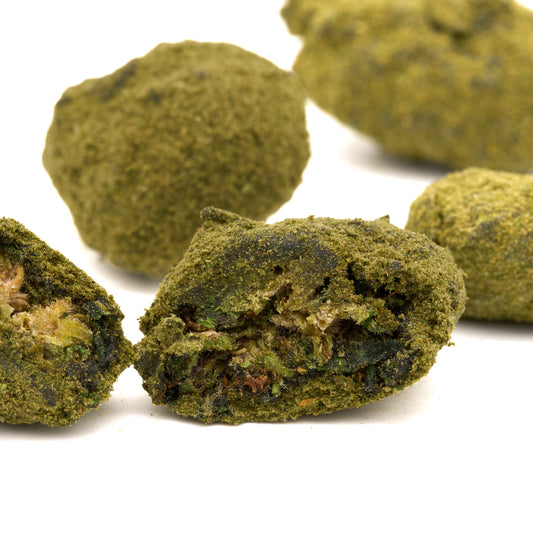
So here is where we stand on flower. Hemp flower is a whole-plant product. It contains CBD along with minor cannabinoids and terpenes, and that is why many adults choose it. We do not claim it treats joint pain or soreness, because the checked research does not show that. What we can say is that if you choose flower, quality and testing matter more than any marketing promise.
Pain that lasts more than a few days, comes with swelling, joint redness, numbness, or follows an injury, calls for a doctor or physical therapist. The FDA warns that people using CBD products marketed for therapeutic purposes may delay seeking proper diagnosis and care.

Safety: what to know before you try CBD
CBD is widely sold, but that does not make it risk-free. The CDC states that CBD use carries potential risks including liver injury, drowsiness, diarrhea, changes in appetite, mood changes, and drug interactions that may raise or lower the effect of other medications.
Practical ways to use that information:
- Taking prescription medication? Ask your doctor or pharmacist before starting. This matters most for blood thinners, seizure medication and anything processed by the liver, because the CDC flags drug interference.
- Plan around drowsiness. Do not drive or operate machinery until you know how a product affects you.
- Watch your body. Stomach upset, appetite change or a shift in mood are reasons to stop and talk to a clinician.
- Men planning a family. The FDA notes that animal studies identified possible male reproductive toxicity, such as lower testosterone and impaired sperm development. The implications for people are not yet fully understood, so raise it with your doctor.
- Pregnant, nursing, or under 21? Do not use hemp products without medical guidance. Our products are for adults 21 and over.
The FDA has also not evaluated unapproved CBD products for efficacy, dosage or safety. It is currently illegal to market CBD by adding it to food or labeling it as a dietary supplement. In 2023 the agency concluded that existing food and supplement frameworks are not appropriate for CBD, citing concerns including long-term use and vulnerable groups. Federal and state rules on hemp-derived products differ and change, so check the rules where you live before ordering.
How to evaluate a CBD product before you buy
Since the efficacy picture is uncertain, the part you can control is what you put in your body. Product quality varies a great deal. USADA, citing a 2017 JAMA study, reports that 69 percent of tested CBD products were mislabeled for CBD content and 21 percent contained detectable THC. The CDC also lists possible contaminants in products labeled hemp or CBD, including THC, pesticides, heavy metals, bacteria and fungi.
Use this checklist:
- A batch-specific COA from an independent lab. It should match the batch number on your product. Our guide to reading CBD lab reports and certificates of analysis walks through each section.
- Cannabinoid content you can verify. Percentages on flower are easy to misread. See how to read the percentages on a CBD flower lab report.
- Pesticide and contaminant screening. If a seller does not publish it, ask why. Learn what labs test for and how to read the results.
- Independent testing, not just in-house claims. Here is why third-party lab testing matters in the hemp industry.
- A realistic claim. Be wary of any page that promises to cure pain or treat a medical condition. The FDA advises consumers to be wary of unproven medical claims and inaccurate labeling.
- Your own testing situation. If you are subject to workplace or athletic drug testing, even trace THC matters. USADA notes that THC content can turn up in CBD products, and competitive athletes should read its guidance. For workplace testing, see our explainer on CBD flower and drug test cutoffs.
On organically grown flower specifically, our approach is simple: grow without pesticides or synthetics, hand-trim, and publish test results so you can check the claim rather than take our word for it.
Perspective
We sell hemp flower, and we want you to buy it knowing exactly what it is. The research on CBD and exercise soreness is not strong, and we will not tell you that a bud, a tincture or a cream will fix a sore quad. Nobody can say that honestly yet.
What we can speak to is how our flower is made. It is grown organically, without pesticides or synthetics, and hand-trimmed. Each strain has its own cannabinoid and terpene profile, and we want you to see those numbers before you buy. That is why we write about lab reports, potency percentages and pesticide testing as often as we write about products.
Our customers use hemp flower for different reasons. Some want a relaxing evening ritual, some want a whole-plant product with a terpene profile they enjoy, and some hope it fits into a wellness routine. We support all of those as adult choices, backed by a 100% satisfaction guarantee. We just keep the claims where the evidence is.
If you are going to try hemp flower, choose a strain based on its lab-reported profile, start low, and keep your doctor in the loop if you take medication or have a health condition.
Michael
Shopping for organic hemp flower
If you have weighed the evidence and want to try hemp flower, we grow ours organically, without pesticides or synthetics, and hand-trim it. Browse the full hemp flower collection to compare strains and their lab-reported profiles, or look at Hawaiian Haze CBD hemp flower for a single-strain example. Orders over $85 ship free, and every order is covered by our 100% satisfaction guarantee. Businesses can ask about bulk options through our wholesale collection.

Our products are for adults 21 and over and are not intended to diagnose, treat, cure or prevent any disease.
A sensible way to approach CBD if you decide to try it
If you want to test CBD for yourself despite the mixed evidence, a cautious process keeps the risks and the guesswork down:
- Check with a clinician first if you take any medication, have liver problems, are pregnant or nursing, or have an underlying pain condition.
- Choose a product with a current COA that matches the batch in your hand.
- Start with the lowest labeled serving. Do not copy the doses used in studies.
- Change one variable at a time. Same product, same timing, same routine, so you can tell whether anything changes.
- Track results honestly. Soreness fades on its own after a few days, so note your pain levels with and without the product rather than crediting CBD for natural recovery.
- Stop and get medical advice if you notice side effects, or if pain is severe, localized after an injury, or not improving.
FAQ
Does CBD reduce muscle soreness?
Human studies have not shown a significant benefit for exercise-induced soreness. A small pilot study and a 150 mg oil trial found no effect, and topical studies did not confirm efficacy. Some people report feeling better, but the research does not currently back a promise of relief.
How much CBD should I take for muscle soreness?
No evidence-based dose exists for soreness. Researchers have tested 2 mg/kg and 10 mg/kg of oil and up to 1000 mg in topicals without showing a benefit. If you try CBD, begin with the lowest serving on the label and ask a clinician first, especially if you take other medicines.
Can CBD buds help with joint pain?
We found no checked research showing that CBD flower relieves joint pain. Studies of CBD for chronic pain conditions have used oils and extracts, not smokable flower. If joint pain is persistent, swollen or limiting your movement, see a doctor for a diagnosis.
How can I tell if a CBD product is good quality?
Look for a batch-specific certificate of analysis from an independent lab that shows cannabinoid content and tests for pesticides, heavy metals and microbes. Studies have found many products are mislabeled, so confirm the batch number on the report matches your package.
Sources
- A Pilot Study on Cannabidiol (CBD) and Eccentric Exercise
- The Effects of Cannabidiol Oil on Noninvasive Measures of Muscle Damage
- Assessing the Efficacy of Cannabidiol (CBD) in Athletic Settings
- About CBD, Cannabis and Public Health (CDC)
- What You Need to Know About Products Containing Cannabis or Cannabis-Derived Compounds, Including CBD (FDA)
- FDA Concludes that Existing Regulatory Frameworks for Foods and Supplements Are Not Appropriate for Cannabidiol
- Athletes: 6 Things to Know About Cannabidiol (USADA)
