






Sustainable Hemp Farming: Practices, Benefits and Trade-Offs

Sustainable hemp farming means growing the crop in a way that protects soil, uses water and chemical inputs carefully, and keeps the land productive season after season. Hemp has real advantages here: fast canopy growth, deep roots and modest input needs. It is not automatically green, though. Results depend on the region, the practices and what happens after harvest. This guide covers what the research shows, where the trade-offs are, and how to tell a sustainable grower from a marketing claim.
TL;DR
- Hemp can improve soil structure, suppress weeds and fit well into crop rotations, according to peer-reviewed reviews.
- Regenerative hemp farming goes further than “no pesticides”: cover crops, reduced tillage and natural nutrient cycles that keep soil life active.
- Hemp is not drought-proof. Water needs vary by region, and arid U.S. areas often need supplemental irrigation.
- Processing energy, transport and burning biomass can cancel out part of hemp’s carbon advantage.
- When you buy hemp flower, look for growing method, hand finishing and lab reports, not just the word “sustainable”.
Table of Contents
- What sustainable hemp farming actually means
- Does growing hemp help the soil?
- Practices that make hemp farming sustainable
- Regenerative vs. conventional hemp farming
- Water, pesticides and fertilizer: what hemp really needs
- Carbon, biodiversity and the numbers behind the claims
- The trade-offs nobody should skip
- Our perspective on sustainable hemp farming
- How to spot a sustainable hemp grower
- Shop hemp flower grown without pesticides
- FAQ
- Sources
What sustainable hemp farming actually means
A sustainable farm keeps its soil, water and surrounding ecosystem in good shape while still producing a crop worth selling. For hemp, that usually comes down to four things:
- Soil management: rotation, cover crops and limited tillage.
- Input discipline: fewer synthetic fertilizers and pesticides, and only what soil tests justify.
- Water planning: matching irrigation to the site rather than assuming hemp needs none.
- Post-harvest handling: drying, processing and shipping with energy use in mind.
Regenerative farming is the stricter version of the same idea. Sustainable aims to avoid harm. Regenerative aims to leave the soil in better condition each year.
Does growing hemp help the soil?
In many cases, yes. A 2020 review in the journal Agriculture notes that hemp can be grown for fiber, seed or CBD, and that research indicates it can replenish soil health, help remediate contaminated land and suppress weeds. The same review says fiber hemp roots can aerate soil, build aggregates and reduce erosion, and that hemp in crop rotations may suppress some pathogens and nematodes.
Root depth matters. A 2025 review in BioResources reports hemp roots of 45 to 90 cm that support phytoremediation, the use of plants to clean up contaminated ground.

Two cautions apply. First, “can” is the operative word. Benefits depend on soil type, rotation and management. Second, a crop grown for cannabinoid flower is managed differently from one grown for fiber. Flower crops are usually planted at lower density and tended more closely, so findings from fiber studies should be read as a guide, not a guarantee.
For a closer look at the ground-level side of cultivation, see our notes on soil health and THCA production and the nutrients and pH levels that suit THCA hemp.
Practices that make hemp farming sustainable
Crop rotation and cover crops
Rotation breaks pest and disease cycles and spreads nutrient demand across different crops. The Rodale Institute’s organic hemp guidance points to leguminous cover crops such as hairy vetch and winter pea as a way to supply nitrogen without synthetic fertilizer.

Weed suppression through canopy
Hemp grows fast. Once the canopy closes, it shades out many weeds. Rodale reports that this rapid canopy development, along with lower chemical needs than row crops like corn and soybeans, is a core advantage of the crop. The same trials found that conventional tillage favored hemp establishment, a useful reminder that the most regenerative method on paper is not always the one that gets a good stand.
Reduced tillage
The 2025 BioResources review identifies no-till farming as a promising way to cut fuel use and the emissions that come with it. A 2024 review by Ahmadi and colleagues also ties organic hemp farming to soil vitality and biodiversity through natural fertilizers and reduced-tillage methods.
Fertility based on soil tests
Guessing at fertilizer rates wastes money and risks runoff. A Kentucky State University fact sheet advises determining nitrogen needs through soil testing, and notes that typical cannabinoid hemp crops call for roughly 100 to 120 lbs of nitrogen per acre. Organic growers meet that need with compost, cover crops and approved amendments rather than synthetic products. One organic approach we have written about is a living soil mix for hemp growers.
Biodiversity on the farm
Hemp offers pollen and shelter for birds, and its seeds feed animals, according to the European Commission’s hemp overview. Growers can add to that with intercropping and border plantings. We cover this in our piece on companion planting for THCA hemp.
Regenerative vs. conventional hemp farming
The 2024 review by Ahmadi and colleagues draws a clear line between the two approaches.
| Factor | Regenerative / organic | Conventional |
|---|---|---|
| Nutrient source | Natural cycles, compost, cover crops | Synthetic fertilizers for precise, fast delivery |
| Tillage | Reduced or no-till where it works | Often routine tillage |
| Soil life | Supports organisms such as mycorrhizae | Risk of degraded microbial activity over time |
| Main risk | Slower, less predictable nutrient supply | Nutrient runoff and long-term soil decline |
| Biodiversity | Prioritized | Not a design goal |
Conventional methods are not reckless by default. Synthetic inputs give growers speed and control, and many farms use them within the law. The question is the long-term cost to the soil, and whether the grower is managing it.
On the legal side, the USDA National Organic Program allows organic certification of U.S. hemp produced under specific state hemp programs and organic regulations, as the 2020 review notes. Where pesticides are used on non-organic hemp, state rules apply. Missouri’s state hemp production plan, for example, limits producers to pesticides approved under state and federal law.
Water, pesticides and fertilizer: what hemp really needs
The popular claim is that hemp needs almost no water and no chemicals. The research is more careful.
- Water: A 2023 review in Agronomy states that hemp is not universally drought-tolerant. Needs vary with region, genotype and crop type (fiber, grain or cannabinoid), and arid U.S. regions often require supplemental irrigation. The review describes hemp’s overall need for pesticides, fertilizer and water as moderate.
- Pesticides and herbicides: Dense foliage and fast growth can reduce the need for herbicides and chemical interventions, according to the BioResources review. That is a head start, not immunity. Pests such as mites and molds still threaten flower crops, and organic growers rely on prevention and scouting. Our approach is outlined in integrated pest management for THCA hemp.
- Fertilizer: Lower than many row crops, but not zero, as the nitrogen figures above show.
A farm that says it uses “no pesticides” is making a specific, checkable claim. A farm that says hemp “needs no inputs” is repeating a myth.
Carbon, biodiversity and the numbers behind the claims
Hemp is often called a carbon sink. The European Commission’s overview cites 9 to 15 tonnes of CO2 sequestered per hectare. An industry report from Canna Markets Group cites a much wider range, from 3.151 to 22 metric tons of CO2 per hectare annually, depending on conditions.
That spread tells you something: carbon figures are estimates that move with climate, soil, variety and method. Anyone quoting a single precise number should be treated with some skepticism.
The same report adds two points worth knowing:
- Sequestered carbon can be released quickly if the biomass is burned or used in short-lived products.
- Hemp’s environmental footprint depends heavily on local climate, farming practices and transport distance.
Peer-reviewed assessments also warn that life cycle comparisons are often built on inconsistent assumptions, so comparing figures across regions or product types needs care, as the BioResources critical review points out.
The trade-offs nobody should skip
Sustainable does not mean free of downsides. The 2023 Agronomy review lists several:
- High water demand in certain arid regions. Growing hemp where irrigation is heavy undermines the sustainability case.
- Soil compaction if fields are worked or harvested carelessly.
- Energy-intensive processing, long-distance transport and improper disposal or burning of biomass.
- Yield variability from site-specific climate and soil, which makes long-term economics and environmental results less consistent.
The BioResources review adds that, even though hemp generally uses fewer agrochemicals and less water than many crops, processing energy can shift the overall picture.
For flower specifically, indoor growing adds lighting and climate-control energy. Outdoor growing depends on weather and region. Neither is automatically better. We explain why we judge quality by lab data rather than label in terpenes and COAs vs. indoor or outdoor claims. Matching a variety to the local climate also reduces waste, which is the subject of our guide to THCA strains for different U.S. climate zones and our regional hemp harvest calendars.
Our perspective on sustainable hemp farming
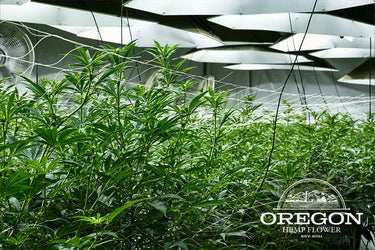
We grow hemp flower in Oregon, and we hold ourselves to a simple rule: say only what we can stand behind. Our flower is organically grown without pesticides or synthetics and hand-trimmed. We treat soil as the main asset of the farm, because every other result, from terpene profile to potency, starts there.
In practice, we think three things matter more than slogans:
- Soil first. Healthy, biologically active soil grows cleaner, more consistent flower. This is why we write so much about regenerative soil practices and organic THCA flower farming.
- Prevention over rescue. Scouting, airflow and beneficial insects beat spraying after the fact.
- Proof over promises. A grower’s claims should show up in the product: freshness, aroma, a clean burn and lab reports you can read.
We also think the industry should be honest that hemp is not a magic crop. Water, energy and transport all count. A farm that admits that is easier to trust.
— Michael
How to spot a sustainable hemp grower
You cannot see a field from a product page, but you can ask the right questions:
- Does the grower state its growing method plainly? “Organically grown without pesticides or synthetics” is specific. “Eco-friendly” is not.
- Is there a certificate of analysis (COA)? Third-party lab reports show cannabinoid content and terpene profile, and a lab report is the clearest proof of what is in the jar.
- Is the flower hand-finished? Hand trimming is gentler on trichomes and signals small-batch handling.
- Is there a guarantee? A satisfaction guarantee shows the grower expects the product to hold up.
- Are the trade-offs acknowledged? Growers who talk about water use and energy tend to track them.
If you buy for resale, the same questions apply with higher stakes. Your customers will ask them next.
Shop hemp flower grown without pesticides
We grow organic hemp flower in a range of strains, each with its own cannabinoid and terpene profile. You can browse hemp flower, pre-rolls, vapes and THCa concentrates, or try a specific favorite such as Royal OG CBD Full-Term Hemp Flower.

Every order comes with our 100% satisfaction guarantee, and shipping is free on orders over $85. Businesses can buy in bulk through our wholesale collection, including Hawaiian Haze CBD hemp flower wholesale. Products are for adults 21 and older.
FAQ
Is hemp farming sustainable?
Often, but not automatically. Hemp suppresses weeds, builds soil structure and generally needs fewer agrochemicals than many row crops. Water use, processing energy and transport can still erode those gains, and results depend on the region and the grower’s methods.
What is regenerative hemp farming?
It is a set of practices that aim to improve soil rather than just avoid damaging it. These include cover crops, crop rotation, reduced tillage and natural fertility sources that keep soil organisms active, as described in the 2024 MDPI review.
Does hemp need pesticides?
Hemp’s fast canopy and dense foliage can reduce the need for herbicides and other chemical controls. Flower crops still face pests and mold, so organic growers depend on prevention, scouting and approved natural controls. Non-organic growers must follow state and federal pesticide rules.
Does hemp use a lot of water?
It depends on where it is grown. The 2023 Agronomy review says hemp is not universally drought-tolerant and that arid U.S. regions often need supplemental irrigation. In regions with reliable rainfall, the need is lower.
Is organic hemp flower the same as sustainable hemp flower?
Not exactly. Organic describes what inputs are allowed, while sustainability also covers water, energy, soil health and transport. Organic practices are a strong foundation, and the best growers pair them with soil-building and honest reporting.
Sources
- A Review on the Current State of Knowledge of Growing Conditions, Agronomic Soil Health Practices and Utilities of Hemp (MDPI Agriculture, 2020)
- A critical review of industrial fiber hemp anatomy, agronomic practices and valorization into sustainable bioproducts (BioResources, 2025)
- Peer-reviewed BioResources article, full text (2025)
- Growing Industrial Hemp as an Organic Cash Crop (Rodale Institute, 2023)
- Hemp Cultivation: Chemical Fertilizers vs. Organic Approaches (MDPI, 2024)
- Hemp Agronomy: Current Advances, Questions, Challenges, and Opportunities (MDPI Agronomy, 2023)
- Organic Hemp for Cannabinoid Extraction (Kentucky State University, 2021)
- Missouri State Hemp Production Plan (USDA AMS)
- Hemp, Agriculture and rural development (European Commission)
- Hemp & Sustainability (Canna Markets Group, 2025)
