




U.S. THCa Flower Prices: $8–$20 per Gram, Less by the Ounce

Most U.S. shoppers pay between $8 and $20 per gram for THCa flower, with ounce pricing often landing between $120 and $300 depending on quality tier. The single rule that matters most: convert every listing to price-per-gram before comparing. Premium indoor flower costs more upfront, but buying larger quantities often lowers the per-gram price, and lab-tested brands give shoppers the data needed to judge real value.
TL;DR:
- A $220 ounce works out to $7.86 per gram, while a $45 eighth costs $12.86 per gram; compare products within the same quality tier.
- Before paying a premium, match the certificate of analysis to the package batch, check its test date, and confirm potency and contaminant results.
- An ounce can lose potency and aroma if it sits for months, so occasional shoppers should weigh bulk discounts against how quickly they use it.
- Orders above $85 qualify for free shipping from Oregon Hemp Flower, but include any delivery fees when comparing small purchases.
- Harvest changes can move a strain from $12 to $8 per gram within weeks, so recheck current listings rather than relying on an old comparison.
Table of Contents
- U.S. THCa flower price bands and what moves them
- How price changes with purchase size: the math that matters
- How quality tiers and strain attributes push prices up or down
- Practical value checklist: price-per-gram, potency, and lab verification
- Spotting real ounce deals and bulk-buy considerations
- Concrete pre-purchase checklist before you buy
- Oregon Hemp Flower proofs: product examples and lab-backed quality
- Shipping costs and fees that affect your total price
- How organic and sustainable farming affect price premiums
- Regional price differences across the United States
- THCa flower prices versus CBD and Delta 8 options
- Verifying seller authenticity beyond the lab report
- Buying advice for different shopper types
- Shop our THCa flower lineup and current pricing
- FAQ
- Sources
U.S. THCa flower price bands and what moves them
THCa flower prices fall into three broad bands, and knowing them helps you spot a fair deal versus an inflated one.
- Value or “smalls” tier: roughly $5 to $8 per gram, often sold in bulk or clearance batches.
- Mid-tier greenhouse flower: typically $8 to $14 per gram, balancing cost and quality.
- Premium indoor or private reserve: usually $14 to $20+ per gram, reflecting controlled growing conditions and higher terpene content.
Ounce pricing generally mirrors these bands: value flower often runs $100 to $180 per ounce, mid-tier $180 to $280, and premium indoor can exceed $300 per ounce for sought-after strains.
Prices do not stay fixed. Market analysts tracking the cannabis and hemp sector report that price volatility is a defining feature of the market, with harvest cycles, regulatory shifts, and regional demand driving sharp short-term swings. A strain that costs $12 per gram in one buying window can drop to $8 within weeks once a new harvest comes in, or climb again if supply tightens. Flowering time also plays a direct role in what growers can charge: our harvest timing guide explains how longer flowering periods tend to raise THCa concentration, which in turn supports higher price points.
Harvest timing can swing per-gram pricing by several dollars within a single season, according to market trend analysis, which means the “right” price today may shift by the time a new crop rotation hits shelves.
Federal policy also shapes what is legally available and how it is marketed. The USDA Farm Bill framework sets the cultivation and market rules that determine which hemp-derived products can reach U.S. shoppers, and that framework indirectly affects supply and therefore price.

How price changes with purchase size: the math that matters
The price-per-gram formula is simple: divide the total price by the total weight in grams. A $45 eighth (3.5 grams) works out to $12.86 per gram. A $220 ounce (28 grams) works out to $7.86 per gram. That gap is why buying in larger quantities often makes sense if you use flower regularly.
- Note the sticker price and the weight. A listing showing $180 for an ounce means nothing until you divide by 28.
- Do the division. $180 ÷ 28 grams = $6.43 per gram.
- Compare that number across listings in the same quality tier, not across different grades.
Typical per-gram price changes vary with purchase size, quality tier, and market shifts.
- A single gram at $15 compares to a quarter (7 grams) at $70, or $10 per gram, a meaningful drop.
- Sometimes smaller quantities offer better per-gram value than larger ones, so checking math for each purchase is important.
- Buying in full ounces often offers better per-gram pricing compared to several smaller purchases, but shoppers should verify math for each option.
Bulk buying only pays off if you can store the flower properly and use it before it loses potency or aroma. If you go through a gram or two a week, an ounce can last months, so weigh the discount against freshness before committing to a larger size.
How quality tiers and strain attributes push prices up or down
Shoppers encounter a handful of recurring quality labels, and each one signals a different price range.
- Indoor: grown under controlled lighting and climate, usually the highest price per gram due to labor and energy costs.
- Greenhouse: grown with natural light supplemented by climate control, typically mid-range pricing.
- Smalls: smaller buds trimmed from larger plants, sold at a discount despite similar cannabinoid content.
- Exotic or private reserve: rare genetics or especially dense terpene profiles, commanding the top of the price range.
Potency and terpene content are the biggest strain-level price drivers. Higher THCa percentages, often in the 25% to 30%+ range for premium flower, tend to command higher prices, and our strain comparison piece breaks down how specific genetics compare on potency. Terpene-rich strains with distinct aromas, whether citrus, pine, or berry notes, also justify a premium because they affect both scent and the overall experience.
A premium price should always be backed by a certificate of analysis (COA) that confirms potency, terpene content, and the absence of contaminants. A high listed THCa percentage without a matching COA is a red flag, not a selling point.
Pro Tip: Always check the COA’s test date, not just its existence. A COA from an old harvest batch may not reflect what is currently in stock.
Practical value checklist: price-per-gram, potency, and lab verification
A reliable shopping workflow comes down to three steps.
- Normalize every listing to price-per-gram so you compare apples to apples, regardless of package size.
- Adjust for potency by checking the COA’s THCa percentage. Our guide to converting lab numbers explains how a 30% THCa reading converts to roughly 26.31% total THC after decarboxylation, which matters when comparing strains with different cannabinoid breakdowns.
- Confirm the COA and harvest date before checkout, since older batches may have degraded potency even if the original lab result looked strong.
Missing or inconsistent lab reports are among the most common signs of mislabeled or low-quality inventory, according to the FDA’s consumer safety guidance, which also notes that edible and flower products lacking clear labeling have contributed to accidental ingestion incidents nationwide.
Watch for prices far below the typical range for a stated grade. An “indoor” listing priced like smalls usually means missing lab verification or a mislabeled product, not a genuine bargain. When weighing potency against terpene quality, remember that a slightly lower THCa percentage paired with a rich terpene profile can still deliver better value for shoppers who prioritize flavor and aroma over raw potency numbers.
Spotting real ounce deals and bulk-buy considerations
Ounce and bulk pricing can offer real savings, but only when the math actually works in your favor.
- A $250 ounce of indoor flower works out to $8.93 per gram, often cheaper than buying the same quality in quarters at $70 each ($10/gram equivalent).
- A pound-level wholesale purchase, common for resellers, can push per-gram costs well below single-ounce retail pricing, though it requires serious storage planning.
- If an ounce deal prices out higher per gram than buying an eighth of the same strain, the “deal” is not actually a discount.
Storage matters as much as the initial price. Airtight, UV-resistant containers kept in a cool, dark space preserve terpene content and potency far longer than flower left in its original bag. Buying a pound to save a few dollars per gram does not pay off if a third of it degrades before you use it.
Concrete pre-purchase checklist before you buy
Before adding anything to your cart, run through a short verification list.
- Confirm the COA link works and matches the batch number printed on the package or listing.
- Check the testing lab name and test date to make sure the results reflect current inventory, not an old harvest.
- Review the weight and price breakdown to ensure the per-gram math matches what is advertised.
- Look for a satisfaction guarantee or return policy in case the product does not match expectations.
- Verify age-gating and shipping policy are clearly posted, along with genuine customer reviews.
For an outside check on lab consistency, this guide to verifying cannabis lab results walks through three quick checks that help spot variability between what a COA claims and what a batch actually delivers.
Pro Tip: Save a copy of the COA at the time of purchase. If a dispute arises later, having the original lab report on hand makes resolution far easier.
Oregon Hemp Flower proofs: product examples and lab-backed quality
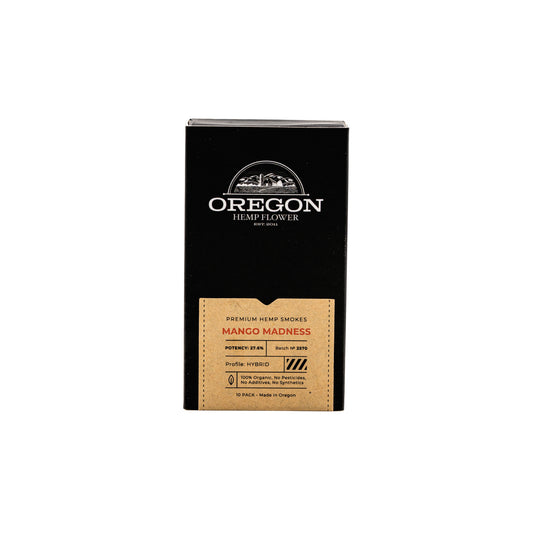
Oregon Hemp Flower grows every product without pesticides or synthetics, backs each order with a 100% satisfaction guarantee, and ships free on orders over $85 on our full catalog. Our lineup spans every tier discussed above: Flyin’ Hawaiian Indoor THCa Flower represents premium indoor pricing with tropical terpene notes, Hawaiian Haze CBD Hemp Flower offers a CBD-dominant option for shoppers comparing cannabinoid types, and Fornicate Indoor THCa Flower rounds out our indoor selection with its own distinct profile.
Michael’s writing for our blog, including strain comparisons and a 2026 hemp industry forecast, tracks the same market shifts covered in this guide, giving readers a consistent source for pricing and quality context.
Shipping costs and fees that affect your total price
Shipping can quietly change the real per-gram cost of a purchase, so it deserves the same scrutiny as the sticker price. Many hemp retailers charge a flat shipping fee on smaller orders, which can add several dollars to a single-gram or eighth purchase and distort your price-per-gram comparison if you forget to include it.
Free shipping on orders over a certain amount means a single larger order often works out cheaper overall than two smaller ones that each trigger a shipping charge. If you are comparing a $70 quarter with a separate small accessory purchase, combining them into one order to clear the $85 threshold can erase the shipping cost entirely and lower your effective per-gram price.
Always factor in potential fees beyond base shipping, such as expedited delivery charges or age-verification requirements that may require signature confirmation. When comparing listings across sellers, calculate the landed cost (product price plus shipping) and divide by total grams, rather than comparing sticker prices alone. A slightly higher product price with free shipping can beat a lower price that triggers a shipping fee, especially on smaller orders.
How organic and sustainable farming affect price premiums
Organic and pesticide-free cultivation methods tend to carry a price premium, and that premium is usually justified by the added labor and oversight involved. Growing without synthetic pesticides or fertilizers requires more manual pest management and soil care, which raises production costs compared to conventional methods.
Every strain is cultivated without pesticides or synthetics, a practice that supports both product safety and consistent terpene expression. Shoppers comparing listings should treat an organic claim as one more line item to verify, alongside the COA, rather than accepting it at face value. A genuine organic or sustainably farmed product often shows cleaner lab results, since fewer chemical inputs mean fewer potential contaminants to flag during testing.
The price difference between organically grown flower and conventionally grown flower of similar potency can run a few dollars per gram, reflecting the added cultivation effort rather than arbitrary markup. When a listing claims organic or sustainable farming without any supporting detail or lab confirmation, treat that premium with the same skepticism you would apply to an unverified potency claim.
Regional price differences across the United States
THCa flower pricing is not uniform across the country, and state-level rules play a direct role in why. States with stricter hemp regulations or additional testing requirements often see higher retail prices, since compliance costs get passed along to shoppers. States with looser restrictions or higher local demand can see either lower prices from increased competition or higher prices from strong buyer demand outpacing supply.

Shipping regulations add another layer. Some states restrict or heavily regulate hemp-derived THCa shipments, which can limit the number of sellers able to ship there and reduce price competition. Shoppers in states with more retail and online options typically see a wider spread of price points, from value smalls to premium indoor, while shoppers in more restricted states may see a narrower range skewed toward higher prices.
Local demand patterns matter too. Urban areas with more hemp retailers tend to have more price competition, while rural areas with fewer options sometimes carry a premium simply due to limited seller choice. Comparing online pricing against any local retail options in your state remains the most reliable way to judge whether you are getting a fair deal for your region.
THCa flower prices versus CBD and Delta 8 options
Shoppers comparing cannabinoid types often find that THCa flower carries a premium over standard CBD flower, largely due to higher demand and the more involved cultivation needed to maximize THCa content. CBD-dominant flower, like our Hawaiian Haze CBD Hemp Flower, typically prices lower per gram than premium THCa strains, making it a common entry point for shoppers comparing cannabinoid options side by side.
Delta 8 products, often sold as pre-rolls, vapes, or infused flower, tend to price closer to mid-tier THCa flower, reflecting the additional processing involved in Delta 8 extraction and infusion. Our CBD versus THCa explainer walks through how heat converts THCa to THC, which helps explain why THCa flower commands different pricing than CBD flower that does not carry the same conversion potential.
When comparing across cannabinoid types, price-per-gram still applies, but factor in your intended use. A shopper prioritizing a mellow, non-intoxicating option may find CBD flower the better value despite THCa commanding a higher per-gram price in most markets.
Verifying seller authenticity beyond the lab report
A COA confirms what is in the product, but it does not confirm who you are buying from is trustworthy. Check how long a seller has operated and whether their website clearly lists a physical business presence, contact information, and a return or satisfaction policy.
Genuine customer reviews, especially ones mentioning specific strains, shipping times, or customer service interactions, carry more weight than generic five-star ratings with no detail. Cross-reference the batch number on a COA with the number printed on the product packaging; a mismatch is a clear warning sign regardless of how polished the listing looks.
Pay attention to how a seller presents potency and terpene data. A seller willing to show full COAs, including contaminant screening and not just potency, generally signals a more transparent operation than one that only posts a cropped or partial lab result. The FDA’s safety guidance on THC products reinforces that proper labeling and clear sourcing information protect against accidental ingestion and mislabeled inventory, both of which point back to seller transparency as a core trust signal.
Buying advice for different shopper types
If you use THCa flower daily, buying an ounce or more usually makes sense once you have confirmed potency and freshness hold up over time. Occasional shoppers are often better served by eighths or quarters, since a full ounce can lose some terpene vibrancy before you work through it.
Gift buyers should prioritize presentation and a strong COA over bulk savings. A smaller, well-documented product makes a better impression than a large quantity with uncertain lab backing. Across all shopper types, keep an eye on harvest and clearance cycles. Prices often dip when new batches arrive and older stock gets discounted, so checking product pages regularly can turn up genuine savings. Whatever your purchase size, confirm the COA and batch date before checkout every time.
— Michael
Shop our THCa flower lineup and current pricing
Our catalog gives you a direct way to apply everything in this guide. Flyin’ Hawaiian Indoor THCa Flower suits shoppers chasing premium indoor quality and a tropical terpene profile, while Fornicate Indoor THCa Flower offers another indoor-tier option worth comparing on potency and aroma. Shoppers wanting a CBD-forward choice can check Hawaiian Haze CBD Hemp Flower against the THCa options to weigh cannabinoid type alongside price.

- Every product ships with lab testing behind it and our 100% satisfaction guarantee.
- Orders over $85 ship free, which can offset the cost of upgrading to a larger, better-value size.
- Browse the full hemp flower collection, pre-rolls, vapes, or THCa concentrates to compare weights and current pricing.
- Businesses buying in volume can review wholesale options for THCa, CBD, and Delta 8 flower.
Check current weights, COAs, and pricing on any product page before you order, and use the price-per-gram math from this guide to confirm you are getting the tier you expect.
FAQ
How much should THCa flower cost?
Expect to pay roughly $8 to $20 per gram depending on quality tier, with value flower at the lower end and premium indoor strains at the higher end. Always convert the listed price to price-per-gram before comparing across sellers.
How much is 1 gram of flower?
A single gram of THCa flower typically runs $10 to $15 at retail, though value tiers can dip closer to $8 and premium indoor strains can exceed $15. Buying larger quantities, like a quarter or ounce, usually lowers the effective per-gram price.
Who has the cheapest THCa flower online?
Price alone does not determine the best value since a cheap listing without a current COA can signal mislabeled or low-quality product. The better approach is comparing price-per-gram within the same quality tier and confirming lab results before purchase, which our guide to Oregon Hemp Flower’s catalog makes easy to check alongside current pricing.
How much is 7 grams of flower?
Seven grams, commonly sold as a quarter ounce, typically costs between $70 and $100 depending on quality tier, which works out to roughly $7 to $14 per gram. That per-gram price is usually lower than buying the same strain by the single gram.
Sources
- Cannabis pricing crisis: market forces shaping 2025 trends
- FDA warns consumers about the accidental ingestion by children of food products containing THC
- USDA — Farm Bill
