






How to Evaluate Hemp Suppliers: A Buyer's Checklist

To evaluate a hemp supplier, check four things in order: where the plant was grown, whether each batch has a full certificate of analysis (COA) from an independent lab, whether the product matches a written specification, and whether the supplier’s terms hold up on paper. A supplier that answers all four clearly is usually worth a sample order. One that dodges any of them is not.
This guide is for two readers: consumers buying hemp flower, CBD or THCA products online, and businesses sourcing bulk hemp for resale. The checks overlap. Wholesale buyers add a few more on samples, minimum orders and capacity.
TL;DR
- Ask where the hemp was grown, who grew it and how it was processed. Good suppliers answer without hesitation.
- Require a COA for the specific lot you are buying. THC results alone are not enough: look for pesticides, heavy metals, microbes and mold too.
- Set a written specification before you buy, then compare each COA against it.
- Wholesale buyers should get samples first, then document minimum order quantities, lead times, payment terms and remedies for bad goods.
- Treat missing COAs, impossible potency claims and unresponsive contacts as reasons to walk away.
Table of Contents
- Start with origin: where and how the hemp was grown
- Read the COA like a buyer, not a browser
- Assess quality beyond the paperwork
- Know the U.S. rules that apply
- Extra checks for wholesale buyers
- Red flags that should stop the purchase
- A simple scoring method
- Perspective
- Where to start with Oregon Hemp Flower
- FAQ
- Sources
Start with origin: where and how the hemp was grown
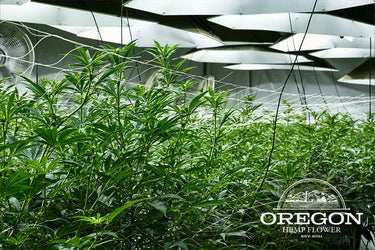
Origin is the first filter because everything downstream depends on it. Soil, inputs, harvest timing and drying all shape the final flower. Industry reporting on supplier qualification suggests asking where the plant material was grown, whether you can talk to the farmer, and how it was processed. The same source suggests requesting details or pictures of the production facility.
A few concrete questions to put to any supplier:
- Which state and farm did this lot come from?
- Is the grower licensed by USDA or by a state or Tribal authority? Professional guidance for companies sourcing hemp says to document supply sources carefully and find licensed growers.
- Does the supplier trim by hand or by machine, and can it show you the process?
- What inputs were used during the grow? “Organic” and “no pesticides” are claims, so ask what documentation sits behind them.
Records and third-party audits
Regulated growers keep paper trails. In Illinois, for example, licensees and registrants must keep records for at least three years, including harvest reports, sales data, testing results and transportation records. Rules differ by state, but the principle is useful anywhere: a legitimate operation can show you its records.
Independent certification can also help. The U.S. Hemp Authority describes a program in which each farm and facility is audited by a third party against a standard drawing on food, dietary supplement and agricultural requirements. The American Herbal Products Association guidance covers cultivation, harvesting, processing, packaging and labeling, including good agricultural practices for all hemp crops. A supplier that follows a recognized framework gives you something concrete to verify.

Read the COA like a buyer, not a browser
A certificate of analysis is the single most useful document a supplier can hand you. It is also the easiest to misuse. A PDF with a lab logo is not proof of quality. Here is what to check.
1. Is it for your lot?
The COA must match the batch or lot number on the product you are receiving. A generic COA for a strain name, or one dated long before the harvest in question, tells you little. Supplier-qualification guidance says buyers should review supplier and laboratory COAs for the specific lot before purchase.
2. Does it cover more than THC?
The same guidance warns that a COA showing THC alone is not a complete product specification. Regulators agree on what a full panel looks like. The California Department of Cannabis Control’s hemp report lists testing for cannabinoids, moisture content, heavy metals, microbial impurities, mycotoxins, pesticides and residual solvents. Flower will not always need solvent testing, but a supplier should be able to explain why a panel is missing.
Use this quick checklist:
| COA section | What to look for |
|---|---|
| Cannabinoid potency | CBD, THCA and delta-9 THC values that match the label and the product page |
| Pesticides | A full panel with results below the limits that apply in your state |
| Heavy metals | Lead, arsenic, cadmium and mercury results |
| Microbials and mycotoxins | Pass results for yeast, mold, bacteria and mycotoxins |
| Moisture | A value consistent with properly dried and cured flower |
| Lab details | Lab name, sample date, lot number, method and a way to contact the lab |
For deeper reading, we have published guides on how to read lab reports and certificates of analysis, what labs test for in pesticide panels and how THCA lab testing works step by step.
3. Can you trust the lab and the chain of custody?
“Third-party tested” is a label, not a guarantee. One lab-industry analysis argues that a COA’s trustworthiness depends on batch specificity, chain of custody, method transparency and the accountability of the issuer. In practice, ask who commissioned the test, who ran it and whether anyone involved has a financial stake in the result. Look for a lab that publishes its methods and can confirm a report when you contact it directly.
Assess quality beyond the paperwork
Testing confirms safety and potency. It does not tell you how the flower smells, burns or ages. Use both.
- Potency against label. The COA values should match what the product page claims. Mismatches are a warning sign (see the red flags below).
- Terpenes. Terpene content shapes aroma and flavor, and a supplier that reports terpenes shows more transparency than one that reports THC alone. We explain why in our piece on terpenes and COAs versus indoor and outdoor claims.
- Freshness and moisture. Flower should feel dry but pliable, not brittle or damp. Ask about harvest date and storage.
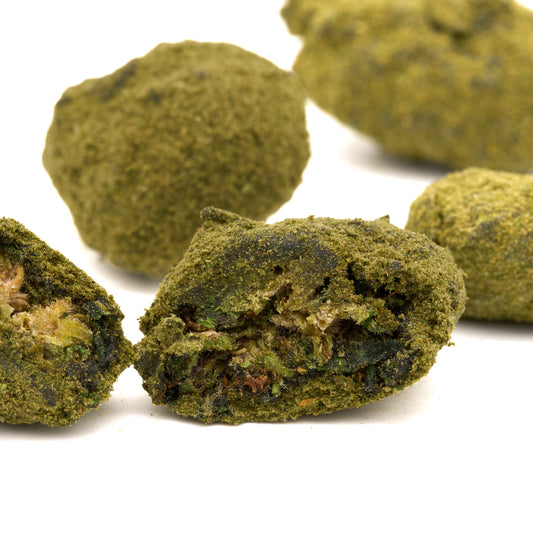
- Trim and structure. Hand trimming preserves trichomes and gives a cleaner nug. See what the hand-trimmed price premium actually buys.
- Genetics. Named strains should come with consistent profiles from lot to lot. Ask for several recent COAs of the same strain and compare them.
Professional guidance says written specifications should be set by the buyer, the seller or both, covering identity, physical and chemical characteristics and potential contaminants. Write yours down, even as a one-page list. It turns a vague feeling about quality into something you can accept or reject.
Know the U.S. rules that apply
Hemp law in the United States is a mix of federal and state rules, and it changes. Verify the current position in your state before buying.
- Definition of hemp. The 2018 Farm Bill defined hemp as any part of Cannabis sativa L. with a delta-9 THC concentration of not more than 0.3% on a dry weight basis. THCA flower is sold on the basis of that definition, so the COA’s delta-9 figure matters to compliance.
- Sampling. Hemp must be sampled under the applicable USDA, state or Tribal requirements to determine delta-9 THC content. Illinois, for example, requires official samples to be collected by a sampling agent, with sampling designed to give 95% confidence that no more than 1% of plants in each lot exceed the acceptable THC level.
- Delta-8. The DEA notes that delta-8 THC is arguably federally legal under the 2018 Farm Bill, but its legal status varies significantly across states, with bans in 17 states as of 2024. Confirm your state’s rule before ordering.
- FDA position on CBD claims. The FDA has issued warning letters to CBD sellers. In one May 2022 letter, it said CBD and delta-8 THC products for humans were unapproved new drugs sold in violation of the FD&C Act. A good supplier does not make disease-treatment claims about its products. Treat those claims as a compliance flag.
If you are buying for resale, our wholesale hemp flower guide on compliance, COAs and sourcing goes deeper on what to verify before you stock a product.
Extra checks for wholesale buyers
Bulk buying adds commercial risk. The product might be fine in a sample and different in a pallet. Work through these points before you commit.
Samples first
Shopify’s wholesale buying guidance says to request samples before committing to a minimum order quantity and to confirm fit against your required packaging, labeling and compliance standards. Run the sample through your own checks: inspect it, then send it to an independent lab if the order is large enough to justify the cost. Compare your lab’s numbers with the supplier’s COA.
Terms to document
The same guidance suggests writing down:
- Sample costs and whether they are credited against a first order
- Minimum order quantity, overall and per product or variant
- Case-pack rules and minimum-spend requirements
- Payment methods and payment terms
- Initial and reorder lead times
- Shipping, tracking, freight and insurance responsibilities
- Remedies for delayed, incomplete, damaged, defective or sample-different goods
Capacity and consistency
The U.S. Chamber of Commerce suggests asking a potential manufacturing partner whether it can scale production up or down, whether it uses subcontractors and how capacity supports seasonal or growth-related changes. For hemp, add a crop-specific question: how much of this strain is in inventory, and when is the next harvest? Seasonal supply is a fact of agriculture, and a supplier who plans for it is more reliable than one who promises unlimited stock.
Food Business News adds that buyers should ask about production capacity, minimum runs, forecast and order cadence, storage, packaging configurations, quality procedures, certifications and extra-fee services.
On lot consistency, ask for COAs from the last several lots of the strain you want. Large swings in potency or terpene content from lot to lot are worth a conversation before you order. Also confirm that samples are drawn from a homogeneous lot. Illinois rules, for instance, require that representative samples represent a homogeneous lot and that sample material not be comingled, a sound standard for any buyer to expect.

Red flags that should stop the purchase
Bad actors in this market are common enough that independent testing keeps finding them.
- No COA available. In a study of hemp products sold on one large marketplace, 95% of the 56 products lacked available COAs, 96% had inaccurate dosage and 89% of companies did not provide responsive contact information.
- Lab results that do not match the label. A NORML summary of an ACIL analysis reported cannabinoid amounts inconsistent with product COAs in most tested hemp-derived intoxicating products, and pesticides above state limits in 7 of 48 products (15%).
- THC-only COAs. If the report covers potency and nothing else, ask for the rest of the panel.
- “GMP” as the only proof. Supply-chain experts warn that a GMP claim and a THC-only COA are insufficient by themselves, because suppliers may omit or manipulate important testing information.
- Impossible numbers. Potency claims that exceed what the plant can physically produce.
- No named lab, no lot number, no contact. If you cannot trace the report, it is decoration.
- Medical promises. Claims that a product cures or treats disease are a regulatory warning sign, as the FDA letter above shows.
A simple scoring method
If you are comparing two or three suppliers, score each from 0 to 2 on the criteria below. Anything under 12 out of 16 needs a hard look.
- Origin disclosed (farm, state, license)
- Lot-specific COA supplied
- Full-panel testing (not THC only)
- Independent lab, traceable report
- Written specification accepted
- Sample policy and transparent terms
- Responsive, named contact
- Return or satisfaction policy in writing
The last item matters for consumers and resellers alike. A supplier willing to put its guarantee in writing is accepting some of the risk you would otherwise carry.
Perspective
We grow and sell hemp flower, so we see this question from the supplier’s side of the table. Our position is simple: a buyer should be able to check everything we say.
Our hemp is organically grown without pesticides or synthetics, and it is hand-trimmed. Those are our claims, and they are the ones you should test. Ask for the COA, read the pesticide panel, compare the potency to the label and look at the flower itself. A supplier confident in its product welcomes that scrutiny.
We also think hand trimming and careful growing show up in the result: cleaner nugs, better preserved terpenes and a more consistent jar. That is why we back our products with a 100% satisfaction guarantee. If you evaluate us and the product does not meet what you expected, that is our problem to fix.
For resellers, the same logic applies at scale. Start with a sample, read the lot paperwork, and only then talk volume.
Michael
Where to start with Oregon Hemp Flower
If you want to put this checklist to work, begin with our hemp flower collection, where you can compare strains by cannabinoid and terpene profile. We also sell pre-rolls, vapes and THCa concentrates. Orders over $85 ship free, and every purchase is covered by our 100% satisfaction guarantee.

Buying in bulk? Our wholesale THCa, CBD and Delta 8 listings cover resale supply, and strain pages such as Gorilla Glue hemp flower wholesale and Hawaiian Haze CBD hemp flower wholesale show what is available. Use the checklist above on us as you would on anyone else.
FAQ
How do I verify that a hemp supplier’s COA is real?
Check that the lot number matches your product, that the lab is named and contactable, and that the report lists methods and a sample date. Then contact the lab directly to confirm it issued the report. For large wholesale orders, send your own sample to an independent lab and compare results.
What should a full hemp COA include?
Potency for cannabinoids, plus testing for pesticides, heavy metals, microbial impurities, mycotoxins and moisture. State regulators such as California’s Department of Cannabis Control list these categories in their hemp testing requirements. A report that shows THC alone is incomplete.
Is a “third-party tested” label enough?
No. It tells you someone other than the seller ran a test, but not which lab, which batch or whether the lab has a conflict of interest. Ask for the actual report and check that it is tied to your lot.
What should I ask for before placing a wholesale hemp order?
Ask for a sample, recent COAs for the strain, the minimum order quantity, lead times for first orders and reorders, payment terms, shipping responsibilities and remedies if goods arrive damaged or different from the sample. Put the answers in writing before you pay.
Is delta-8 THC legal everywhere in the U.S.?
No. The DEA reported that its legal status varies significantly by state, with bans in 17 states as of 2024. Rules keep changing, so check your state’s current law before buying or reselling.
Sources
- Questions to ask a potential hemp CBD supplier (SupplySide)
- Sourcing Cannabis Lawfully for CBD Consumer Products (FDLI)
- Illinois Industrial Hemp Plan (USDA AMS)
- U.S. Hemp Authority
- AHPA Good Agricultural and Manufacturing Practices for Hemp
- Hemp Report (California Department of Cannabis Control)
- What Makes a Certificate of Analysis Trustworthy?
- National Drug Threat Assessment 2024 (DEA)
- FDA warning letter, May 2022
- How To Buy Wholesale Products for Resale (Shopify)
- 5 Questions to Ask a Potential Manufacturing Partner (U.S. Chamber of Commerce)
- Know the questions to ask in contract manufacturing (Food Business News)
- Lab Testing Reveals the Reality Behind Amazon’s Hemp Market (CBD Oracle)
- Hemp-Derived Intoxicants Frequently Mislabeled (NORML)
